2026-09-17
The grout lines are the first part of a tiled floor to look dirty and the last part to come clean. Years of mopping, wiping and occasional scrubbing with a toothbrush often end with the same result: the tile faces are passable, but the joints stay grey, spotted or darkened by mildew. Steam cleaning changes the outcome. A well-designed steam cleaner heats water past the boiling point and delivers it as pressurized vapor that can reach inside the pores of cement-based grout without soaking the room.
Working with handheld steam cleaners on tiled test boards in our own factory has given us a clear conclusion: steam is the most effective and least damaging method for routine grout maintenance. It dissolves oils, soap residue, mineral film and fine dust that mops cannot touch, and it leaves no chemical residue behind to attract new dirt. That last point matters more than most people realize. A floor cleaned with detergent will look clean for an evening; a floor cleaned with steam stays cleaner longer because the joints are not coated with a sticky detergent film.
This guide explains why grout stains so quickly, what steam actually does to the material, how to clean grout step by step, which mistakes damage tiles and joints, and what to check before buying a steam cleaner for this work. The advice is aimed at homeowners first, but it is equally practical for cleaning companies, property managers and importers who want to know how a handheld steam cleaner performs before they stock or specify it. You do not need a professional machine to start; a handheld steam cleaner with a jet nozzle covers most residential grout work.
Grout is not a decorative line between tiles. It is a structural joint that allows the floor to expand and contract while keeping moisture from passing through the gap. Those same properties make it hard to clean. Most domestic grout is cement-based and slightly porous. Water on a tiled floor moves sideways into the joint, carrying detergent residue, soap film, body oil, cooking grease and very fine dust. Inside the pores, these materials harden into a grey or brown deposit that a mop cannot remove.
Not all grout behaves the same way, and the cleaning method should start from the grout type.
| Grout type | Where it is often used | Main soiling problem | Steam suitability |
|---|---|---|---|
| Sanded cement grout | Floor joints wider than 3 mm | Deep dirt and oil absorption | Excellent with a jet nozzle |
| Unsanded cement grout | Wall joints and narrow floor joints | Soap scum and mildew | Excellent; use lower pressure |
| Epoxy grout | Kitchens, laboratories, commercial floors | Surface film, very little absorption | Good; cleaning is faster, steam mainly aids wiping |
| Pre-mixed ready-to-use grout | DIY wall and floor tiling | Surface stains, sensitive to heat | Test first; keep steam contact short |
Epoxy grout is dense and nearly non-porous, so it absorbs less dirt and stains more slowly; it usually develops a surface film rather than deep soiling. Pre-mixed acrylic or latex-modified grouts are the opposite case: they are less porous but more heat-sensitive. A few seconds of steam on an intact joint is normally harmless, but holding the nozzle in one spot can soften the polymer or dull the finish. Test an inconspicuous area first.
Mops and sprays fail for a simple physical reason. A mop leaves a layer of water on the tile surface but cannot push that water into a joint that is just a few millimetres wide. Spray cleaners rely on surface tension and dwell time, but the dirt is below the surface. Strong acidic descalers can dissolve the face of cement grout before they loosen the embedded soil, leaving the grout rougher and quicker to re-stain. Steam avoids all three problems because gas, not liquid, carries the heat into the joint.
Steam cleaning works on grout through three simultaneous mechanisms: heat, vapor penetration and mechanical scrubbing. Understanding them explains why the technique matters as much as the machine.
Heat is the first mechanism. In a properly functioning handheld steam cleaner, the water in the boiler reaches 100 degrees Celsius or higher. By the time vapor leaves a jet nozzle, it is still hot enough to soften and melt the organic part of grout soiling, which means cooking oil, soap residue, body oil and the fine film that builds up in any lived-in house. These are exactly the materials trapped inside the pores.
Vapor penetration is the second. Steam is a gas made of very fine water particles, and a gas travels into narrow spaces far more effectively than a liquid does. When steam meets a cooler grout joint, it condenses into a very small amount of hot water inside the pores themselves. That water is exactly where the dirt is, so the dirt is re-moistened and loosened before you touch it.
Mechanical action is the third. The steam flow from the nozzle carries energy. A handheld unit with a working pressure of about 2.5 to 4 bar, which is roughly 35 to 60 psi, pushes vapor into the joint and creates enough agitation to lift particles out of the surface. The immediate wipe with a cloth then removes the suspension before it can settle again.
One detail worth knowing is the difference between dry steam and wet steam. A good handheld unit produces mostly dry steam, which means the vapor contains little free liquid. Dry steam wets the grout surface just enough to dissolve the soil but leaves the room noticeably dry. Weaker units and mop-style steamers tend to produce wetter steam, which takes longer to dry and leaves a thin film that can re-deposit dirt on light grout. For grout work, dry steam is the better choice.
Temperature and pressure are not interchangeable. Temperature determines how quickly fats and proteins soften. Pressure determines how deep the vapor penetrates and how fast the job goes. A machine with high pressure but insufficient heat will still clean, but it needs more passes. A machine with high heat but low pressure is gentler on delicate joints but slower on heavy soil. The most practical cleaners for grout produce continuous hot steam and concentrate it through a narrow nozzle, which turns even moderate pressure into a useful jet.
There is also a hygienic benefit. Steam at the moment of contact is still above 60 degrees Celsius, which is enough to disrupt common household mould spores and bacteria on surfaces. It is not a substitute for full disinfection of a deep porous joint, but it explains why steaming a shower wall visibly reduces black spotting and the musty smell around it. For a closer look at how the heating element, boiler and nozzle work together inside a production unit, see our complete guide to handheld steam cleaners from principle to application.
Steam restores grout that is dirty but physically sound. If the joints are intact and the problem is a grey or dark film built up over years, one steaming pass usually brings back the original shade. You can see the difference immediately along the steamed line. Steam also works on unsealed grout. Unsealed joints absorb more dirt, but they also release it more easily when heat and vapor loosen the deposit. Sealed grout cleans faster because less material has penetrated, though the sealer itself stays in place when steam is applied briefly.
There are real limits, and it is better to know them before you start:
One caution deserves a dedicated mention. Some pre-mixed ready-to-use grouts and latex-modified formulations contain polymers that soften at high temperature. Steam applied briefly to an intact joint is normally harmless, but a nozzle left in the same spot for several seconds can dull the surface or leave a slight impression. If you are not sure what type of grout is on the wall, test a small area in a corner or behind furniture before cleaning the full surface.
Ten minutes of checking before steaming saves an hour of correction later. Run a fingernail along the joint. If powder comes off, the grout is degrading and steam will make it worse. Look for hairline cracks, missing sections and tiles that sound hollow when tapped. Note whether the grout is sealed: put a few drops of water on the joint; if the water beads, the sealer is still working; if it soaks in within seconds, the grout is open and will release dirt more readily once you steam it.
In a shower or bathroom, inspect the silicone joints around the base and corners. Damaged silicone can lose adhesion when heated and softened, so repair it before any deep steaming. Steam applied from the wrong angle can push moisture behind a failed seal, which leads to the kind of slow damp damage that is much harder to fix than a dirty grout line.
| What you see | What it means | What to do |
|---|---|---|
| Powdery, crumbly grout | Grout is breaking down | Repair or replace first; steam will worsen it |
| Shallow hairline cracks | Normal aging; surface damage | Steam gently, then seal after full drying |
| Intact grout with grey or dark deposit | Classic embedded soil | Steam clean, then reseal if the joint absorbs water |
| Epoxy grout with film | Surface residue only | Steam is safe; cleaning time is short |
| Pre-mixed acrylic or latex grout | Heat-sensitive surface | Test first; keep the nozzle moving |
| Loose or hollow tiles | Adhesion to the substrate is failing | Fix the tile first, then clean |
Equipment check matters too. Use distilled or de-mineralized water if your local water is hard. Scale in the boiler reduces steam output and deposits white minerals on dark grout. A clean nozzle opening and a fully heated boiler matter more than the brand or the power rating on the box.
The routine below is the one we use when demonstrating handheld steam cleaners on tiled test boards in the factory. The order matters more than speed, and every step exists for a physical reason.
As a rough timing reference, a three-meter joint at a steady walking pace takes about fifteen to twenty seconds in one pass. If you are still scrubbing after two passes, the problem is usually a wrong attachment or a grout that needs repair, not your effort.
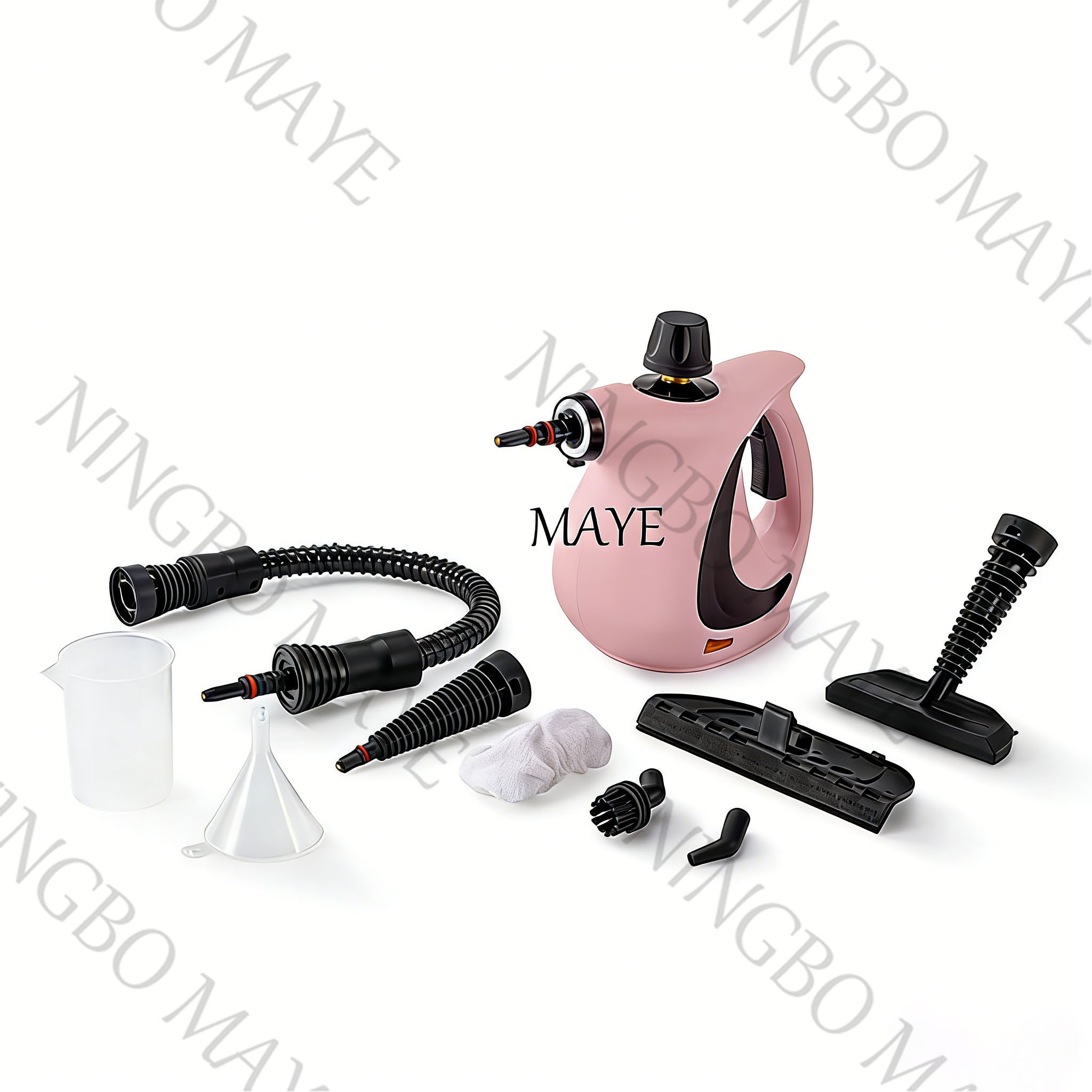
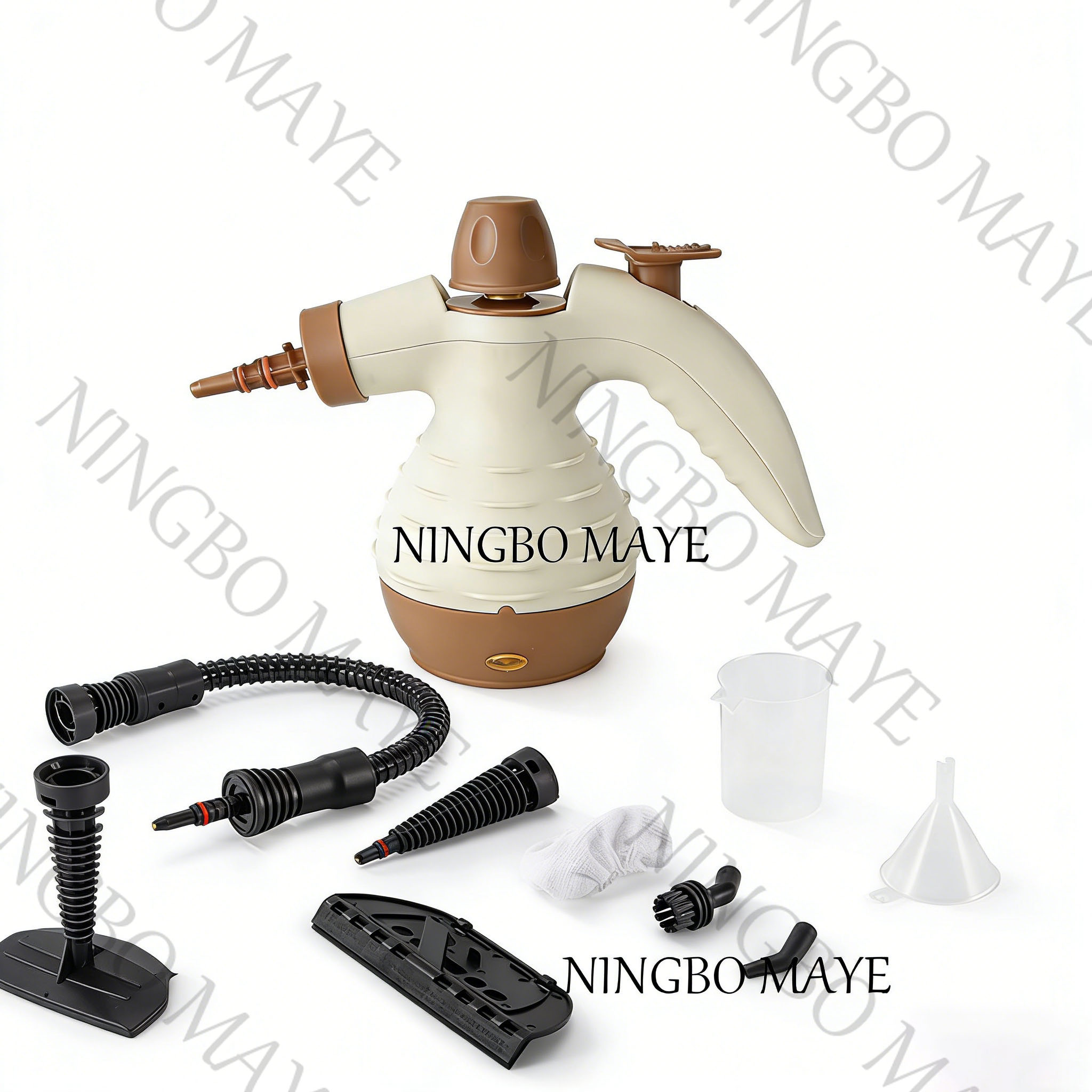
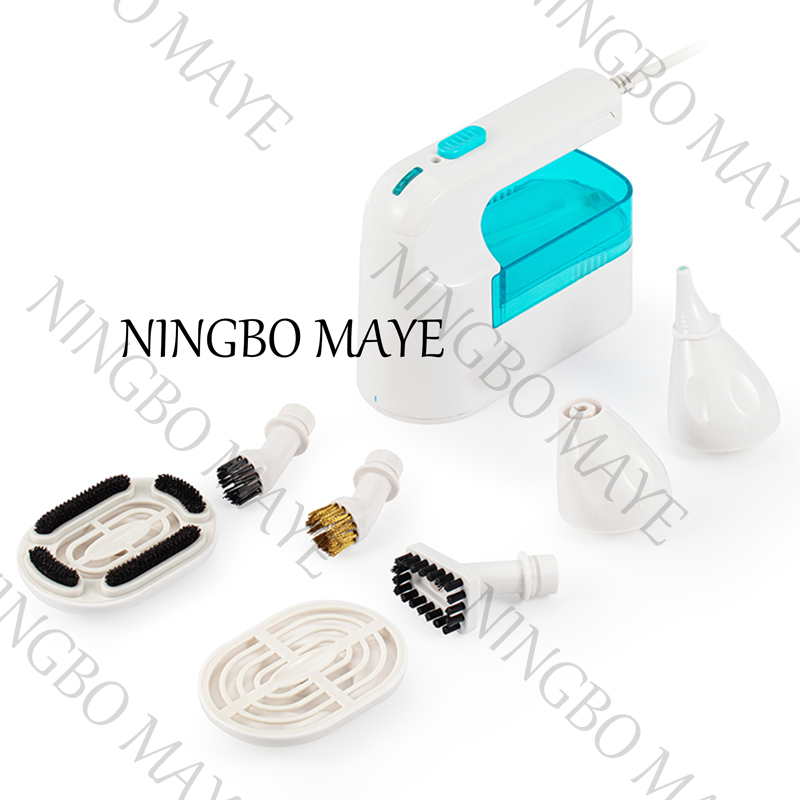
The jet nozzle is the default for grout lines narrower than five millimeters. The brush attachment is better for wider joints and textured tiles because it combines steam flow with light scrubbing. A flat accessory wrapped with a microfibre cloth works well for wiping a long joint without bending awkwardly. The cloth should be dry or barely damp; a soaked cloth simply puts water back onto the grout.
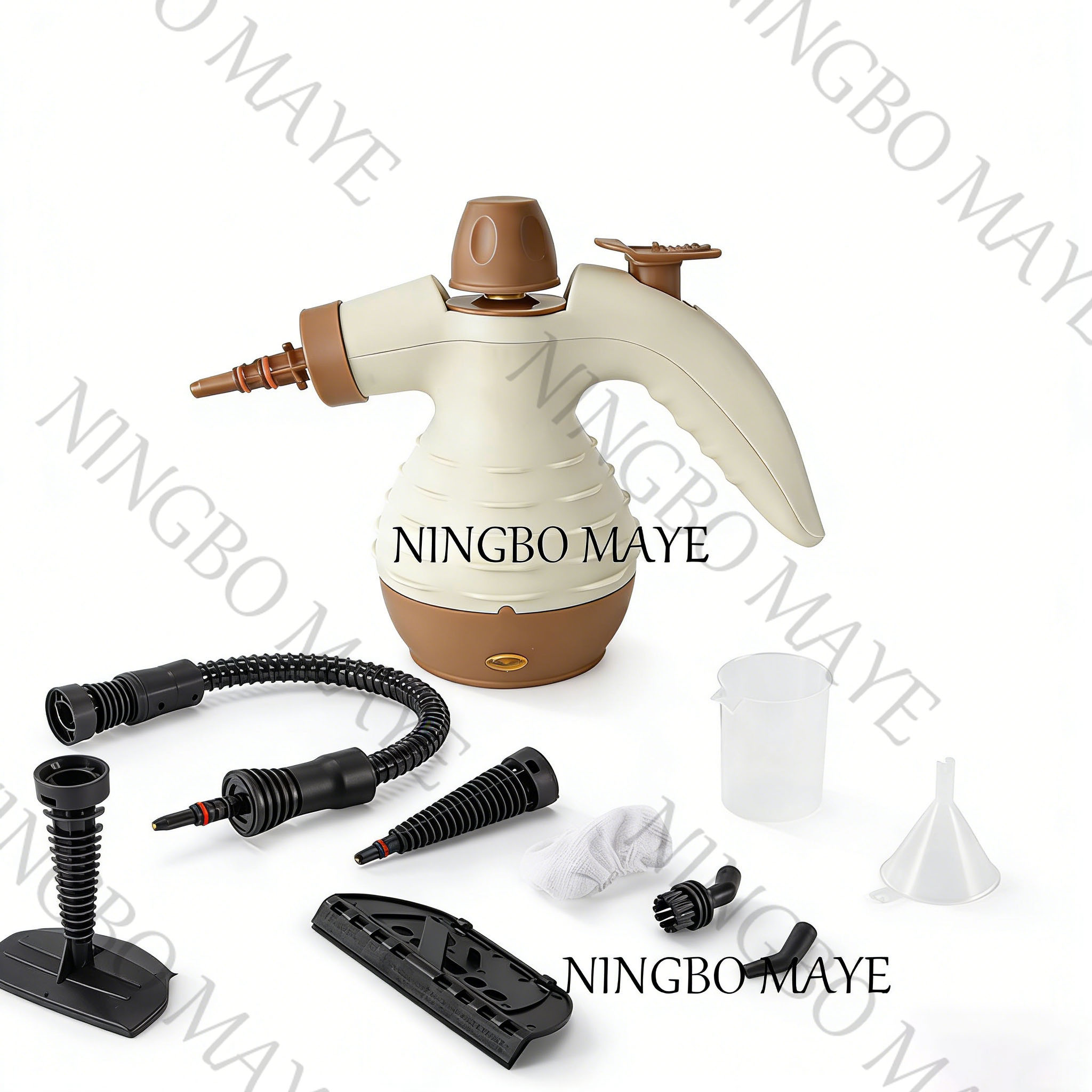
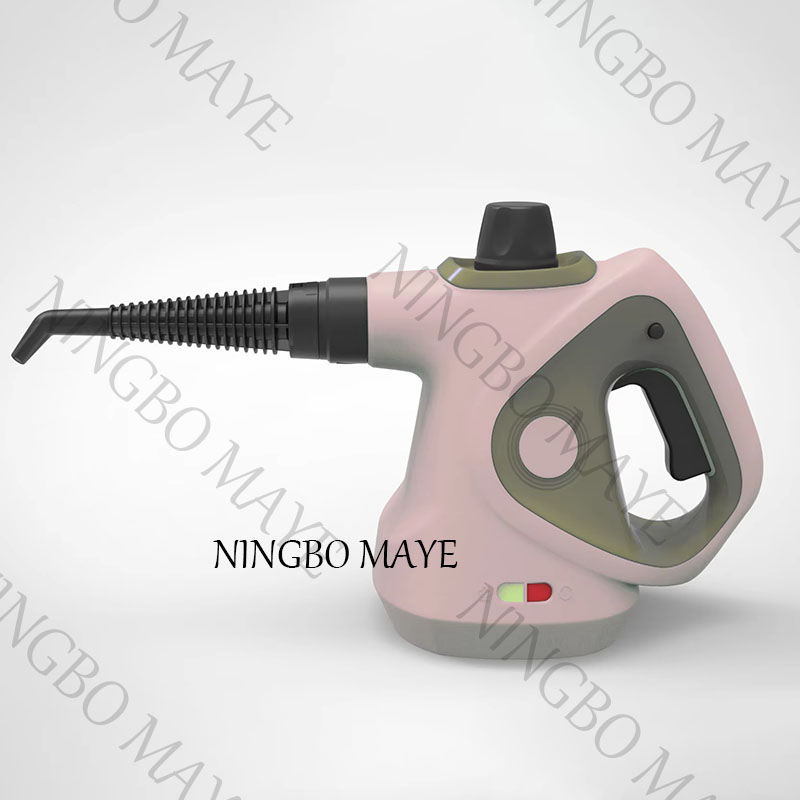
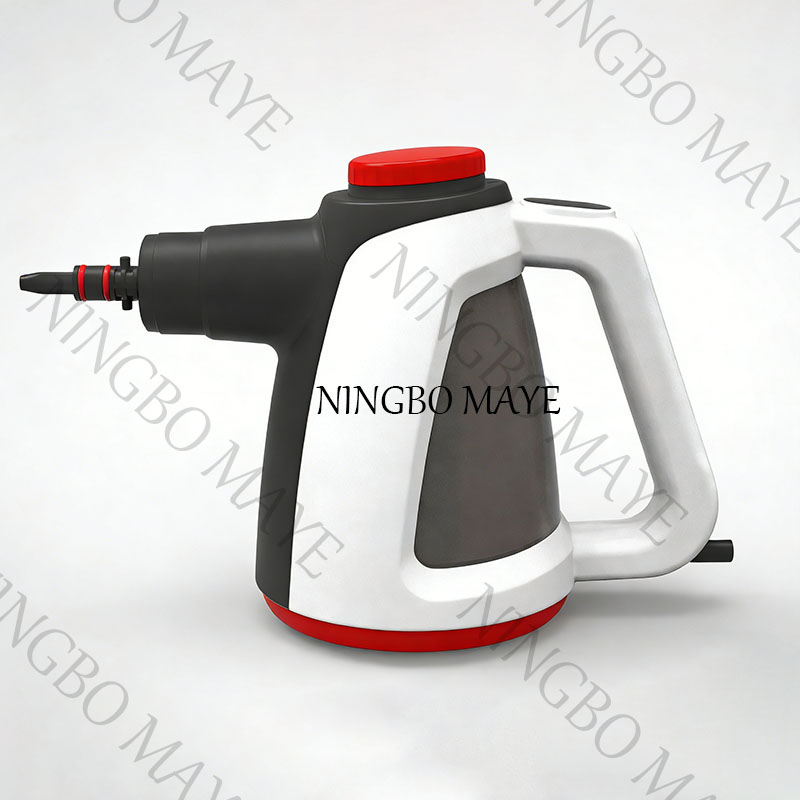
Our TM168 handheld model is the unit we reach for in the factory when demonstrating grout cleaning. Its jet nozzle produces a concentrated stream that matches the routine above, and the compact body keeps the wrist comfortable during floor-level work.
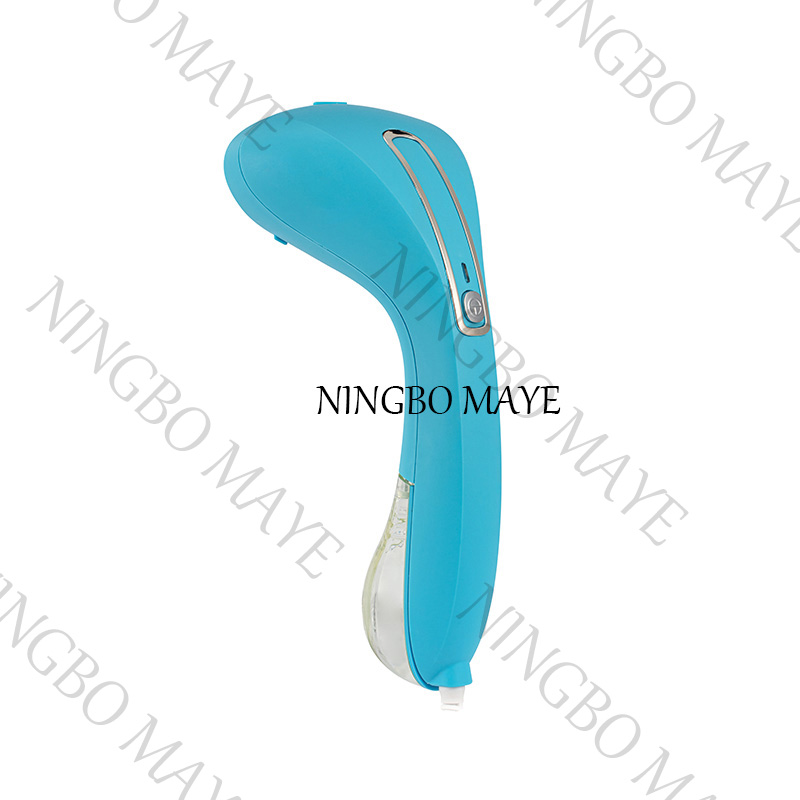 TM-168 1100W 4-in-1 Handheld Steam Vacuum for Multi-Surface CleaningThis handheld steam vacuum generates steam up to 120°C to tackle stubborn kitchen and bathroom stains, with a compact design and multiple accessories suitable for homes and commercial spaces.View Product →
The same routine adjusts to the type of soil you are removing. Kitchen grout collects cooking grease and airborne oil, which harden into a tacky film. Steam softens it in one pass, and a dry cotton cloth picks it up easily. Avoid mixing steam with caustic kitchen cleaners; the heat drives the chemistry deeper into the joint, where it is harder to rinse out.
Bathroom grout carries soap scum and hard-water minerals. Steam loosens both, but mineral deposits may need two passes and a gentle wipe. If you use a descaler, apply it to the tile surface only, rinse it away before steaming, and never use strong acid on cement grout. Colored grout needs an extra word of caution: dark grout shows limescale as a white haze, and aggressive descaling will strip the surface pigment faster than steam alone would.
Shower grout is the classic mold case. Steam removes the surface mold and the residue that feeds it. Dry the walls after steaming, and repeat after a week if black spots return. If they come back quickly, the problem is moisture inside the wall, not the cleaning routine.
Entryway grout sees the coarsest soil: fine grit that grinds its way into the joints. Vacuum first until no dust rises. Steam then lifts the embedded material without creating a muddy paste. Entryways with badly worn grout should be repaired before steaming because heavy foot traffic will turn a weak joint into a gap within a few months.
| Room | Typical soiling | Best technique | After-care |
|---|---|---|---|
| Kitchen | Grease, food splashes, fine dust | Steam plus dry wipe; short passes | Ventilate; wipe down tile faces |
| Bathroom floor | Soap scum, hard-water film | Steam plus immediate microfibre wipe | Dry the floor; prevent pooling |
| Shower walls and floor | Mildew, soap scum | Steam plus brush attachment | Dry with a squeegee; ventilate |
| Entryway | Traction grit, dark embedded soil | Vacuum first, then steam | Reseal after full drying |
Steam cleans silicone without damaging it as long as the seal is intact. If the silicone is cracked, peeled or lifting at the edges, remove it, clean the gap, and apply fresh silicone. Steam a new seal only after it has fully cured, and never direct the nozzle aggressively at the edge of a seal; the heat can soften the adhesion while the joint is still fresh.
Mold is the reason most people start looking for a grout solution. Steam has a real advantage: it removes surface mold, lifts the organic film that feeds it, and leaves essentially no residual moisture on a non-porous surface. That last point matters, because humidity is what causes mold to return.
The heat of the steam disrupts the surface layer of the mold, and the wiping step physically removes the dark pigmented spores. The grout will look lighter after one session. For joints with recurring spots, steam a second time after a week. If the problem is persistent, inspect the wall for hidden leaks, look at the tile for hairline cracks, and check the silicone for failed edges. Steam is a cleaning tool, not a waterproofing system.
A warning about additives: do not put detergent, bleach or fragrance into the water tank. Steam cleaner boilers are sized for water; additives foam, block the nozzle and leave residue inside the boiler. If you want chemical disinfection after steaming, apply a neutral disinfectant spray to a cool, dry surface and follow the label instructions.
Most damage done during steam cleaning comes not from the steam itself but from how long it stays in one place and what was happening before it got there. The list below covers the mistakes we see most often in practice, both in homes and during factory testing.
Grout is one of the most demanding tasks a steam cleaner will face, because it requires continuous pressure, a fine nozzle and enough heat output. Choosing a machine specifically for this job, even if it will also clean ovens, windows and upholstery, is the realistic approach.
Start with the boiler and pressure. A model that produces steam in short bursts or sputters will make grout cleaning painfully slow. Look for a boiler that generates continuous steam and a working pressure around 2.5 bar, which is about 35 psi, or higher. The manufacturer should state these values clearly rather than quoting a vague power rating.
Next is the nozzle set. A metal jet nozzle is essential for narrow joints. A brush attachment covers wider joints. A flat accessory for cloths speeds up the wiping step. If the machine comes with a full set, you are ready for almost any grout situation without buying extra parts.
Tank capacity sets the rhythm of the job. A 300 milliliter tank with continuous steam gives roughly 10 to 20 minutes of intermittent use, which is enough for a bathroom. For a whole house, plan on refilling two or three times; a quick-refill design matters more than a very large tank, because a heavy machine filled to the top is harder to control during floor-level work.
Weight and balance affect the user long before the water runs out. Grout cleaning is done close to the floor, with the wrist loaded. A handheld unit that balances well and stays cool on the outside will feel much better after twenty minutes than a heavier unit with the same steam output. Corded models give continuous heat without the battery-drain problem, which is why we recommend a corded handheld unit for grout work unless you regularly clean areas with no access to power.
Safety and certification are not marketing details. A steam cleaner is a small pressure vessel. Look for a pressure-relief valve, a secure fill cap, a trigger that locks in the off position, and certification marks such as CE for Europe, GS for the German market, or UL/ETL for North America. The factory behind the product should be able to document these marks for each production series.
| Specification | Why it matters for grout | Practical target |
|---|---|---|
| Steam pressure | Penetration depth into the joint | 2.5 bar or more at the nozzle |
| Steam temperature | Melting fats and disrupting mold | Continuous output above 100 degrees Celsius |
| Heat-up time | Convenience and boiler efficiency | Two to three minutes |
| Tank capacity | Portion of the job without a refill | 300 ml or more |
| Attachments | Narrow joints versus wide joints versus corners | Jet nozzle, brush, cloth pad |
| Safety certifications | Pressure vessel quality and consumer protection | CE, GS, UL or equivalent mark |
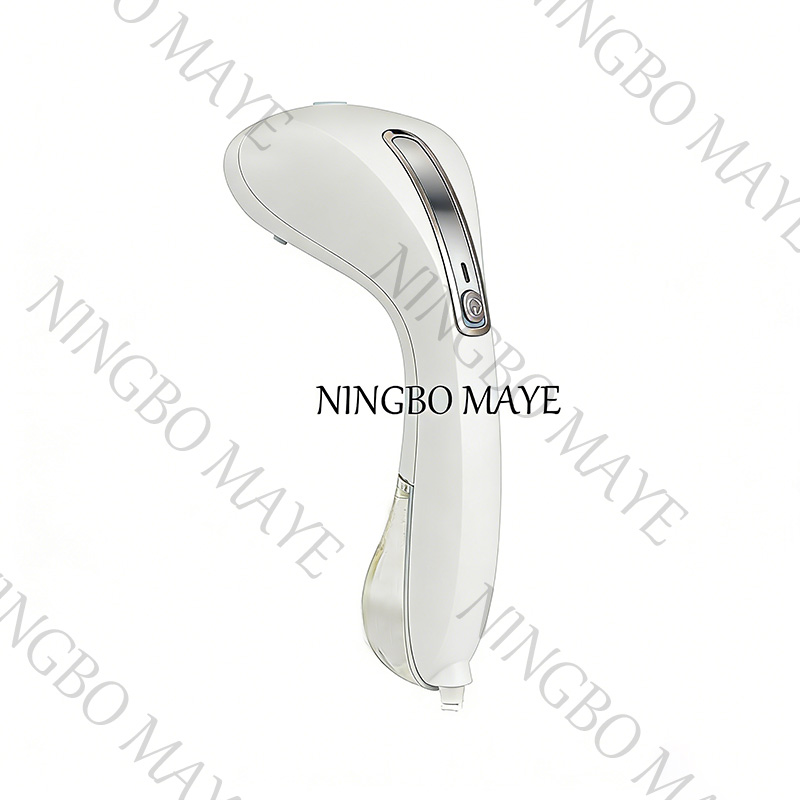
One example from our own range: the TM388 handheld steam cleaner is built with a boiler designed for continuous output, and on our grout test boards it clears a three-millimeter joint in a single pass at a normal walking pace. It is a good reference for the kind of performance a serious grout cleaning job demands.
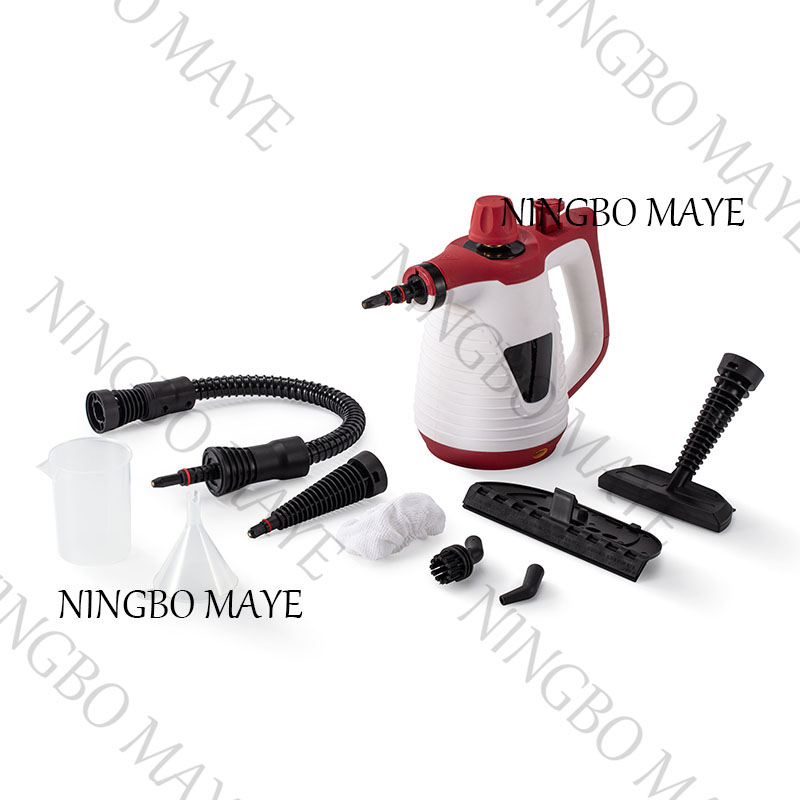 TM-388 Handheld Natural Steam Cleaner with Continuous Output BoilerFeaturing 2.8–3.2 bar steam pressure, this unit penetrates surfaces to remove grease, odors, and bacteria across kitchens, bathrooms, and car interiors, all without chemical detergents.View Product →
Buyers sourcing steam cleaners for resale or for a professional cleaning fleet will eventually ask who made the machine and how it is controlled. Factory checks by major European retail groups, documented quality systems and the ability to evaluate pre-production samples all point to consistent manufacturing. A practical starting point is the official Maye Electric website, which lists the full product series, factory profile and export certifications.
A steam cleaner that is emptied, aired and descaled will keep producing the same steam quality for years. The maintenance routine is short, and grout cleaning is one of the tasks where it pays off, because scale directly reduces boiler efficiency and turns a reliable jet into a sputtering mist.
The TMSM002 handheld unit is a typical example of how simple maintenance becomes when the boiler layout is straightforward. We design models with accessible tanks and cleanable nozzles because we know how often users forget basic care. A maintained cleaner produces predictable steam, and predictable steam is what makes grout cleaning repeatable in every room of the house.
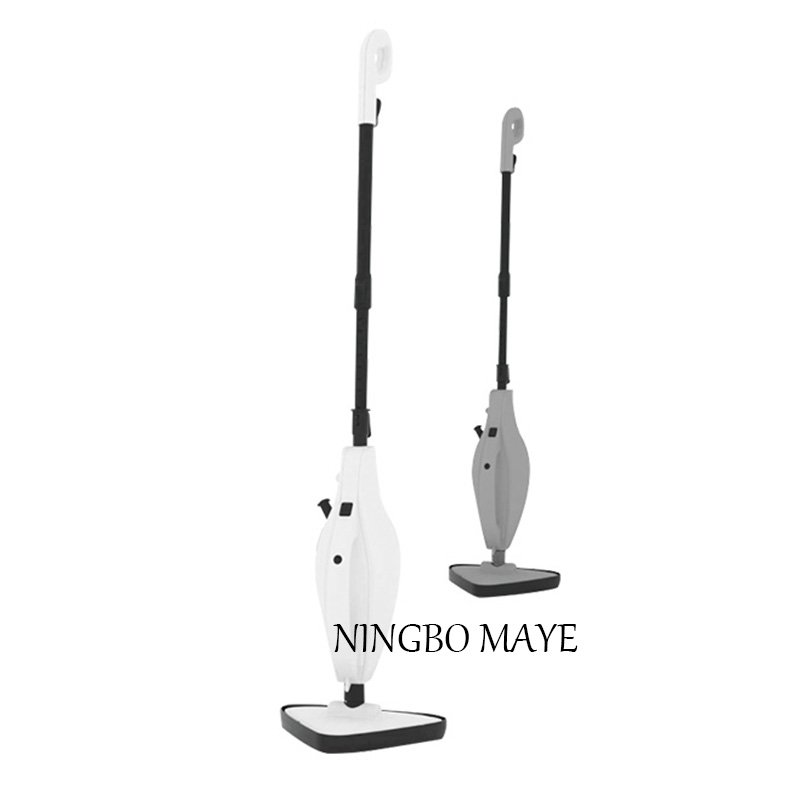
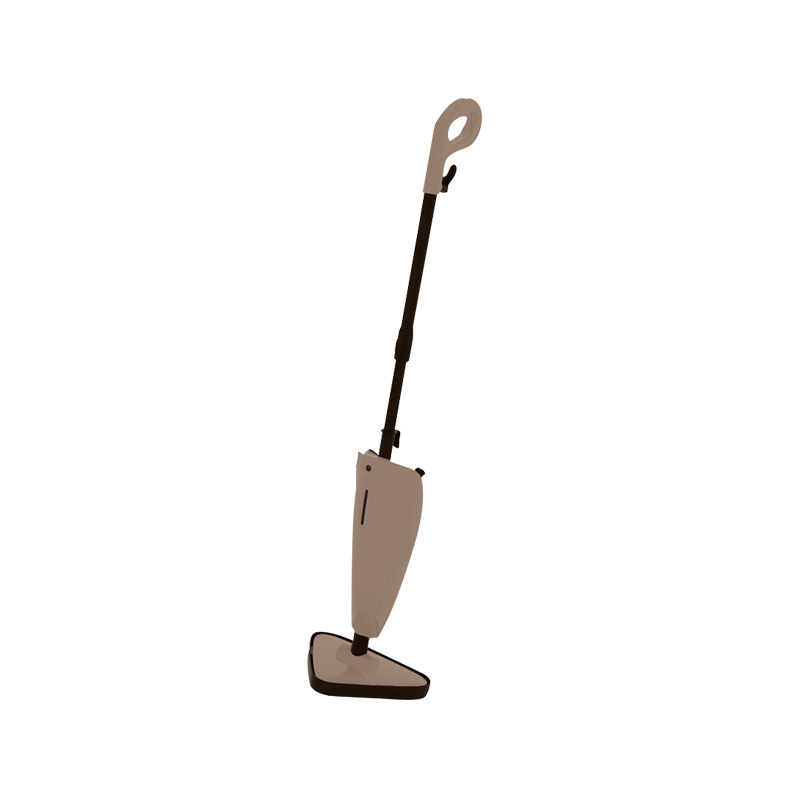 TMSM-002 1500W Steam Cleaning and Disinfection Mop with Large TankThis steam mop heats water to 120°C, offers an 800ml tank and 360-degree rotating head, providing efficient floor and countertop disinfection for homes and commercial settings.View Product →
Cleaning grout with steam is effective for one reason: heat, vapor and mechanical action arrive exactly where a mop cannot reach. The technique is discipline, not magic. Assess the grout first, vacuum before you steam, use distilled water, keep the nozzle moving, wipe immediately, dry the room and seal the joints only when they are fully dry.
When the grout is sound and the soiling is ordinary, steam performs in minutes what scrubbing performs in hours. That is the standard we hold our own products to, and it is a realistic expectation for anyone who follows the steps above. Clean grout is not about scrubbing harder; it is about putting the right energy in the right place and letting physics finish the job.
Related Products

Address
East Zone Development Zone Lingshan Town Yuyao City Zhejiang P.R.C.
Tel
+86-18905840666 / +86-574-62067822
+86-15905848828
QR CODE
 Wholesale Multifunctional Steam Cleaner Manufacturers

 English
 Español