2026-08-13
One steam cleaner manual tells you to use only distilled water. Another manual, from a different manufacturer, warns that distilled water can damage the machine. Both instructions are technically correct for the machines they ship with, and the contradiction confuses thousands of owners every year. The difference is not marketing. It is engineering, and once you understand two or three design details, the right choice for your own machine becomes obvious.
Here is the conclusion first. Distilled water prevents mineral scale, and mineral scale is the most common cause of steam cleaner failure. That makes distilled water the best operating fluid for the majority of steam cleaners, especially machines with stainless steel boilers and float-type or mechanical water-level sensing. However, a minority of machines rely on the electrical conductivity of water to detect the fill level and control the heating element. Distilled water conducts almost no electricity, so those machines can refuse to start, flash an error, or shut off even when the tank is full. For that group, manufacturers correctly tell you to use tap water or another water type with some mineral content.
The rest of this article walks through the chemistry behind distilled water, the mechanism of scale damage, the reasons manufacturers disagree, and a practical decision process you can apply to any steamer: a kitchen handheld unit, a steam mop, or a professional machine used for auto detailing.
Distillation is one of the oldest water purification methods. Water is heated until it boils and turns into steam; the steam is collected and condensed back into a liquid, leaving dissolved solids behind in the boiling chamber. Because calcium, magnesium, chlorine, sediment, and most other impurities do not evaporate with the water, the condensed result is almost completely pure. Typical distilled water has a total dissolved solids (TDS) reading of 0 to 5 parts per million, compared with roughly 100 to 400 ppm for ordinary tap water.
That purity is exactly what a steam boiler wants, because the minerals left behind when tap water evaporates are the same minerals that build up as scale. But purity has side effects. Distilled water has almost no buffering capacity, and it conducts almost no electricity. Those two properties explain most of the conflicting advice you will read about it, and we return to both of them in the sections below.
Distilled water is often grouped with demineralized water, deionized water, and reverse osmosis water, but they are produced differently and behave slightly differently inside a boiler. The table below compares the common options using typical values.
| Water type | How it is made | Typical TDS (ppm) | Scale-forming minerals left | Conductivity |
|---|---|---|---|---|
| Tap water | Municipal supply or private well | 100-400 | High | High |
| Pitcher-filtered water | Activated carbon filtration | 90-400 | High (hardness remains) | Medium to high |
| Softened water | Sodium ion exchange | Similar total | Low (calcium replaced by sodium) | Medium to high |
| Reverse osmosis water | Membrane filtration | 10-50 | Trace | Low |
| Demineralized / deionized water | Ion exchange | 0-10 | None | Very low |
| Distilled water | Boiling and condensation | 0-5 | None | Very low |
The two columns that matter most for a steam cleaner are TDS and conductivity. TDS tells you how much scale-forming material will be left behind after heating. Conductivity tells you whether the machine's electronics can reliably detect the water level. A common misunderstanding is that a simple carbon filter makes water safe for a steam cleaner. Pitcher filters remove chlorine and improve taste, but they do not remove significant hardness, so the scale risk remains almost the same as tap water. We return to the practical consequences of each option in a later section.
Hard water contains dissolved calcium and magnesium, usually in the form of bicarbonates. When that water is heated to the temperatures inside a steam boiler, the bicarbonates decompose and precipitate as calcium carbonate and magnesium carbonate: the same white deposits that build up inside a kettle. The higher the hardness, the faster the layer accumulates.
A useful reference point: water with a hardness of 60 mg/L or less (measured as calcium carbonate) is considered soft; 61-120 mg/L is moderately hard; 121-180 mg/L is hard; and anything above 180 mg/L is very hard. If your supply is in the hard or very hard range and the machine is used regularly, visible scale can form in the heating chamber within weeks.
Scale is a poor conductor of heat. Once it coats the heating element, the element must run hotter to transfer the same amount of heat into the water. The sequence of problems follows a predictable pattern: steam output drops, the heating element overheats, thermal cutouts trip, steam paths become partially blocked, and eventually the unit stops producing steam or shuts down entirely.
The most common symptoms of scale accumulation are:
The speed of damage depends on the boiler architecture. A flash boiler, which is common in handheld steam cleaners, heats a small amount of water almost instantly inside a compact chamber. The heating surface is small and the heat density is high, so even a thin layer of scale has an outsized effect on performance. A reservoir or continuous-feed boiler, typical of larger stationary machines, holds more water and spreads heat over a wider surface, so it tolerates hardness longer, but the boiler is harder to clean when scale finally builds up.
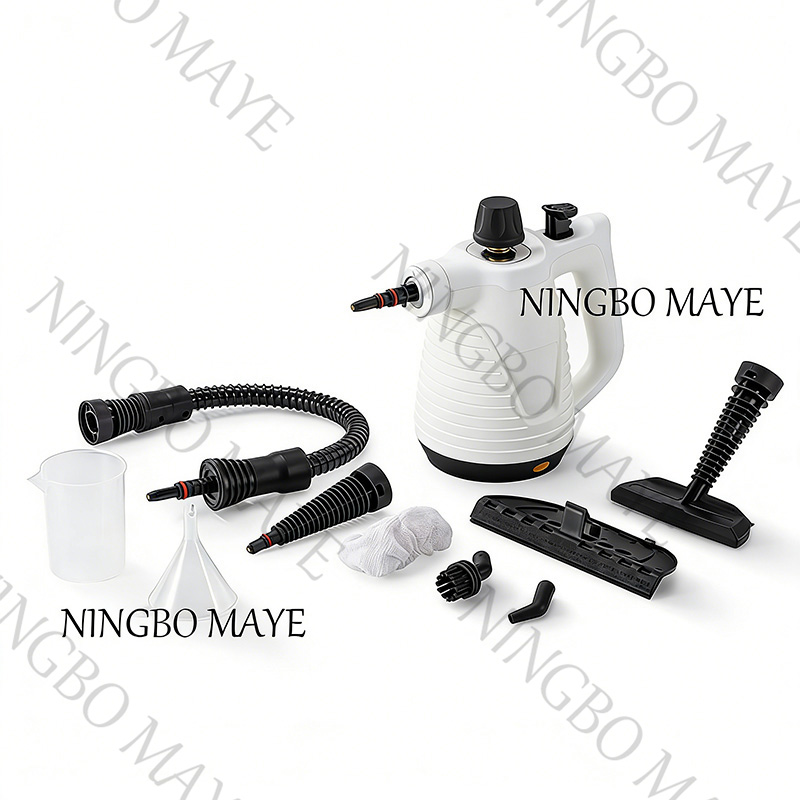
If you want the full technical background on how these designs differ, our guide to handheld steam cleaners from principle to application explains boiler architecture, heating control, and nozzle design in more depth.
The practical consequence for owners in hard-water areas is simple: a flash-boiler unit used several times a week will need frequent descaling when run on tap water, while the same unit on distilled water can go months without showing scale-related symptoms.
Distilled water has almost no dissolved minerals, which means it has almost no buffering capacity. As soon as it is exposed to air, it absorbs carbon dioxide and forms weak carbonic acid, giving it a pH of roughly 5.5 to 6.5. That is still close to neutral, far less acidic than coffee or soda, but in a machine with an unprotected aluminum boiler or soft-metal internal parts, long-term exposure to low-pH, mineral-free water can contribute to corrosion. This is the factual basis behind the warnings you occasionally see about distilled water being acidic.
Stainless steel, used in most quality steam boiler designs, is much more resistant to this effect. That is why the same warning appears frequently for budget-friendly aluminum boilers and rarely for stainless steel ones. If a manual explicitly says not to use distilled water, the boiler material is usually the reason.
The second reason is more technical but just as important. Many modern steam cleaners use the electrical conductivity of water to sense when the boiler is full, when water is flowing, or when the tank is dry. Distilled water is almost an electrical insulator, so a machine with such a sensor can behave erratically: it may refuse to start, display an error code, or cut power to the heating element even though the tank is full.
Demineralized and reverse osmosis water have the same limitation to a lesser degree. This is why some product reviews and forum threads report that a particular machine only works with tap water. The machine is not rejecting the water out of stubbornness; its sensor simply needs the ions in tap water to complete the circuit.
Warranty language matters more than any general rule. If the manual says that non-distilled water voids the warranty, then use distilled water. If the manual says never to use distilled water, the machine was validated with water that contains minerals, and you should follow that instruction and remove scale by cleaning and descaling on schedule.
If the manual says nothing specific, apply the decision framework in the next section. Meanwhile, remember that more expensive and more purified does not automatically mean safer for a particular boiler. The safest first step is always a two-minute check of the manual and a look at the boiler material.
Once you move beyond distilled water, the alternative that works for you depends on your water hardness, your machine's sensor design, and the manual's instructions. The following table compares the realistic options side by side.
| Water option | Scale risk | Conductivity | Typical cost | Best used when |
|---|---|---|---|---|
| Tap water, soft area | Low | High | Very low | The manual demands tap water and you descale on schedule |
| Tap water, hard area | High | High | Very low | Nothing else is allowed by the manual; expect frequent descaling |
| Pitcher-filtered water | Medium to high | Medium to high | Low | You want less chlorine; it is not a hardness solution |
| Softened water | Low to medium | Medium to high | Low | Hard-water area and the manual allows sodium water |
| Reverse osmosis water | Very low | Low | Medium | Stainless steel, sensorless machines; a practical compromise |
| Distilled water | Negligible | Very low | Medium | Sensorless machines and maximum scale prevention |
| Demineralized / DI water | Negligible | Very low | Medium to high | Auto detailing, spotless rinses, sensorless machines |
| Manufacturer steam water | Negligible | Machine-specific | High | The manual specifies it; zero guesswork |
Tap water is not automatically wrong. In a soft-water area, tap water with a well-maintained descaling routine can be perfectly acceptable, and it is essential for machines with conductivity sensors. In a hard-water area, tap water is a slow poison for the boiler: it will scale, the steam will weaken, and the heating element will strain until something breaks.
Pitcher-filtered water remains a common mistake. Carbon filters improve taste and remove chlorine and some sediment, but they do not remove hardness. If your tap water is hard, filtered water will still create scale, just more slowly than unfiltered tap water if the filter contains a small amount of ion-exchange resin.
Softened water replaces calcium and magnesium with sodium. It reduces scale formation, but it adds sodium to the boiler water, and some manufacturers specifically discourage softened water because of this. If you have a whole-house softener, check the manual before connecting your steam cleaner to a softened supply.
Reverse osmosis water is the closest practical alternative to distilled water. It strips most minerals and has low but not zero conductivity, which makes it a useful compromise for machines that tolerate low-mineral water but refuse to work with completely non-conductive distilled water.
Demineralized or deionized water, often called spotless water in the auto detailing world, behaves much like distilled water: excellent scale prevention, very low conductivity, and the same sensor caveats. Detailing professionals who use steamers on car interiors typically prefer DI water to avoid spotting and mineral residue on glass, plastic trim, and upholstery. If your steamer is used for detailing, the water choice matters not only for the boiler but also for the streaks left behind on the surfaces you clean.
This last step is the most practical advice we can offer. A single test session with distilled water tells you instantly whether your machine's sensor accepts low-conductivity water. If it does, you get all the scale-prevention benefits without any guesswork.
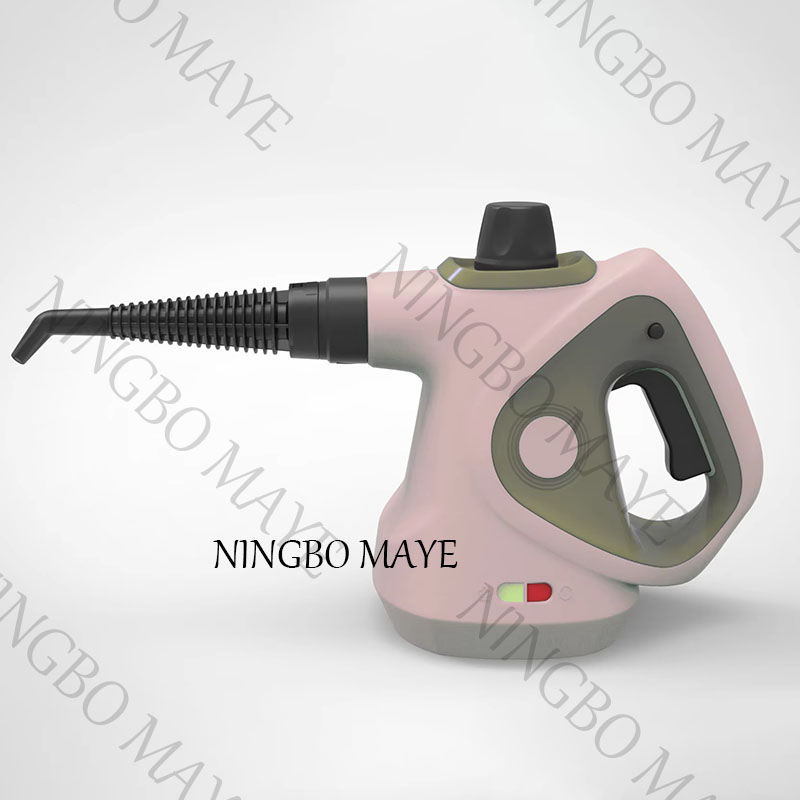
When you are comparing models and want to know whether a particular unit will accept distilled water, read the product documentation before you buy. For example, if the TM168 handheld steam cleaner is on your shortlist, check its water and descaling requirements in the listing and confirm them directly with the supplier before ordering.
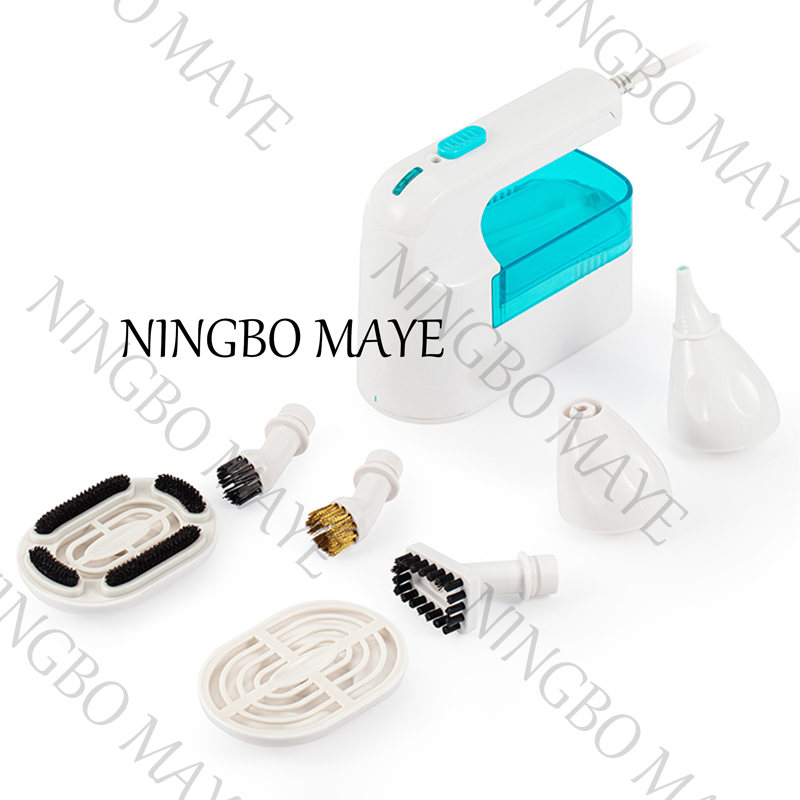
 Custom TM-168 1100W 4-in-1 High Temperature Pressure Handheld Steam Vacuum SupplNingbo Maye Electric Appliance Technology Co., Ltd. is China TM-168 1100W 4-in-1 High Temperature Pressure Handheld Steam Vacuum Supplier...View Product →
Some owners of conductivity-sensing machines mix a small amount of tap water into distilled water, usually 10 to 20 percent, to give the sensor enough ions while keeping the overall mineral content low. This is a pragmatic workaround, but use it only if the manual does not prohibit mixing and you are prepared for a small increase in scale risk. Test the blend before relying on it, and confirm that the machine produces full steam without error codes.
Do not add vinegar, essential oils, or floor cleaner to the water tank of a steam cleaner. Vinegar is a descaler, not a long-term operating fluid; oils and fragrances can clog the nozzle and coat the boiler; and commercial steam-booster solutions are only safe in machines designed for them. If you want a scent or a stronger cleaning effect, apply the product to the surface or the cleaning cloth, never to the water tank.
Keep distilled water in a sealed food-grade container, away from direct sunlight, and never leave the cap off. Because distilled water readily absorbs things from the air, including carbon dioxide, dust, and even microbes in a dirty environment, an open container gradually loses its purity. A sealed store-bought bottle kept in a cool cabinet stays usable for many months.
When scale does form, the correct remover depends on the boiler metal. Citric acid or sulfamic acid descalers work well on stainless steel; use a product approved by the machine manufacturer whenever possible. Dilute exactly as instructed and never leave acid sitting in the boiler overnight. After descaling, run at least two full tanks of clean water through the unit to flush every trace of acid before using it again.
If a machine has already suffered severe scaling, the first sign is weak steam or a burnt smell from the heating element. In that situation, do not keep running the unit in the hope that the scale will clear itself. Stop, descale, and if the element has already overheated, have it inspected or replaced rather than risking a more expensive failure.
Some steam cleaners include a water filter or descaler cartridge to make tap water safer for the boiler. These work by reducing hardness before the water reaches the heating chamber, but they are consumables: a saturated filter stops protecting the boiler and becomes a maintenance cost of its own. If your machine has one, replace it on the manufacturer's schedule. If you are about to buy a machine and the filter cartridge is expensive, factor that cost into the total price of ownership.
For both household buyers and professional purchasers, water compatibility deserves the same attention as steam pressure and heating time. A machine that fails because the wrong water was used is one of the most common returns in the steam cleaner category, and the manual's water policy is where the problem starts.
As a manufacturer that builds household appliances and steam cleaning equipment for export markets in Europe and the Americas, we treat water compatibility as a design requirement rather than a footnote. We publish practical guidance such as the key considerations to keep in mind when choosing a handheld steam cleaner because water behavior is part of what determines whether a product lasts one year or five.
If you are reviewing our household steam cleaner collection, compare the boiler and sensor details across the models and ask the same questions you would ask any supplier: what water was used in the lifetime tests, whether distilled water is accepted, and how the descaling procedure works. A supplier who gives clear, specific answers is sending a much stronger signal than one who quotes only the maximum steam pressure.
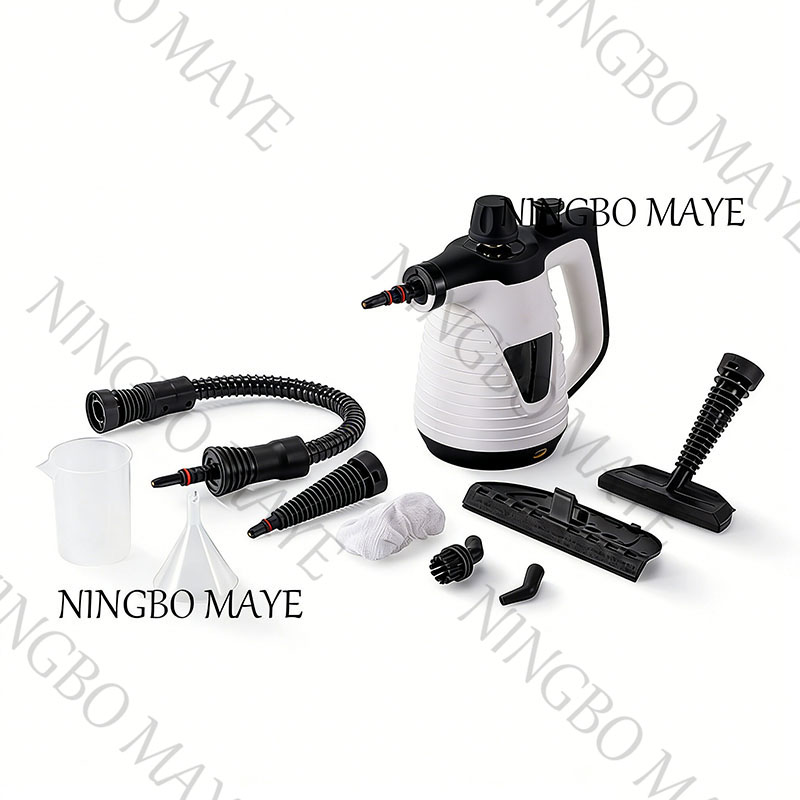
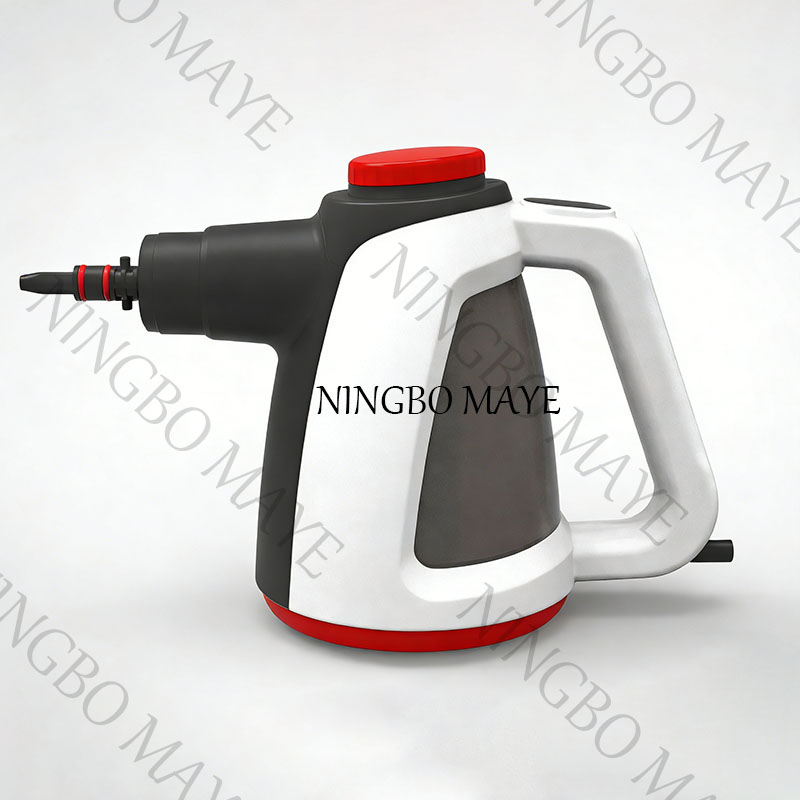 Wholesale Handheld Steam Cleaner Manufacturers, SuppliersMaye Electric Appliance Technology Co., Ltd. is China Household Handheld Steam Cleaner Manufacturers and Suppliers, offer Wholesale All ...View Product →
If you buy steam cleaners for resale, the water instruction page in the manual is a product-specification issue, not a marketing detail. In markets with very hard water, a machine sold with a distilled-water requirement creates an ongoing cost for the end user; a machine sold with a tap-water requirement needs a visible descaling schedule. Both policies are valid, but the wrong match for the market produces warranty claims and dissatisfied customers. Confirm that the manual you intend to ship matches the water reality of your target region and that the model has actually been validated for it.
Distilled water is, for most steam cleaners, the best fluid you can put in the tank. It prevents the scale that destroys boilers and sensors, it leaves no residue on the surfaces you clean, and it costs little compared with the repair or replacement of a scaled-up machine. The only serious caveats are machines with uncoated aluminum boilers and machines with conductivity-based water sensors, and both are easy to identify from the manual.
The final rule is short. Check the manual. Check the boiler material and the sensor type. If the manual allows distilled water and the machine runs without error, use it and keep a simple descaling routine as a safety net. If the manual objects to distilled water, follow the manual and accept the descaling schedule as the price of the design. And when you are shopping, make water compatibility one of your comparison points: ask the supplier what water the boiler is validated with, and check the documentation for a model such as the JQ688A household steam cleaner before you commit.
 Automotive Electrical Appliances Manufacturers, FactoryAs China Automotive Electrical Appliances Manufacturers and Factory, Ningbo Maye Electric Appliance Technology Co., Ltd. supply Custom Au...View Product →
Water choice will not make a bad steam cleaner good, but it will make a good steam cleaner last much longer.
Related Products

Address
East Zone Development Zone Lingshan Town Yuyao City Zhejiang P.R.C.
Tel
+86-18905840666 / +86-574-62067822
+86-15905848828
QR CODE
 Wholesale Multifunctional Steam Cleaner Manufacturers

 English
 Español