2026-10-08
A few years into living with a glass shower enclosure, most people notice the same three things: a chalky, faintly greasy band across the middle of the door at roughly hip height, grout lines that have stopped looking grey and started looking beige, and a silicone bead along the tray that has drifted from bright white to a soft, slightly grubby ivory. Spray-and-wipe products handle the middle of the panels reasonably well and almost nothing else. That is the moment a steam cleaner starts to look less like an impulse buy and more like a piece of equipment with a job to do.
The short answer comes first, because it saves time: a steam cleaner is the single most effective tool most households can buy for shower glass, glazed ceramic tile, and grout. It is a mediocre tool for thick limescale on its own, because steam does not dissolve calcium carbonate. And it is a genuinely risky tool for acrylic trays, natural stone, and silicone seals when it is used the way a thirty-second video suggests, with the nozzle parked against one spot until the dirt gives up.
Everything below explains why those three statements are true, how to sequence a shower clean so you never have to repeat a step, which surfaces to keep the nozzle away from, and what to check before buying a machine for a whole household or for a retail program.
Shower soil is not one substance. It is at least three, and they respond to heat very differently.
The first is soap scum, the insoluble calcium and magnesium salts that form when bar soap meets hard water, mixed with body oils, dead skin cells, and conditioner residue. This is the greasy grey film on glass and tile. Its oil fraction begins to soften at around 40 °C and flows freely well below steam temperature, so heat is genuinely useful here.
The second is hard water scale, crystalline calcium carbonate deposited where water sits and evaporates. Scale is not affected by temperature in any useful way. Water, hot or cold, does not dissolve it in meaningful quantities. Steam softens the binder around scale and loosens the film on top of it, but the mineral itself still needs an acid, a chelating agent, or mechanical removal with a blade or a mild abrasive.
The third is biological film: mold, mildew, and biofilm that colonize grout pores, silicone joints, and the drain area. Sustained heat above roughly 70 °C disrupts the proteins and cell structures involved, which is why steam is so effective on grout compared with a cold spray bottle.
A steam cleaner therefore wins on soap scum, mold, and grime, competes evenly on light scale, and loses outright on heavy scale. Understanding that division of labor is what separates a fifteen-minute shower clean from an hour of frustration.
Not every surface in a bathroom tolerates 100 °C or more. The table below reflects how the materials behave under a handheld or canister steam cleaner held at a normal working distance with continuous motion. Ratings assume the nozzle keeps moving; a stationary jet changes every answer.
| Shower surface | Steam suitability | Practical notes |
|---|---|---|
| Glazed ceramic wall tile | Excellent | Steam plus a microfiber wipe removes scum quickly; glaze is unaffected by heat. |
| Porcelain or enamel tray | Excellent | Watch the edges where the tray meets silicone; steam can force its way under a failing bead. |
| Tempered glass door and panels | Excellent | Best results with a squeegee or microfiber immediately behind the nozzle. Avoid cold water on hot glass. |
| Chrome and stainless fittings | Good | Steam lifts soap film from plating; dry immediately to avoid water spotting. |
| Cement-based grout | Excellent | The strongest use case. Follow with a soft brush; never a wire brush. |
| Epoxy grout | Good | Very heat tolerant, but the resin surface can dull if scrubbed while hot. |
| Silicone caulk | Use with care | Heat and pressure degrade the bead over time. Keep passes short and the nozzle moving. |
| Acrylic or fiberglass tray and enclosure | Risky | Many acrylic makers advise against steam; heat can soften and craze the surface. Test a hidden area first. |
| Natural stone such as marble or travertine | Avoid | Sealers can be heat sensitive, and acidic descalers are off-limits anyway. |
| Anodized or painted aluminum frames | Use with care | Finish is usually fine, but keep the jet off the joint between frame and glass. |
| Plastic curtains and liners | Risky | Thin PEVA can warp. Fabric curtains tolerate light steaming for odor control. |
The practical takeaway is simple. If the shower is tile, glass, and porcelain, steam is close to ideal. If it is acrylic with heavy scale and a stone accent wall, steam should be a secondary tool rather than the primary one.
A handheld steam cleaner typically produces steam at the nozzle in the range of 100 °C at atmospheric pressure, while pressurized boiler units can deliver 135 to 155 °C at the nozzle because the water is held above boiling point. That temperature does four things at once. It melts oily soil, it hydrates dried films so they release rather than smear, it expands trapped air and moisture inside grout pores, and the jet itself supplies low-pressure mechanical energy that carries loosened soil away.
The expansion point matters more than most people realize. Grout is porous. When steam penetrates a pore and heats the moisture already inside, the film lifts from the inside out. That is why grout responds so well to steam even when a brush and detergent have already failed.
Steam is fast, but it is not instantaneous. On a genuinely dirty glass door, one slow pass with the nozzle 50 mm from the surface, followed immediately by a microfiber wipe, will remove most of the film. Two or three passes clears the rest. Trying to finish in a single pass at speed usually leaves a haze that dries into visible streaks, and streaks are the most common complaint from first-time steam users.
The gap between a cheap handheld and a decent canister unit is not marketing. It shows up in how many minutes of steam you get before refilling, how wet the steam is, and how much of the shower you can finish without stopping.
Consumer handheld units generally run around 3 to 4 bar, while canister and larger handheld models reach 4.5 to 6 bar. Higher pressure does not clean better by itself; it improves reach into corners and helps clear grout lines faster. Temperature matters more for mold and grease. A unit that reaches 140 °C or more at the nozzle will handle biofilm in one or two passes where a lower-temperature unit needs three or four.
A pressurized boiler heats a sealed tank and then releases steam under pressure. It produces drier, hotter steam and is the better choice for a single thorough job. A continuous-fill or instant-heat design lets you top up the tank while working, which is convenient for large bathrooms but usually produces wetter steam and lower peak temperature. For shower work specifically, boiler units have the edge.
A 200 to 300 ml handheld reservoir typically yields 8 to 15 minutes of actual steaming. That is enough for one shower enclosure if you work efficiently, and not enough if you plan to do the grout, the glass, the fittings, and the floor in one tank. A 1.5 to 2 litre canister gives 30 to 60 minutes and turns a two-bathroom job into a single session.
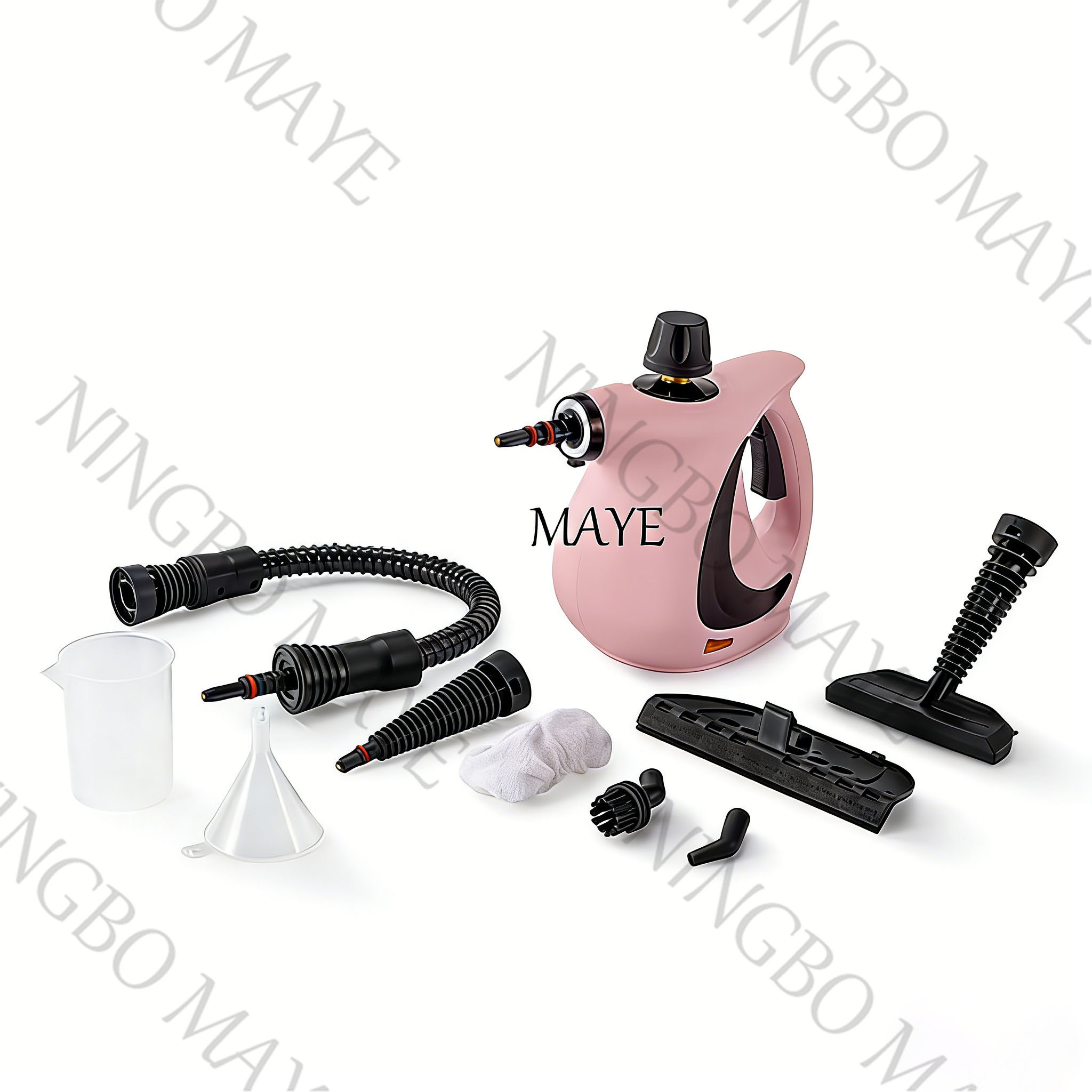
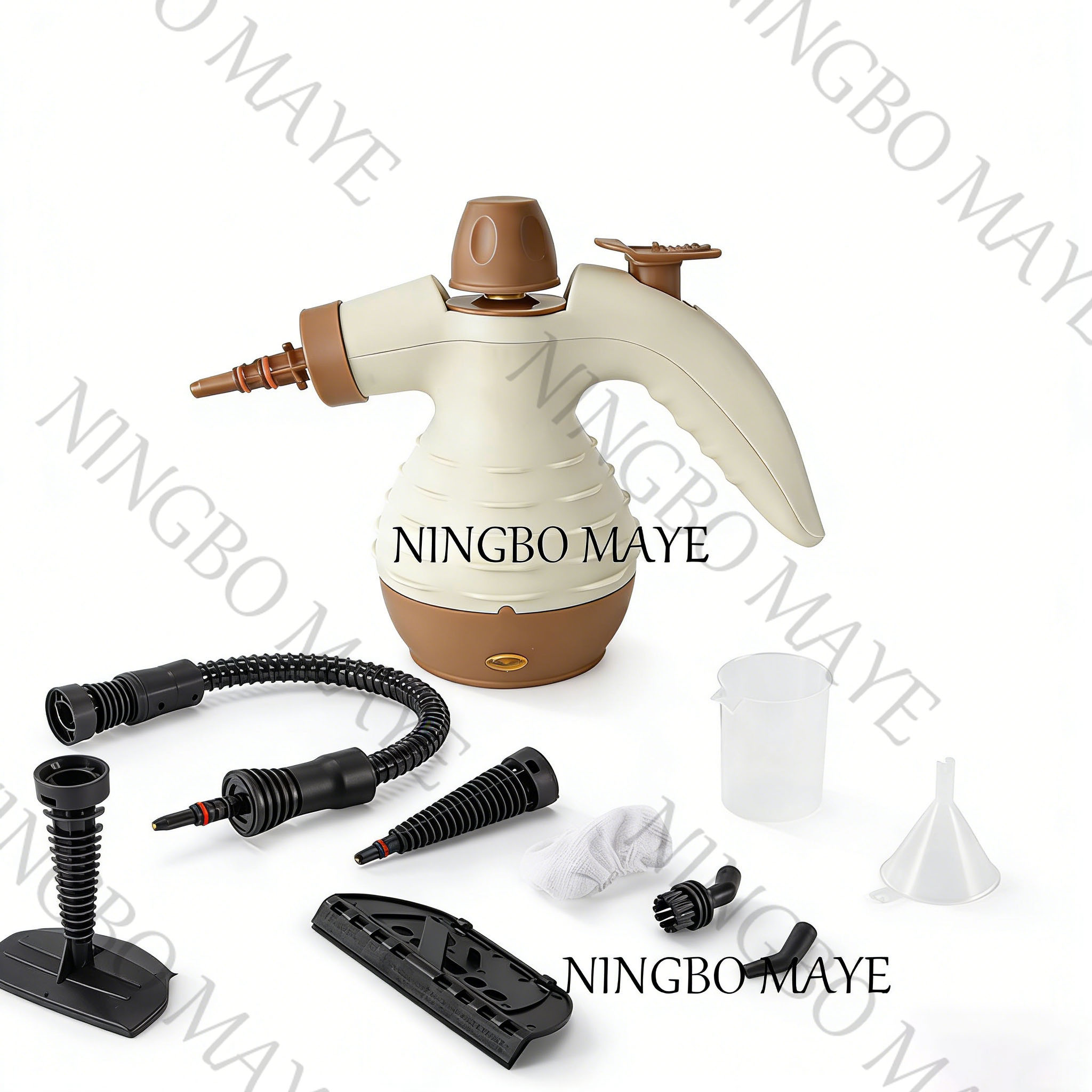
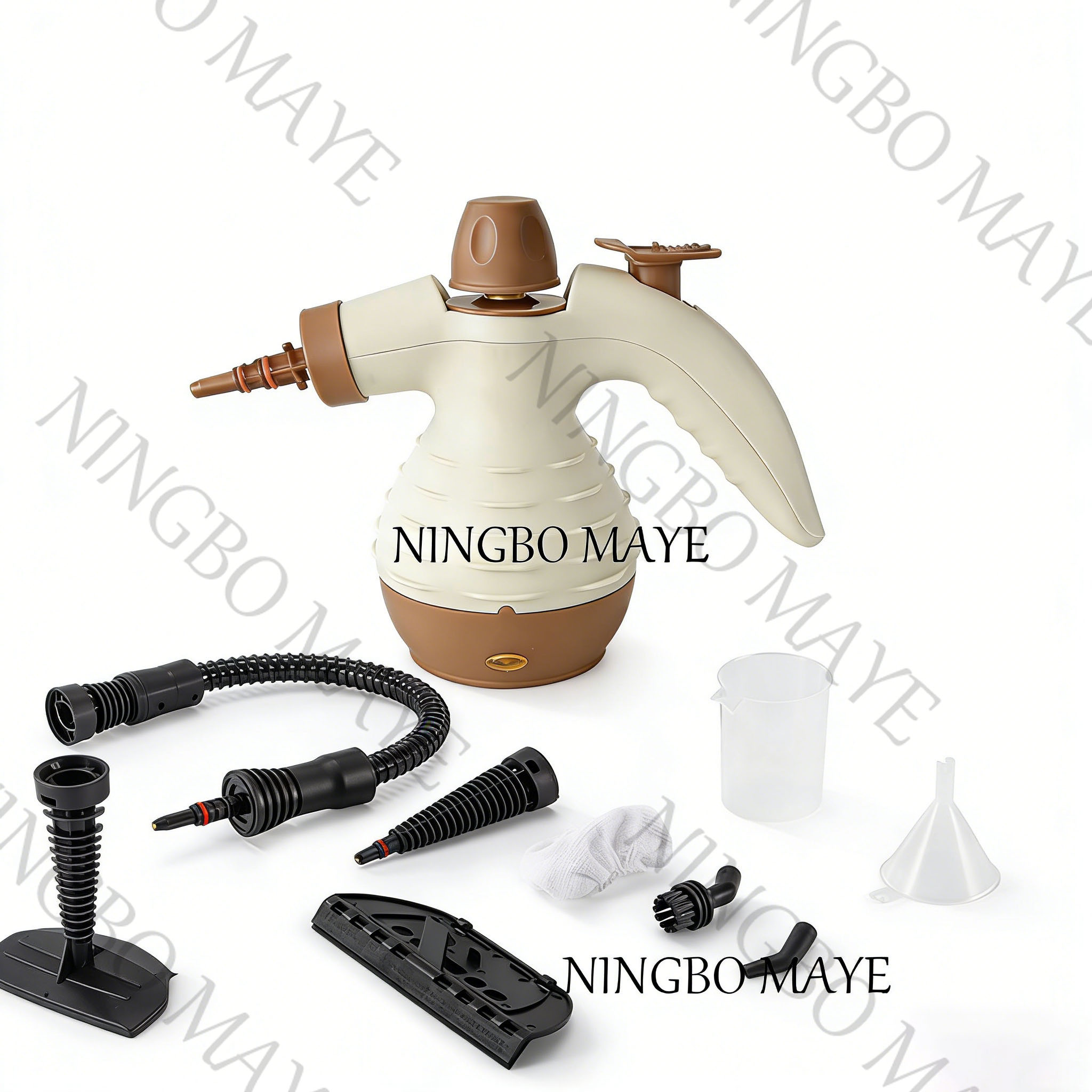
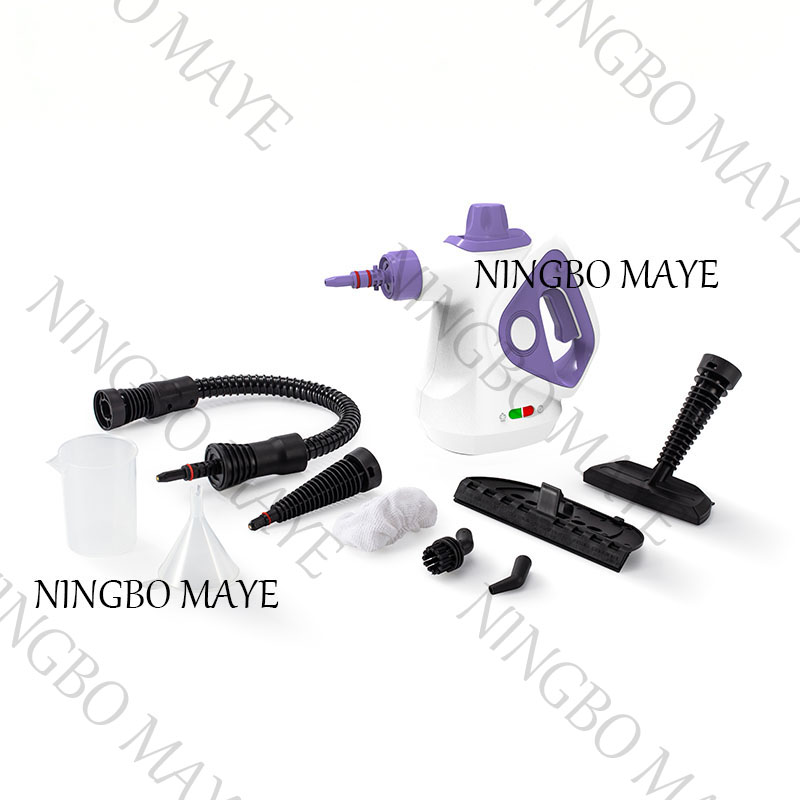 TM-377 Handheld Steam Cleaner for Home Multi-Surface CleaningA compact 900-1050W handheld steamer with 250 ml working capacity, 8-10 minutes per fill, and nine accessories for quick household touch-ups.View Product →
For a typical tiled shower enclosure of 900 by 900 mm with a glass door, a 900 to 1050 W handheld with a boiler and a squeegee attachment is usually enough. Buyers who also want to steam the bathroom floor, the kitchen grout, and the car interior should look at a unit with a larger reservoir rather than a higher pressure rating.
Sequence is the difference between a fifteen-minute job and a forty-minute one. Soil always travels downward, so every step below is arranged to keep dirty water from landing on something you have already finished.
Remove bottles, caddies, the shower head if it unscrews easily, and the bath mat. Then deal with scale before you bring out the steamer. Apply a citric acid or vinegar-based descaler to the glass, the shower head, and any thick white deposits, leave it five to ten minutes, and rinse. Steam will not dissolve that layer, and steaming over it just spreads a chalky film.
Start at the top of the tile and move down in overlapping horizontal passes roughly the width of the nozzle. Hold the nozzle 50 to 100 mm from the surface and keep it moving. Follow each pass immediately with a microfiber cloth. If you steam the whole wall and then start wiping, the first section will have dried and re-bonded into a haze.
Glass rewards a specific technique. Work in vertical strips about 150 mm wide, from the top of the panel to the bottom, and run a squeegee down each strip directly behind the nozzle. Do not let the steam condense and dry on the glass. The hip-height band that resists spray cleaners is usually two layers thick, soap scum over scale, so it may need a second pass and a light pass with a non-scratch pad.
Switch to the narrow jet nozzle and treat grout as a series of short segments rather than one continuous sweep. Two or three slow passes along a 300 mm line, followed by a soft brush, lifts more than one aggressive pass. The sliding door track and the inside corners of the tray collect a mixture of soap scum and biofilm; those areas benefit from the small round brush attachment and a final wipe with a cloth wrapped around a blunt tool.
Steam the shower head and the valve trim last, from a distance, and dry the chrome immediately with a separate cloth to avoid spotting. A brief pass around the drain ring reduces odor-causing biofilm. Finish by running the exhaust fan and leaving the door or curtain open for at least twenty minutes; trapped humidity undoes a surprising amount of the work.
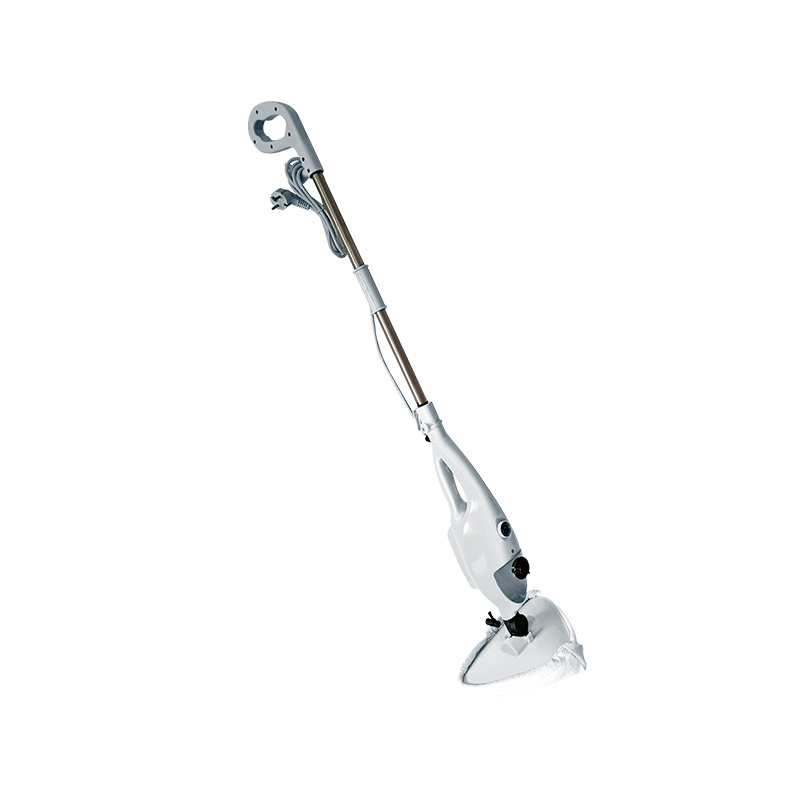
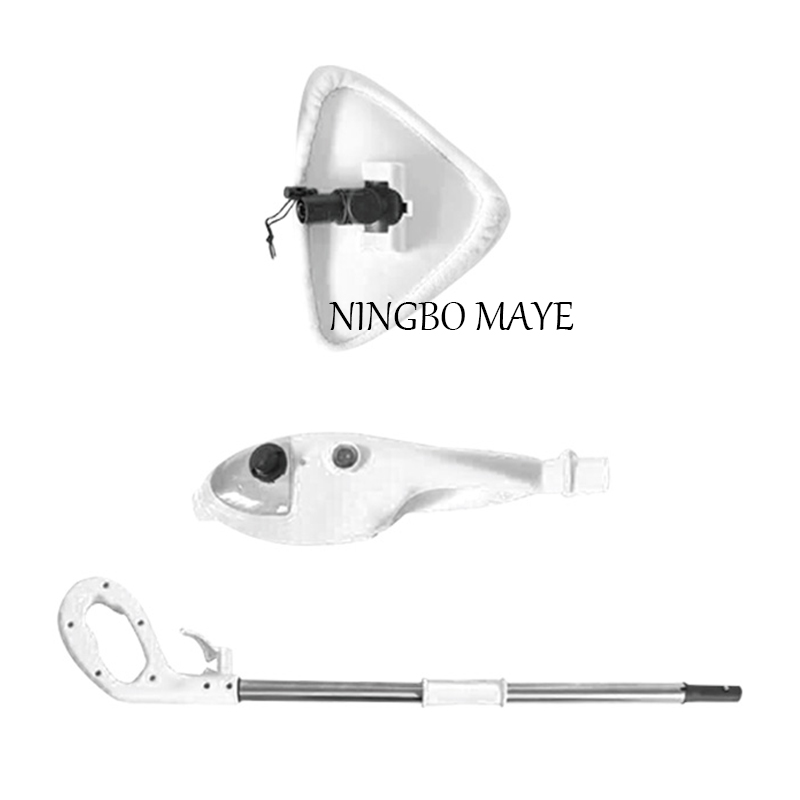
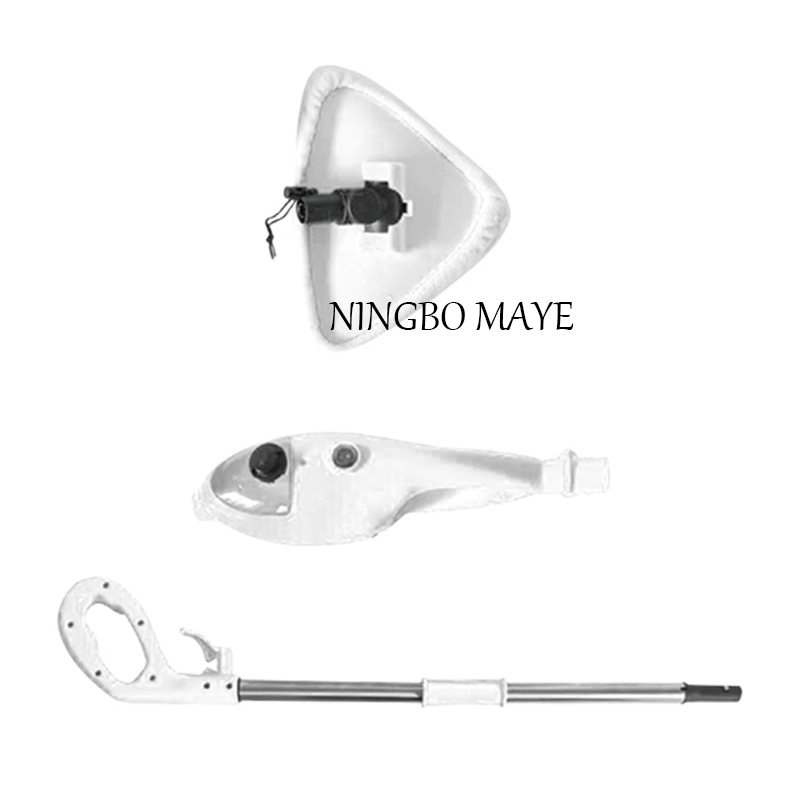 TMSM-001 Detachable Floor Steam Mop for Hardwood Tile CarpetA 1300W detachable steam mop with 400 ml tank, adjustable steam, and 15 accessories for hard floors, tiles, and carpets.View Product →
Most steam cleaner failures that get blamed on the machine are actually water problems. Boilers accumulate scale exactly the way a shower screen does, and a scaled boiler loses pressure, spits water instead of steam, and eventually trips its thermal cutout.
If your tap water is hard, meaning roughly above 120 mg per litre of calcium carbonate, use distilled or demineralized water. It costs very little per fill and doubles or triples the working life of the heating element. In soft-water regions tap water is acceptable, but descaling the boiler every twenty to thirty uses is still worth the ten minutes. A full explanation of what distilled water does and does not fix for steam cleaners is covered in this guide to scale-free steam cleaning, which is worth reading before you commit to a routine.
There is a second-order effect that matters for anyone maintaining a fleet of machines in a rental property or a hotel: scale damage is the most common warranty claim on steam appliances, and it is almost always avoidable with a two-dollar bottle of distilled water.
These are the failures that actually show up in repair shops and warranty claims, in roughly descending order of frequency.
The common thread is dwell time. Steam is a moving tool. Every one of these problems comes from holding it still.
Manufacturers overpromise on time savings. Here is a realistic comparison for a standard 900 by 900 mm tiled shower with a glass door and moderate soil, done by one person.
| Method | Typical time | Effort profile |
|---|---|---|
| Spray cleaner, sponge, rinse, squeegee | 25 to 35 minutes | Moderate scrubbing, repeated rinsing, chemical smell |
| Steam cleaner, full sequence | 18 to 30 minutes including heat-up | Low scrubbing, no rinsing, more equipment handling |
| Steam cleaner, glass and grout only | 8 to 12 minutes | Very low effort, highest visible return |
| Spray cleaner on heavy scale plus scrubbing | 45 to 70 minutes | High effort, often incomplete |
Two conclusions follow. First, steam saves the most time on grout and glass, which are precisely the two surfaces people hate cleaning. Second, steam does not replace a descaler, so budget five minutes for an acid pre-treatment on the glass and the shower head and the comparison above still holds.
For households with two or more bathrooms, the economics improve further. The heat-up and cool-down overhead is paid once, and the marginal cost per shower drops to roughly ten minutes.
If the goal is one machine for one household, the list below is enough. If the goal is a container load for retail, the same list becomes the basis for a specification sheet.
Buyers sourcing handheld steam cleaners for retail chains or private label programs tend to care about three things that never appear on a product page: whether the factory can hold tolerances across a run of twenty thousand units, whether the certification file is real and current, and whether the supplier has already passed the social compliance audits that large European retailers require.
Those are factory-level questions rather than product-level ones. A manufacturer with in-house injection molding controls the housing, the tank components, and the color matching directly instead of buying them in, which shortens the loop when a tooling change is needed. A quality system certified to ISO 9001, combined with product certifications such as CE, GS, UL, E-mark, PAHS, and RoHS, is the minimum documentary baseline for most European and North American retail programs. Factory inspections from retail groups and social compliance audits such as BSCI are the practical gate that determines whether a purchase order can be placed at all.
Ningbo Maye Electric Appliance Technology is one example of the type of supplier this profile describes: a manufacturer based in Yuyao, Zhejiang, founded in 2015, operating a plant of roughly 23,000 square metres with about 200 employees, in-house injection molding, an engineering team covering design through production, and a product range that includes handheld and household steam cleaners alongside automotive and personal care appliances. It exports mainly to Europe and the Americas and has passed LIDL, ALDI, and BSCI factory checks. More detail on the company and its manufacturing scope is available on the main site.
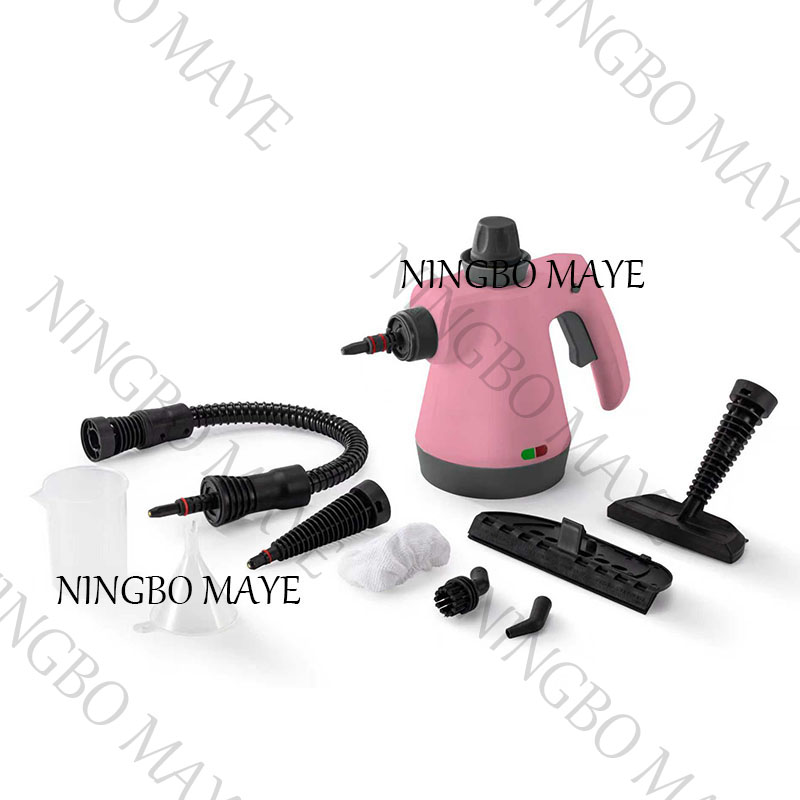
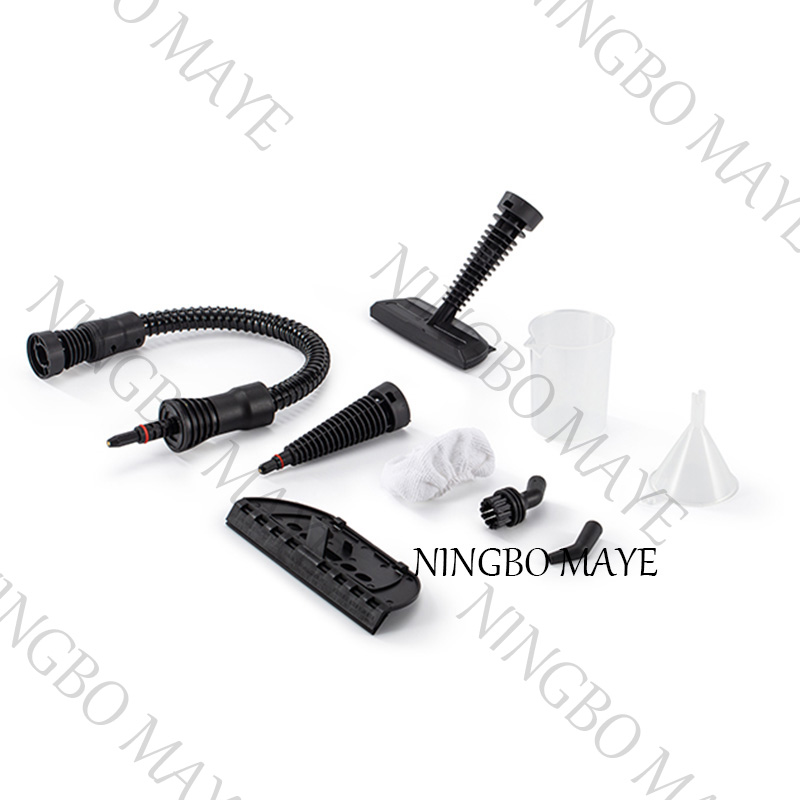 TM688 Multipurpose Handheld Upholstery Steamer Cleaner with 9 AccessoriesA 900-1050W handheld steamer with 250 ml working capacity and nine accessories, aimed at sofas, mattresses, curtains, and car interiors.View Product →
When comparing quotes, ask for the reservoir material and its food-contact or heat-aging test data, the pressure vessel test report, the actual nozzle temperature measured at the accessory tip rather than at the boiler, and the spare parts list with lead times. Those four items separate a supplier who can support a retail program from one who can only fill a first order.
A steam cleaner is a small pressure appliance, and it rewards five minutes of maintenance a month. After each session, empty the reservoir, run the unit briefly to clear residual water from the hose, and wipe the nozzle. Every twenty to thirty uses in a hard water area, fill with a citric acid solution, run it cold through the system, let it sit, then flush. Store the unit upright with the cap loose and the attachments detached so seals do not take a permanent set.
Descaler for the appliance is a different product from descaler for the shower, and mixing them is a common and expensive mistake. The appliance-safe versions are formulated to be non-corrosive to the boiler and the seals.
Steam works on showers because it attacks the two things that make shower cleaning unpleasant: the oily film that smears when you scrub it, and the porous grout that never seems to come clean. It does not work on thick mineral scale, and it should never be parked against silicone, acrylic, or stone. Treat it as the middle of a three-part routine, an acidic pre-treatment for scale, steam for scum and grout, and a dry cloth to finish, and the hip-height band on the glass door stops coming back as quickly as it used to.
Buy for the surface you actually have, not the surface in the advertisement. A tiled shower with a glass door is the ideal case for a handheld boiler unit. An acrylic enclosure with a stone accent is not, and no amount of pressure or temperature will change that.
Related Products

Address
East Zone Development Zone Lingshan Town Yuyao City Zhejiang P.R.C.
Tel
+86-18905840666 / +86-574-62067822
+86-15905848828
QR CODE
 Wholesale Multifunctional Steam Cleaner Manufacturers

 English
 Español