2026-07-23
A steam cleaner uses only water heated to above 100 degrees Celsius to produce pressurized dry steam that sanitizes surfaces and dissolves soils without chemical agents. A carpet cleaner (also called a hot water extractor or carpet shampooer) injects a mixture of hot water and cleaning detergent into the carpet pile under pressure and simultaneously extracts the dirty water with a powerful vacuum, physically removing dissolved soils and suspended particles from deep within the carpet. These two machines serve related but distinct purposes: a steam cleaner sanitizes and loosens surface contamination using heat and pressure; a carpet cleaner physically removes that contamination by flushing and vacuuming it out.
For a household that wants one machine to clean floors, bathrooms, kitchens, car interiors, and upholstery without chemicals, a home steam cleaner is the more versatile choice. For a household with heavily soiled wall-to-wall carpets where professional-level soil extraction is the priority, a carpet cleaner extracts more total soil per session. Many experienced cleaning professionals use both in sequence: the home steam cleaner loosens and sanitizes first, and the carpet cleaner extracts the loosened soils afterward for the best possible deep-clean result.
What is vapor distilled water in the context of steam cleaners is water that has been purified by vaporization and condensation, removing all dissolved minerals, salts, and contaminants. Using vapor distilled water (or standard distilled water, which achieves the same mineral-free result) in any home steam cleaner or Household Steam Cleaner is the single most important maintenance practice that extends the machine's service life from 2 to 3 years on hard tap water to 8 to 12 years on mineral-free water, because limescale deposits from tap water's dissolved calcium and magnesium progressively block the steam output channels and coat the heating element.
The debate between steam cleaner vs carpet cleaner appears frequently because both machines are marketed toward the same outcome (clean carpets and upholstery) but work through completely different physical and chemical mechanisms. Understanding the fundamental difference between steam cleaner vs carpet cleaner prevents expensive purchase mistakes and helps buyers identify which machine solves their specific cleaning problem.
Steam cleaner mechanism: Water is sealed in a boiler and heated to 115 to 165 degrees Celsius, creating pressurized steam at 1.5 to 6 bar depending on the model. This steam is released through nozzles and attachments onto the target surface. The steam's thermal energy dissolves grease and soap scum through heat, kills bacteria and dust mites through sustained high-temperature contact, and physically penetrates porous materials including grout, tile joints, and carpet fiber bases through pressurized vapor penetration. The steam then condenses on the surface, and the user wipes or blots away the loosened contamination with a microfiber cloth or attachment pad. A steam cleaner on carpet deposits a small amount of moisture (typically 5 to 15% moisture content steam) and then the user physically removes the loosened surface contamination, but the machine itself does not extract the contamination.
Carpet cleaner mechanism: A solution tank holds a mixture of water (heated to 60 to 80 degrees Celsius in most models) and carpet cleaning solution. A high-pressure pump injects this solution through spray jets into the carpet pile under the cleaning head. Simultaneously or immediately after, a powerful vacuum motor creates suction through a separate recovery path that lifts the dirty water, dissolved soils, and suspended particles out of the carpet into a recovery tank. The combined injection-and-extraction mechanism physically removes contaminants from the carpet rather than simply loosening them at the surface.
| Cleaning Task | Steam Cleaner | Carpet Cleaner | Winner |
|---|---|---|---|
| Killing bacteria and dust mites in carpet | Excellent (heat kills pathogens) | Good (hot water plus solution) | Steam cleaner |
| Removing deep embedded soil from carpet | Poor (does not extract) | Excellent (injection and extraction) | Carpet cleaner |
| Bathroom tile and grout cleaning | Excellent | Not suitable | Steam cleaner |
| Kitchen appliance degreasing | Excellent | Not suitable | Steam cleaner |
| Car interior carpet cleaning | Good (surface treatment) | Good (portable models) | Both (sequential use is best) |
| Upholstery odor elimination | Excellent (heat denatures odor compounds) | Good (extraction removes source) | Steam cleaner |
| Speed of surface drying after treatment | Fast (30 to 60 minutes) | Slow (2 to 8 hours) | Steam cleaner |
| Chemical residue left on surface | None (water only) | Possible (cleaning solution residue) | Steam cleaner |
Professional carpet cleaners and auto detailers routinely use both technologies in sequence for maximum results. The correct sequence is always steam cleaner first, carpet cleaner second:
This combined approach achieves better soil removal than either machine alone, because the steam loosens contamination that hot-water extraction alone cannot dislodge, and the carpet cleaner removes contamination that steam cleaning alone cannot extract. Professional carpet cleaning services that use steam pre-treatment followed by hot water extraction consistently rate their customer satisfaction scores higher than services using extraction alone.
A steam cleaner for car detailing has become the standard tool in professional auto detailing operations over the past decade because it achieves cleaning results that traditional spray-and-wipe methods cannot match, particularly on interior surfaces where conventional wet cleaning creates moisture problems in enclosed spaces, damages electronic components, and leaves behind residues that degrade premium leather, Alcantara, and soft-touch plastics.
Traditional car interior cleaning methods including spray detailers, fabric cleaners, and all-purpose cleaners have three significant limitations that a steam cleaner for car detailing eliminates:
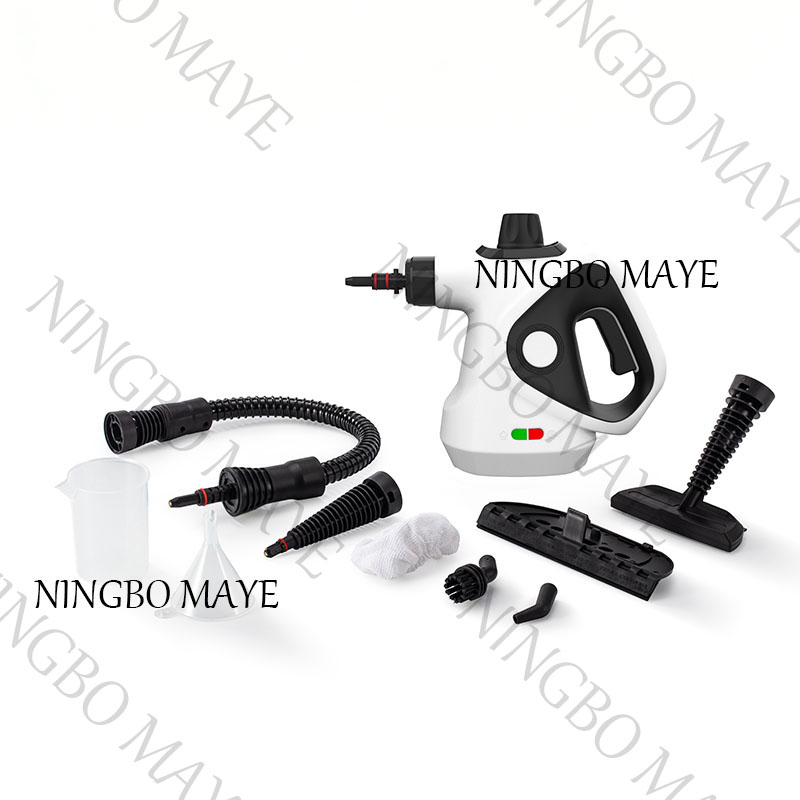
A quality steam cleaner for car detailing with the appropriate attachment kit covers every interior surface in a vehicle cleaning session:
Not every home steam cleaner performs equally well as a steam cleaner for car detailing. The following specifications determine whether a unit delivers professional-grade results in a vehicle interior:
The car upholstery steam cleaner application is one of the most commercially valuable uses of steam cleaning technology because vehicle upholstery accumulates a unique combination of body oils, food residues, pet contamination, and embedded particulate over years of use that conventional cleaning methods cannot adequately address without the risk of surface damage or moisture saturation. Professional auto detailers who have adopted car upholstery steam cleaner techniques consistently report that steam-treated vehicles achieve higher customer satisfaction ratings and generate more repeat business than vehicles cleaned by conventional spray-and-wipe methods.
Leather vehicle upholstery requires a different steam treatment approach than fabric because leather is a natural material that responds differently to heat and moisture. Applied correctly, a car upholstery steam cleaner produces excellent results on leather by removing the surface grime and oxidation products that make leather appear dull and cracked. Applied incorrectly, steam can dry out leather, raise the grain, or bleach color from untreated or poorly protected leather surfaces. The correct technique for leather:
Identifying the best home steamers for cleaning for a specific household requires matching the machine's technical specifications to the cleaning tasks most frequently performed and the surfaces most commonly encountered in that household. The best home steamers for cleaning are not necessarily the most expensive ones: the correct match between machine capability and actual use pattern produces better results and lower total cost than over-specified premium machines that sit unused because their setup time discourages daily use.
The best home steamers for cleaning market divides into three distinct product categories, each optimized for a different household profile:
| Specification | Budget Range | Mid-Range | Premium Range | Why It Matters |
|---|---|---|---|---|
| Operating pressure | 1.0 to 2.0 bar | 2.5 to 3.5 bar | 3.5 to 6.0 bar | Determines steam penetration and cleaning power |
| Tank capacity | 100 to 250 ml | 400 to 800 ml | 1,000 to 1,800 ml | Determines session length before refilling |
| Heat-up time | 45 to 90 seconds | 20 to 45 seconds | 3 to 8 minutes (cylinder) | Affects daily use convenience |
| Attachment count | 2 to 4 pieces | 5 to 8 pieces | 10 to 20 pieces | Determines surface coverage of the machine |
| Continuous fill capability | No | No | Yes (on premium models) | Unlimited session length for large-home use |
A home steam cleaner operates on a simple but profoundly effective physical principle: water heated under pressure to temperatures well above its normal boiling point is released as a stream of high-energy vapor that simultaneously delivers thermal energy, pressurized penetration, and moisture to target surfaces. The home steam cleaner's cleaning action has no chemical counterpart because no spray cleaner can simultaneously deliver 130-degree heat, 3-bar pressure, and zero residue to a surface in the way steam does.
Every time a home steam cleaner's nozzle is applied to a surface, three distinct cleaning mechanisms operate simultaneously:
A comprehensive home steam cleaner program covers every room in the home with a different primary focus in each area:
Knowing how to use steamer correctly on different surface types is as important as owning the right machine, because the same steam cleaner used with incorrect technique can damage sensitive surfaces or produce disappointing results on challenging surfaces that should respond well to steam. The technique variables that matter most are holding distance, movement speed, steam output level, and the choice of attachment.
Tile and grout are the most steam-responsive surface combination in any home, and the correct technique produces results in 5 to 10 minutes that would take 30 to 45 minutes of chemical spray and manual scrubbing to approach:
The most critical technique element for how to use steamer on any fabric is maintaining the 3 to 5 cm stand-off distance between nozzle and fabric surface rather than placing the nozzle in direct contact. This gap allows the steam to diffuse slightly before contacting the fabric, producing a wider, gentler steam distribution that treats a larger area without over-concentrating heat and moisture at a single point:
The question of what is vapor distilled water appears frequently in steam cleaner contexts because many manufacturers and technical resources recommend it specifically, yet the distinction between vapor distilled water and other "pure" water types is not always clearly explained. Understanding what is vapor distilled water and how it compares to other water types allows steam cleaner users to make the correct choice for protecting their machine's longevity.
Vapor distilled water is water that has been purified by the distillation process: liquid water is heated to its boiling point, producing steam (water vapor); this steam is collected and condensed back to liquid water in a separate container. The vaporization step is selective: water molecules vaporize but dissolved minerals, salts, heavy metals, bacteria, and most organic contaminants do not, remaining in the original boiling vessel as concentrated residue. The condensed water (the distillate) therefore contains virtually no dissolved solids.
The key fact about what is vapor distilled water is that the purity it achieves is through a physical process, not a chemical or filtration process. This distinguishes vapor distilled water from filtered water (which removes particles and some minerals but not dissolved ionic minerals), softened water (which replaces calcium and magnesium ions with sodium ions but does not remove dissolved solids), and deionized water (which removes ions through ion exchange resin but may leave some organic contaminants).
The limescale that forms inside steam cleaner boilers and steam output channels comes from the dissolved calcium carbonate (CaCO3) and magnesium carbonate (MgCO3) in tap water. When tap water is heated inside a steam cleaner boiler, these dissolved minerals do not vaporize with the water: they remain in the boiler as increasingly concentrated solution, and when the water is fully vaporized they precipitate as solid scale deposits on the heating element and the internal boiler surfaces.
This scale formation is cumulative and self-accelerating: early scale deposits have a rough surface that provides nucleation sites for faster subsequent scale growth, and the scale's thermal insulating properties cause the heating element to run hotter than its design temperature (to maintain steam pressure despite reduced heat transfer), accelerating both further scale formation and element degradation. In areas with hard tap water (above 200 mg/L total dissolved solids), a steam cleaner used without descaling may experience significant performance reduction within 3 to 6 months of regular use, while an equivalent machine used with vapor distilled water or standard distilled water maintains original performance indefinitely.
| Water Type | Dissolved Minerals | Scale Risk | Cost | Recommendation |
|---|---|---|---|---|
| Vapor distilled water | None (below 1 mg/L) | None | Moderate (purchased) | Best choice |
| Standard distilled water | None (below 1 mg/L) | None | Low (purchased in bulk) | Best choice (equivalent) |
| Deionized (DI) water | Very low (ions removed) | Minimal | Moderate | Good alternative |
| Filtered tap water (Brita-type) | Reduced but present | Low to moderate | Very low | Better than tap, not ideal |
| Softened tap water | Sodium ions remain | Low (different scale type) | Very low | Acceptable in soft-water areas |
| Standard tap water | High (varies by region) | High in hard-water areas | Free | Not recommended for regular use |
A Household Steam Cleaner is a long-term investment in chemical-free home sanitation, and the return on that investment is determined as much by how the machine is maintained as by how it is used for cleaning. A Household Steam Cleaner maintained correctly with vapor distilled water and regular descaling will perform at factory specification for 8 to 12 years; the same machine used with hard tap water and no descaling will underperform within 1 to 2 years and may fail completely within 3 to 4 years.
The key difference in steam cleaner vs carpet cleaner is the mechanism: a steam cleaner uses high-temperature pressurized steam to sanitize surfaces and loosen contamination without chemical agents, while a carpet cleaner injects hot water and detergent into carpet pile and vacuums out the dirty water, physically extracting dissolved soils. A steam cleaner is more versatile (it cleans tiles, grout, kitchen appliances, car interiors, upholstery, and floors in addition to carpet) but does not extract carpet soil; it only loosens it. A carpet cleaner excels at deep extraction cleaning of heavily soiled carpet but is limited to carpet and upholstery applications. For most households, a steam cleaner used weekly is sufficient for carpet sanitation and maintenance; a carpet cleaner should be added to the household toolkit when the carpet has visible embedded soiling that steam alone does not remove, used seasonally rather than weekly for deep extraction cleaning.
What is vapor distilled water is water purified by vaporizing liquid water and condensing the resulting steam, leaving all dissolved minerals, salts, bacteria, and contaminants behind in the original vessel. The condensed water is essentially pure H2O with dissolved solids below 1 milligram per liter. Using regular tap water instead of vapor distilled water or standard distilled water in a steam cleaner causes progressive limescale accumulation inside the boiler as dissolved calcium and magnesium minerals precipitate when the water vaporizes. This scale insulates the heating element, reduces steam pressure, increases heat-up time, and ultimately causes heating element failure. In hard water areas (above 200 mg/L TDS), steam cleaners used with tap water may show noticeable performance degradation within 3 to 6 months of regular use. Vapor distilled water or standard distilled water is inexpensive enough (typically USD 1 to 2 per gallon) to make the cost of using it trivial compared to the machine replacement cost it prevents.
A steam cleaner for car detailing produces superior results to traditional spray-and-wipe car interior cleaning methods in three key ways: it leaves zero chemical residue on interior surfaces (which attracts dust and degrades leather over time with conventional cleaners); it deposits minimal moisture (5% to 8% by mass) that evaporates within 20 to 40 minutes (compared to spray cleaners that can saturate fabric and create mold risk in seat foam); and it penetrates fabric fibers, leather pores, and dashboard crevices through pressurized vapor rather than only contacting the visible surface. For professional-standard interior detailing results, a steam cleaner for car detailing achieving 3 bar or more of operating pressure with a detail brush and upholstery fabric attachment is the preferred approach of most professional auto detailers because it produces better results with no risk of the moisture problems that cause mold in enclosed vehicle interiors.
The correct technique for how to use steamer on bathroom tile and grout is: attach the narrow jet nozzle with the small round brush overlay; hold 1 to 2 cm from the grout surface; move slowly along each grout line at approximately 2 cm per second; follow immediately with the brush attachment or an old toothbrush scrubbing along the grout line direction while the grout is still hot from the steam treatment; wipe with a clean microfiber cloth to collect the released mold, soap scum, and mineral deposits. For tile surfaces, use the rectangular pad attachment across the full tile face in overlapping passes, wiping immediately after each section with a microfiber cloth. The most common technique error when learning how to use steamer on grout is moving too quickly: a slow deliberate pass allows the steam's thermal energy to penetrate the full depth of the grout pore structure, while a fast pass only heats the surface without fully treating the contamination below.
For a small apartment, the best home steamers for cleaning are compact handheld units weighing 0.8 to 1.3 kg with 150 to 350 ml water tanks and 20 to 45 second heat-up times. These units are the best home steamers for cleaning in small apartments because their compact size stores conveniently in a kitchen drawer or small cupboard, their fast heat-up time makes them as convenient as a spray bottle for daily targeted cleaning tasks, and the surfaces most commonly cleaned in apartment living (bathroom tiles and fixtures, kitchen appliance surfaces, and fabric upholstery) are precisely the surfaces where handheld steam cleaners excel. A steam mop adds value if the apartment has significant hard floor area; a full cylinder unit is over-specified for most apartment cleaning needs and its storage footprint and setup time reduce the likelihood of regular daily use that produces the best cumulative cleaning outcomes.
Yes, a car upholstery steam cleaner can be used safely on leather car seats with the correct technique and appropriate aftercare. Use the lowest available steam output setting, cover the steam nozzle with a thin microfiber cloth before application to buffer direct steam contact with the leather, move the nozzle quickly and continuously over the leather surface spending no more than 1 second over any single point, and apply a high-quality leather conditioner immediately after steaming while the leather is still slightly warm from the treatment. This technique cleans the leather by opening the surface pores and removing accumulated grime without over-stressing the leather structure. The critical aftercare step is the conditioner: steam heat temporarily displaces some surface oils from the leather, and applying conditioner immediately after treatment restores these oils before they evaporate. A car upholstery steam cleaner must never be used on Alcantara, suede, or napped synthetic surfaces as direct steam permanently mats and damages these materials.
Steam cleaning (when performed correctly with a steam cleaner at 3 bar or above) deposits a very small amount of moisture relative to carpet shampooing or carpet cleaning: the steam is 5% to 15% moisture content by mass at high operating pressures, compared to the substantial liquid injection of a carpet cleaner. Correctly applied steam cleaning on carpet or upholstery should produce a surface that is dry to the touch within 30 to 60 minutes in a normally ventilated room, and ready for foot traffic or use within 1 to 2 hours. The drying time extends if: the steam output setting is too high (depositing more moisture than necessary); the nozzle is held too close to the fabric (concentrating moisture at one point); or the room has poor air circulation. For car interior steam cleaning, leave all doors open for 2 to 4 hours after treatment to ensure complete drying, as the enclosed vehicle interior has much less natural air circulation than a home room of comparable size.
A home steam cleaner should never be used on the following surfaces: unsealed hardwood flooring (moisture penetrates through any gap in the sealant and causes swelling, cupping, or finish bubbling); laminate flooring with click-lock seams (steam moisture swells the HDF core beneath the seams irreversibly); silk, velvet, and delicate napped synthetic fabrics (steam permanently alters the surface texture and can cause color distortion); cold glass (rapid thermal shock from steam on a very cold glass surface can cause cracking); painted surfaces with water-sensitive finishes (some decorative paints and chalk paints absorb moisture and swell or peel); and Alcantara or suede vehicle upholstery (steam mats the napped surface permanently). When using a home steam cleaner on any unfamiliar surface for the first time, test a small inconspicuous area and allow it to cool and dry completely before inspecting for any adverse reaction before treating the full surface.
A Household Steam Cleaner operated correctly is genuinely chemical-free: the only input is water, and the steam output is pure water vapor with no cleaning agents, fragrances, preservatives, or biocides. The thermal action of steam at 120 to 150 degrees Celsius is independently effective at killing bacteria, dissolving grease and soap scum, loosening limescale, and deactivating dust mites without any chemical assistance. A Household Steam Cleaner can replace cleaning sprays for: bathroom tile and grout sanitizing, kitchen appliance degreasing, floor mopping, furniture sanitation, window cleaning, and general surface wiping. It cannot replace: toilet bowl cleaners that must work submerged (steam cannot be directed below the waterline); enzymatic stain removers for deeply embedded protein stains on carpet; and chemical descalers for very heavy limescale deposits where steam alone lacks the chemical reactivity to dissolve hardened scale efficiently. For approximately 70% to 80% of regular household surface cleaning tasks, a quality Household Steam Cleaner eliminates the need for chemical spray cleaners.
Operating pressure is the single most important technical specification for home steam cleaner cleaning performance because it determines the steam temperature, the steam's penetration depth into porous surfaces, and the physical force applied to stubborn soils. At 1.0 bar, steam temperature at the nozzle is approximately 100 to 105 degrees Celsius, barely above boiling point, with limited penetration capability. At 3.0 bar, steam temperature reaches 133 degrees Celsius with strong physical pressure that penetrates grout pores, fabric fiber bases, and accumulated soap scum layers effectively. At 5.0 bar, steam temperature reaches 152 degrees Celsius with the maximum penetration and thermal energy delivery that a home steam cleaner can achieve. In practical terms, a home steam cleaner below 2 bar will feel noticeably less effective on bathroom grout, baked-on kitchen grease, and embedded carpet soiling than a unit operating at 3 bar or above, even if both units have identical tank capacity, heat-up time, and attachment sets. When selecting any home steam cleaner based on marketing claims, finding the actual operating pressure specification is the most reliable predictor of real-world cleaning performance.
Related Products

Address
East Zone Development Zone Lingshan Town Yuyao City Zhejiang P.R.C.
Tel
+86-18905840666 / +86-574-62067822
+86-15905848828
QR CODE
 Wholesale Multifunctional Steam Cleaner Manufacturers

 English
 Español