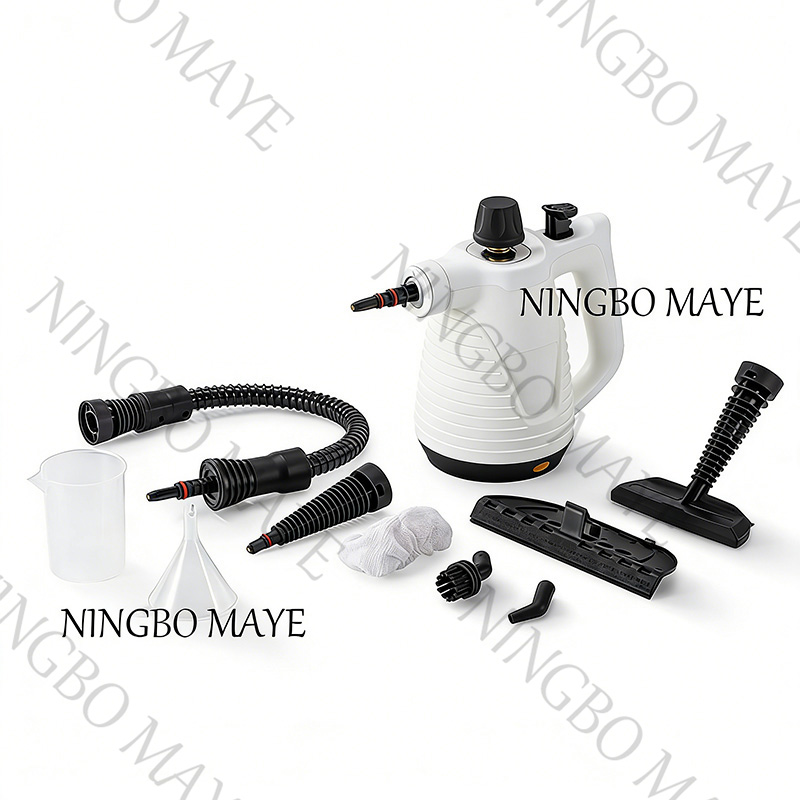
A Handheld Steam Cleaner kills bed bugs on contact at temperatures above 48°C (118°F), with most quality units producing steam at 100°C to 155°C (212°F to 311°F) at the nozzle, well above the lethal threshold for all bed bug life stages including eggs. For deep cleaning, steam penetrates porous surfaces without chemicals, sanitizing grout lines, fabric fibers, mattresses, and upholstery by killing up to 99.9% of bacteria, dust mites, and allergens with heat alone. When cleaning tile grout with a steam cleaner, a brass or nylon brush attachment combined with focused steam at 3 to 5 cm distance removes embedded dirt and mold in a fraction of the time required by manual scrubbing. To clean a sofa with a steam cleaner, use a fabric attachment, work in overlapping strokes, and keep the steamer moving at all times to prevent moisture saturation of the cushioning. This guide covers every practical application of handheld steam cleaners with specific temperatures, techniques, and surface-by-surface instructions.
What Is a Handheld Steam Cleaner and How Does It Work
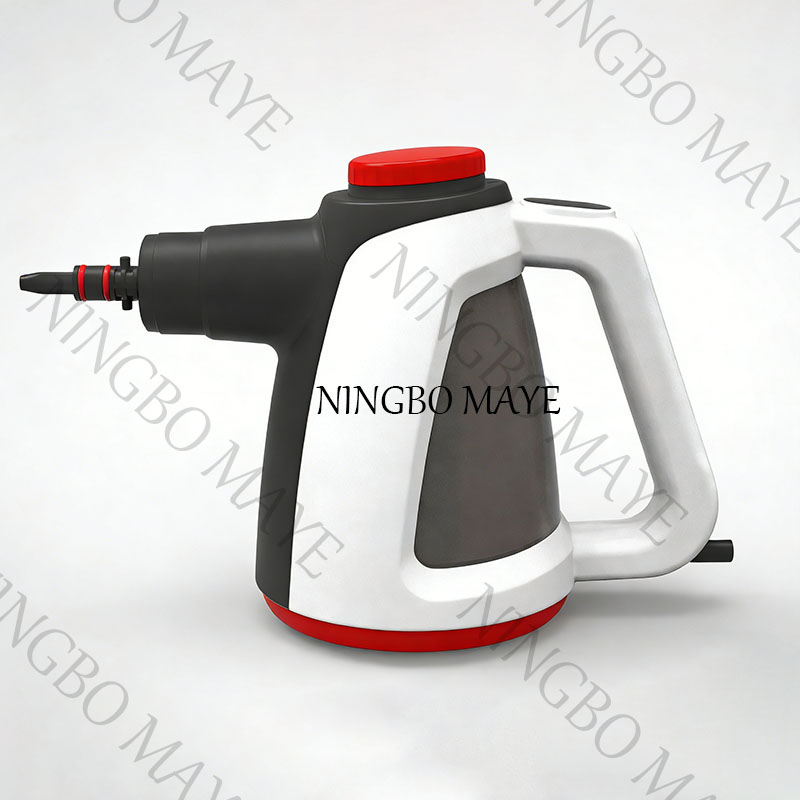
A Handheld Steam Cleaner is a compact, portable appliance that heats water in a sealed boiler to produce pressurized steam, which is then directed through interchangeable nozzle attachments onto surfaces requiring cleaning, sanitizing, or pest control. Unlike full-size steam mop systems or canister steam cleaners, a handheld unit is designed for targeted spot cleaning, above-floor surfaces, furniture, bedding, vehicles, and any application where a full-size machine is impractical to maneuver.
Core Operating Principle: Heat and Pressure Without Chemicals
The operating principle of a handheld steam cleaner is deceptively simple: water is heated in a sealed aluminum or stainless steel boiler to its boiling point and beyond, building internal pressure that forces steam through the output valve and attached nozzle at high velocity. The steam carries three properties that make it effective for cleaning and sanitizing:
- Heat: Steam exits most handheld units at temperatures between 100°C and 155°C, hot enough to denature the proteins in bacteria cell walls, kill fungal spores, destroy dust mite eggs, and penetrate the waxy exoskeleton of insects including bed bugs, killing them on direct contact.
- Moisture: The water vapor penetrates porous surfaces, loosening dirt, grease, and biological matter embedded below the surface layer that dry cleaning methods cannot reach. This is why steam is effective on grout lines, fabric fibers, and mattress ticking where surface wiping alone does not clean.
- Pressure: The steam exits under pressure that physically dislodges dirt particles, mold colonies, and debris from surface recesses, driving loosened material to the surface where it can be wiped or vacuumed away. Pressure varies significantly between units, from approximately 2 to 4 bar (30 to 58 psi) in standard consumer handheld units up to 6 to 8 bar (87 to 116 psi) in professional-grade handheld steamers.
Key Specifications to Understand When Buying a Handheld Steam Cleaner
Key handheld steam cleaner specifications and their practical significance for cleaning performance
| Specification |
Typical Consumer Range |
Professional Range |
Why It Matters |
| Steam temperature |
100°C to 120°C |
130°C to 155°C |
Higher = more effective sanitizing and pest kill |
| Steam pressure |
2 to 4 bar |
4 to 8 bar |
Higher = better penetration into grout and fabric |
| Water tank capacity |
200 to 400 ml |
400 to 1,000 ml |
Determines continuous run time between refills |
| Heat-up time |
3 to 5 minutes |
1 to 3 minutes |
Faster = more convenient for spot cleaning |
| Continuous steam time |
10 to 25 minutes |
20 to 45 minutes |
Longer = suitable for larger jobs without refilling |
| Power (wattage) |
800W to 1,200W |
1,500W to 2,000W |
Higher = faster heat-up and more consistent steam output |
Standard Attachments and Their Applications
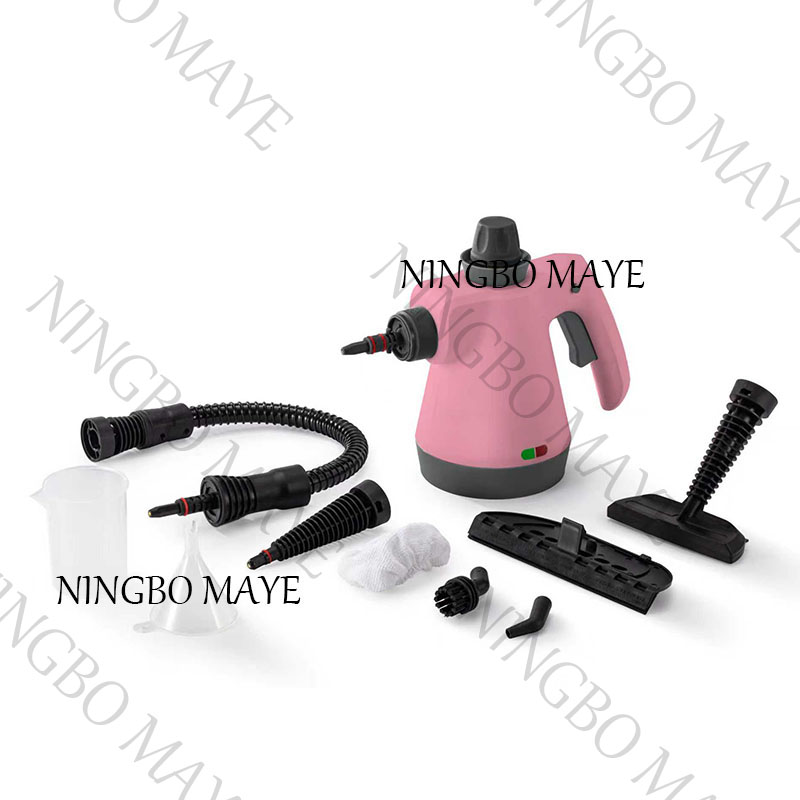
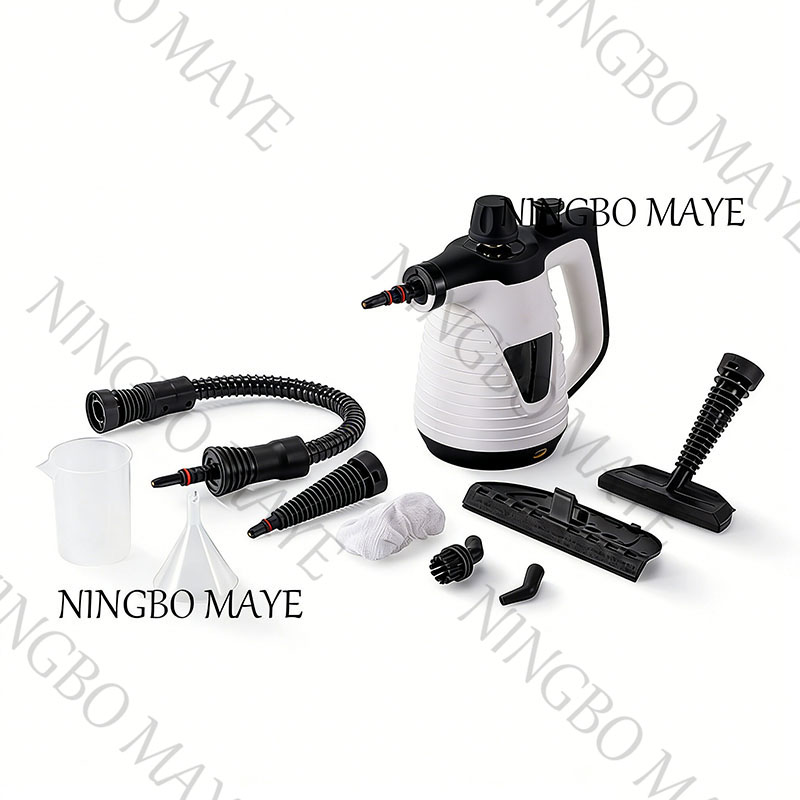
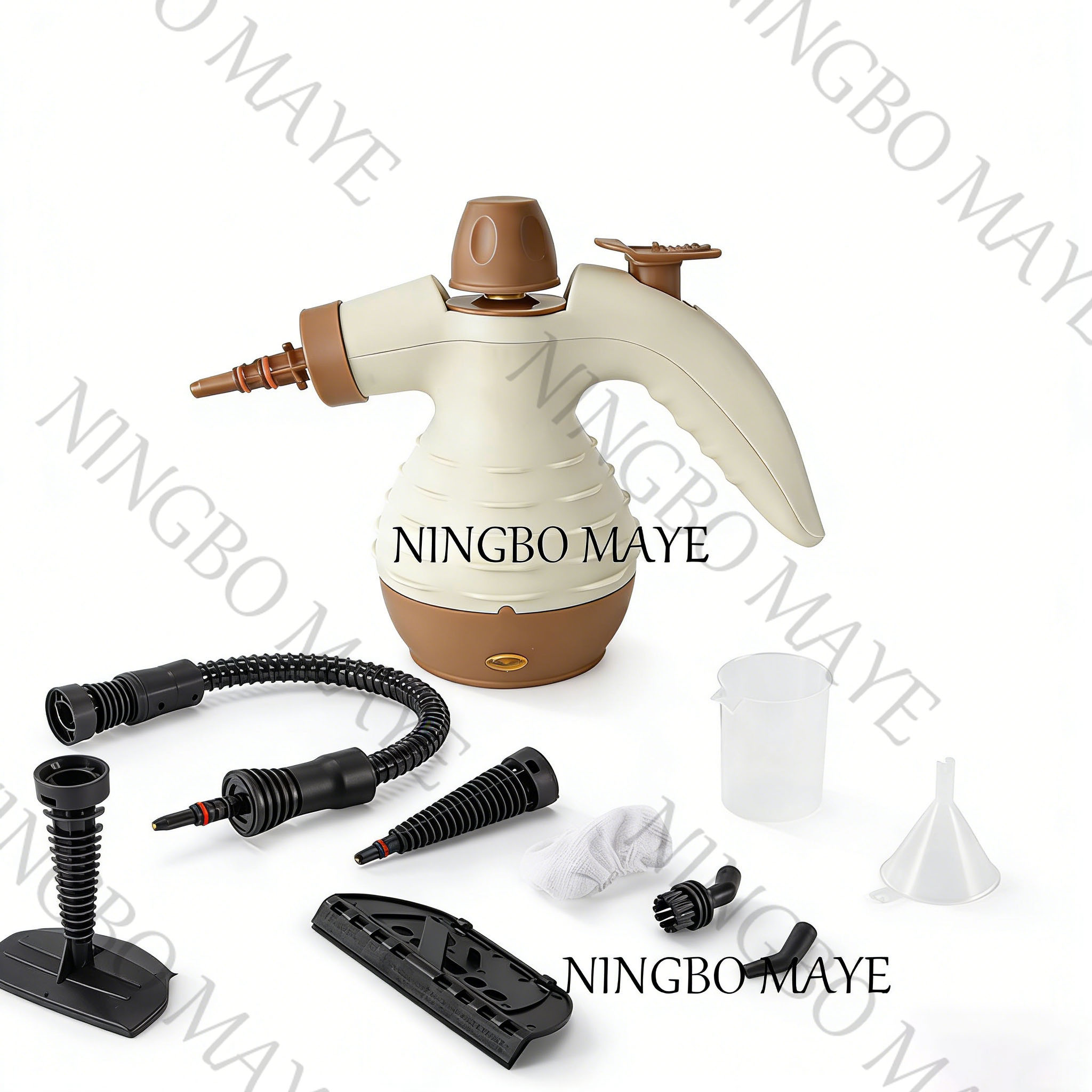
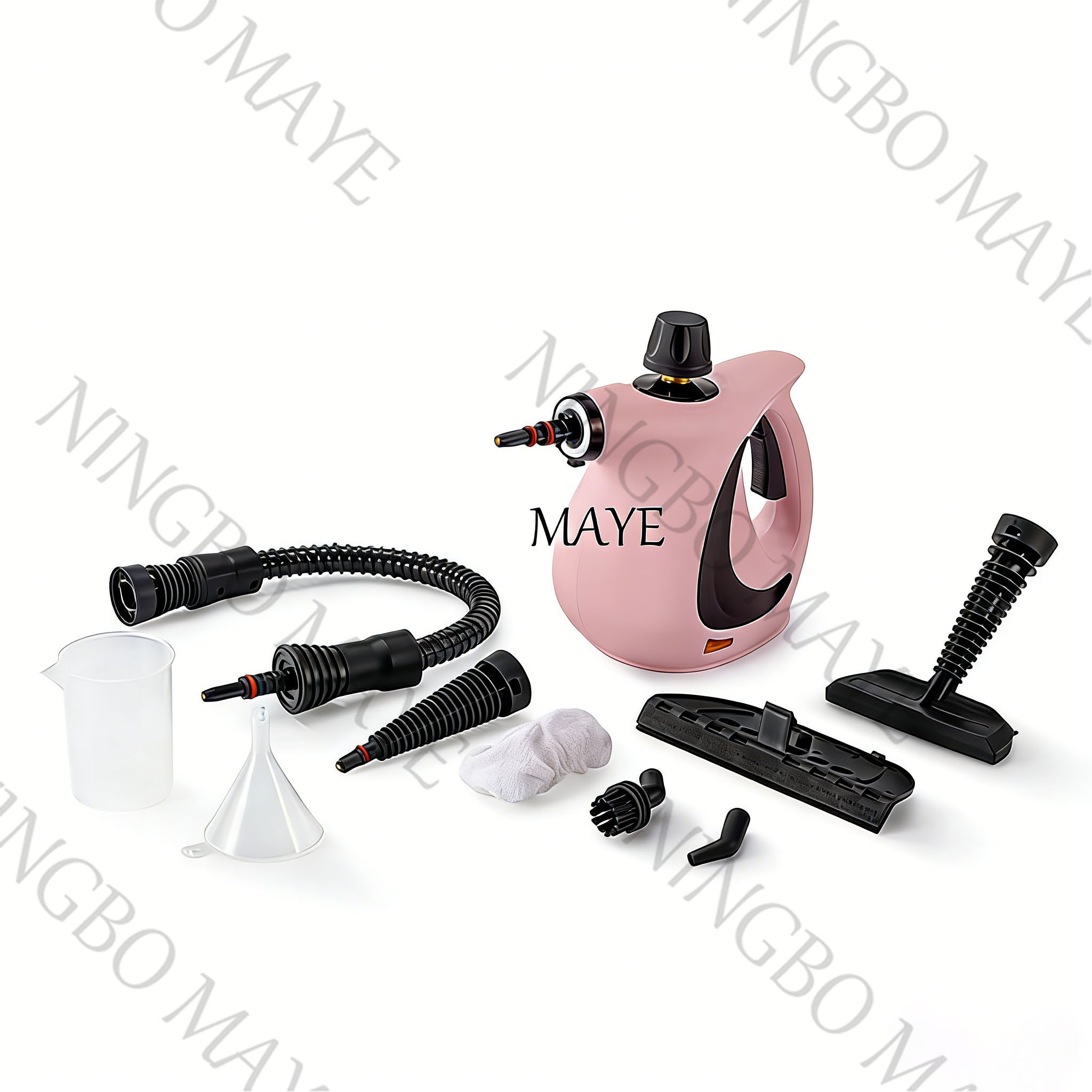
Most Handheld Steam Cleaner units are sold with a range of attachments that determine which surfaces and tasks the unit can address. Understanding each attachment prevents misapplication:
- Pointed nozzle: For directing steam into cracks, crevices, corners, and bed bug harborage sites. The most commonly used attachment for targeted pest control work.
- Wide floor nozzle: For flat surfaces including tile, hardwood, and laminate. Distributes steam over a broader area for efficient coverage.
- Brush attachment (brass bristles): Combines steam with mechanical scrubbing action for tile grout, bathroom fixtures, oven racks, and heavily soiled surfaces. Brass bristles are effective without scratching most surfaces.
- Fabric or upholstery attachment: A wider, often cloth-covered head designed for applying steam to sofas, mattresses, curtains, and other soft furnishings without creating a concentrated hot spot that could damage delicate fabric.
- Window squeegee attachment: Applies steam to glass while the integrated squeegee removes the loosened condensation and dirt in one pass.
Handheld Steamer for Bed Bugs: How It Works, Temperatures Required, and Full Treatment Protocol
A handheld steamer for bed bugs is one of the most effective non-chemical treatment tools available for homeowners and pest control professionals alike. Bed bugs cannot develop resistance to heat the way they develop resistance to chemical insecticides, making steam a reliably lethal method for all life stages when applied correctly. The science is straightforward: thermal death of bed bugs occurs at specific temperature and exposure time combinations.
Bed Bug Lethal Temperature Thresholds
Research from entomology laboratories has established clear temperature and exposure time requirements for killing bed bugs at every life stage:
- 48°C (118°F) for 20 minutes: Kills all nymphs and adult bed bugs. The lowest effective temperature for bed bug elimination, requiring prolonged exposure at this temperature throughout the target material.
- 60°C (140°F) for 5 minutes: Kills all life stages including eggs. This is the standard target temperature for professional heat treatment protocols and is reliably achievable with a quality handheld steamer at the surface being treated.
- Above 70°C (158°F) on direct contact: Instantaneous kill of all life stages including eggs. Most handheld steamers produce steam well above this temperature at the nozzle, ensuring direct-contact kill even at the steam's cooled output after traveling a short distance from the nozzle.
The critical variable is not just the steam temperature at the nozzle but the temperature reached within the material being treated. Bed bugs and their eggs typically hide deep in mattress seams, inside box spring frames, under baseboards, and in furniture joints where surface-level steam must penetrate to reach them. This is why a slow, deliberate application speed is essential in bed bug steam treatment.
Handheld Steamer Bed Bug Treatment Protocol
The following protocol applies to the use of a handheld steamer for bed bugs on mattresses, box springs, bed frames, and surrounding furniture:
- Vacuum thoroughly first. Before steaming, vacuum all surfaces to be treated with a strong suction vacuum using a crevice tool. Vacuuming removes live bugs, shed skins, eggs, and debris that would otherwise block steam penetration. Seal the vacuum bag immediately after and dispose of it in an outdoor bin. Never use a bagless vacuum for bed bug work without immediately emptying and cleaning the canister outdoors.
- Set up for slow, systematic coverage. Bed bug steam treatment requires moving the steamer at a maximum speed of 2.5 to 5 cm per second (1 to 2 inches per second) across the surface. This very slow application speed is necessary to allow the steam to heat the material below the surface to a lethal temperature. Most people instinctively move too fast, which heats only the surface layer and leaves bugs in deeper harborage alive.
- Use the pointed nozzle for seams, tufts, and edges. Fit the pointed or crevice nozzle to the steamer and hold it approximately 2.5 to 5 cm (1 to 2 inches) from the surface. Work systematically along every mattress seam, tuft, handle attachment, and edge piping. Bed bugs concentrate in these areas at densities many times higher than on open fabric surfaces.
- Steam all surfaces of the mattress. Work from the top face to the sides to the bottom face, covering the entire mattress surface with overlapping steam strokes. Pay particular attention to the top and bottom edges where the seam runs the full perimeter and where infestation density is typically highest.
- Treat the box spring thoroughly. The box spring is often the primary harborage site for a mattress bed bug infestation because its internal structure provides many protected spaces. Remove the dust cover from the bottom of the box spring and steam the interior from below. Steam all wood frame members, metal springs or wire grids, and any fabric-lined areas visible inside the box spring.
- Treat the bed frame. Steam all joints, screw recesses, bolt holes, and rough surface areas of the bed frame where bugs can hide in the surface texture. Pay particular attention to the joint between the headboard and the side rails and the slots or holes where slats rest in the side rails, as these are common harborage sites.
- Treat baseboards and adjacent furniture. Steam along the floor-wall junction (baseboard area) around the entire room perimeter, especially within 1.5 m (5 feet) of the bed. Treat the back, bottom, and drawer recesses of any furniture within this zone.
- Allow surfaces to dry completely before remaking the bed. Steam adds moisture to treated surfaces. Allow the mattress and box spring to dry for at least 2 to 4 hours (longer for box springs) with windows open or a fan circulating air before encasing in mattress protectors and remaking the bed. Encasing the mattress and box spring in bed bug-proof encasements immediately after drying prevents re-infestation of the treated surfaces.
Limitations of Handheld Steamers for Bed Bug Treatment
A handheld steamer for bed bugs is highly effective as part of an integrated pest management approach but has specific limitations that must be understood:
- No residual action: Steam kills only what it directly contacts at lethal temperature. Bed bugs in walls, behind electrical outlets, or in areas the steam cannot physically reach will survive and reinfest treated surfaces. Steam treatment must be combined with physical exclusion, encasements, and monitoring.
- Water damage risk on electronics: Do not steam near electrical outlets, electronic components, or any item that would be damaged by moisture. Even superheated steam condenses on cooler surfaces and can cause electrical shorts or water damage.
- Limited tank size requires frequent refills: A 300 ml tank provides approximately 12 to 15 minutes of continuous steam, which is often insufficient to complete full treatment of a bed, box spring, and frame. Plan the treatment sequence to allow for tank refills without losing treatment momentum.
Steam Cleaner for Deep Cleaning: Surfaces, Methods, and Sanitizing Results
A steam cleaner for deep cleaning removes contamination from surfaces at a microbial level that chemical cleaners often cannot match without harsh active ingredients. The combination of heat, moisture, and pressure reaches into pores, cracks, and surface textures inaccessible to wiping, and kills a broader spectrum of microorganisms including viruses, bacteria, mold spores, and dust mites simultaneously.
What Steam Deep Cleaning Kills and at What Temperature
- Bacteria (E. coli, Salmonella, Staphylococcus): Most pathogenic bacteria are killed at 65°C to 75°C within seconds of exposure. Steam at 120°C provides rapid, reliable kill of all common household bacterial pathogens on contact.
- Dust mites and their eggs: Dust mites die at temperatures above 55°C. Steam cleaning mattresses, pillows, upholstered furniture, and carpets at normal operating steam temperature kills active mites and their eggs, reducing the dust mite allergen load that is a primary trigger for asthma and allergic rhinitis. A single steam treatment can reduce viable dust mite populations by 90 to 95% in treated surfaces.
- Mold and mildew: Mold spores require temperatures above 60°C for reliable kill. Steam cleaning at 120°C destroys both the visible mold colony and the dormant spores on the treated surface. However, steam alone does not prevent future mold regrowth if the underlying moisture source is not eliminated.
- Common viruses: Most enveloped viruses (influenza, coronaviruses) are inactivated at 56°C to 65°C. Steam temperatures far exceed these thresholds, providing reliable virus inactivation on hard surfaces and fabrics.
Surfaces That Respond Best to Steam Deep Cleaning
Not all surfaces are equally suitable for steam cleaning. Surfaces that respond best are those that are heat-tolerant, waterproof or quick-drying, and porous enough for the steam to penetrate and lift embedded contamination:
- Ceramic and porcelain tile: Steam penetrates the porous grout joints between tiles to dissolve soap scum, kill mold, and remove embedded grime that surface wiping cannot reach. One of the highest-value steam cleaning applications.
- Stainless steel appliances and fixtures: Steam removes grease, food residue, and fingerprints from stainless steel surfaces without chemical cleaners that can leave streaks or damage the surface finish.
- Mattresses and bedding: Deeply penetrates ticking fabric to kill dust mites, bacteria, and bed bug eggs at all life stages without using pesticides or chemical deodorizers.
- Upholstered furniture (appropriate fabrics): Removes odors, bacteria, and allergens from fabric sofas, chairs, and ottomans. See the sofa cleaning section for fabric precautions.
- Kitchen surfaces: Cooktops, oven interiors, range hood filters, and countertop edges where grease accumulates respond well to steam's grease-cutting heat, loosening baked-on residues that chemical degreasers struggle to remove from crevices.
Surfaces That Should Not Be Steam Cleaned
- Unsealed hardwood floors: Steam forces moisture into wood grain and between boards, causing swelling, warping, and finish damage. Only sealed, properly finished hardwood should ever receive steam treatment, and even then with caution and a cloth cover on the steam head.
- Painted surfaces with water-sensitive paint: Steam can soften and lift latex paint on walls, doors, and furniture, especially near seams and edges.
- Delicate or heat-sensitive fabrics: Silk, velvet, wax-coated fabrics, and fabrics with glued-on embellishments should not be steam cleaned as the heat and moisture can cause irreversible damage.
- Cold-sensitive stone (marble and some granite): Rapid heating from steam can cause thermal shock cracking in cold marble or granite, particularly on slabs with existing micro-fissures.
- Electronics and electrical outlets: Never direct steam toward electrical outlets, switches, extension cords, or any electronic device. Steam conducts electricity when it condenses and can cause shorts, fires, or shock hazards.
Cleaning Tile Grout with a Steam Cleaner: Step-by-Step Technique for Maximum Results
Cleaning tile grout with a steam cleaner is one of the most transformative applications of a handheld steam unit. Grout is a cement-based porous material that absorbs soap residue, body oil, hard water minerals, and mold spores over time, turning originally white or light-colored grout progressively darker. Steam cleaning dissolves these embedded materials and kills mold at the source, restoring grout appearance without the skin irritation and fume problems associated with bleach-based grout cleaners.
Why Steam Is Superior to Chemical Grout Cleaners
Chemical grout cleaners (bleach solutions, acid-based cleaners, commercial grout sprays) work on the grout surface and require significant dwell time, vigorous scrubbing, and thorough rinsing to prevent residue buildup or chemical damage to the grout sealant. Steam offers several practical advantages:
- No chemical residue: Steam leaves no soap film, chemical residue, or rinse requirement. The only byproduct is water vapor and the loosened dirt, which is wiped away with a microfiber cloth.
- Kills mold rather than bleaching it: Bleach kills the surface color of mold but may not penetrate deeply enough to kill the mold mycelium within porous grout. Steam at 120°C kills mold through the full depth of the grout joint it can penetrate, reducing regrowth rates compared to bleach treatment.
- Safe for grout sealant: Acid-based chemical cleaners can degrade polyurethane or silicone grout sealants over time. Steam does not damage properly applied sealant and can be used regularly without accelerating sealant degradation.
- Faster for large areas: A handheld steam cleaner with a brush attachment can clean approximately 1 square meter of grout in 5 to 10 minutes, compared to 20 to 30 minutes for equivalent results using manual scrubbing with chemical cleaner.
Step-by-Step Grout Cleaning Procedure
- Fill the steamer and allow full heat-up. Use distilled or filtered water if your local tap water is hard (high mineral content) to prevent scale buildup inside the boiler. Allow the steamer to reach full operating temperature, confirmed by a steady steam flow from the nozzle rather than sputtering droplets, before beginning.
- Attach the grout brush. Fit a brass or nylon bristle brush attachment to the steamer. The brush concentrates steam into the grout line while mechanically agitating loosened material. A brass brush is effective on floor grout; a nylon brush is preferable for wall grout or lighter grout colors where brass bristle marks might be visible.
- Work the steam brush along grout lines in short strokes. Hold the brush at a 45-degree angle to the grout line and work in short strokes of approximately 15 to 20 cm at a moderate pace. You should see visible steam rising from the grout and the grout color beginning to lighten as embedded material is released. Do not rush; the dwell time of steam on each section is what breaks up the deep-seated contamination.
- Wipe with a microfiber cloth immediately after each section. Have a microfiber cloth ready to wipe the treated grout and tile surface immediately after steaming each section, while the material is still wet and loose. If you allow steamed sections to dry before wiping, some of the loosened material will re-deposit on the surface.
- Repeat stubborn areas with a second pass. Very dark or long-neglected grout may require a second steam pass over stubborn sections. Allow the first pass to cool for a minute before the second pass so you can see clearly which areas still need attention.
- Allow the grout to dry fully before sealing. If you plan to apply grout sealant after cleaning (recommended to prevent future staining), allow the grout to dry for at least 24 hours at room temperature with ventilation before applying sealant. Applying sealant to damp grout traps moisture and prevents proper adhesion.
Grout Cleaning Results: What to Expect
Results vary depending on grout color, age, degree of staining, and whether the grout has been sealed previously. Realistic expectations:
- Lightly soiled sealed grout (1 to 2 years since last cleaning): One steam pass restores near-original color. Very satisfying results with minimal effort.
- Moderately soiled unsealed grout (3 to 5 years of buildup): Two passes achieve significant improvement, typically removing 70 to 90% of surface staining. Deep black staining from long-term mold penetration may remain as a shadow.
- Heavily stained or permanently discolored grout: Steam cleaning improves appearance significantly but cannot reverse chemical or dye staining that has penetrated beyond the surface layer. Grout that remains discolored after thorough steam cleaning may need to be recolored with grout colorant or replaced.
How to Clean a Sofa with a Steam Cleaner: Fabric-by-Fabric Guide
Learning how to clean a sofa with a steam cleaner correctly is important because the technique required varies significantly by fabric type, and using the wrong approach can damage upholstery that would have been easy to clean with the correct method. Steam is an outstanding sofa cleaning tool for appropriate fabrics because it sanitizes, deodorizes, removes allergens, and refreshes the fabric appearance without the drying time and soaking risk associated with wet shampoo or extraction cleaning.
Check the Fabric Code Before You Start
Before applying any steam to a sofa, locate the care label (usually found under a seat cushion or on the frame beneath the sofa). The cleaning code on the label defines what cleaning methods are safe for that particular upholstery:
- W (Water): Water-based cleaning methods are safe. Steam cleaning is appropriate for fabrics coded W.
- S (Solvent only): Water-based cleaning including steam is not safe for this fabric. Steam will cause water marks, shrinkage, or color bleed on S-coded fabrics. Do not steam clean.
- WS (Water or Solvent): Both water and solvent cleaning are safe. Steam cleaning is appropriate.
- X (Vacuum only): Neither water nor solvent cleaning is appropriate. Only dry vacuuming is recommended. Do not steam clean X-coded fabrics.
Always test the steam cleaner on a hidden area of the sofa (the back panel behind a cushion, or the underside of a cushion) before treating visible surfaces. Apply steam briefly to the test area, allow it to dry, and check for color fading, watermarking, texture change, or shrinkage before proceeding with the full sofa.
Step-by-Step Sofa Steam Cleaning Procedure
- Vacuum the entire sofa thoroughly first. Use an upholstery attachment on a vacuum cleaner to remove all loose crumbs, pet hair, dust, and surface debris before steaming. Steam does not remove solid debris; it sanitizes and deodorizes fabric. Any debris left on the sofa before steaming will become a wet, embedded paste that is harder to remove than dry debris.
- Remove and treat cushions separately. Remove all seat and back cushions and steam each one individually, allowing you to treat all faces and edges of each cushion. Working on separated cushions also allows you to steam the sofa base and frame beneath the cushions, where significant dust, allergen, and mite accumulation occurs.
- Attach the fabric or upholstery attachment. Fit the wide upholstery attachment or the fabric attachment to the steamer. This head distributes steam over a wider area than the pointed nozzle and reduces the risk of concentrating too much heat and moisture in one spot. If the attachment has a fabric or microfiber cover, use it: the cover slows the steam delivery slightly and helps spread the moisture evenly.
- Hold the attachment 2 to 5 cm from the surface and keep it moving. Unlike grout cleaning where you hold the steam close and work slowly, sofa steam cleaning requires keeping the attachment moving continuously. A slow-moving steamer on upholstery can oversaturate the fabric, driving moisture into the cushion filling and creating conditions for mold growth inside the cushion. Work in overlapping horizontal strokes, maintaining a constant speed of approximately 5 to 8 cm per second.
- Work from top to bottom and back to front. Start with the back and arms of the sofa, working from the highest point down to the seat level. Any drips or condensation will fall onto areas not yet treated. Treat the seat cushions last.
- Brush pile fabrics immediately after steaming. For velvet, microfiber, or any pile fabric, use a soft upholstery brush to brush the pile in one direction immediately after steaming while the fabric is still warm. This realigns the pile and prevents it from drying in a crushed or randomly directional set that makes the fabric look worn and uneven.
- Allow to dry fully before use. Allow the sofa to dry for at least 2 to 4 hours with windows open or a fan circulating air before sitting on it. For heavily treated sofas or those cleaned in humid conditions, drying time may extend to 6 to 8 hours. Sitting on a still-damp sofa compresses the wet fabric and filling, extending drying time and increasing the risk of mildew odors developing inside the cushions.
Specific Fabric Types and Steam Cleaning Suitability
Sofa fabric types and their suitability for steam cleaning with recommended technique adjustments
| Fabric Type |
Care Code |
Steam Suitable? |
Key Technique Note |
| Polyester microfiber |
W or WS |
Yes |
Brush pile immediately after steaming |
| Cotton canvas or twill |
W |
Yes |
Keep steamer moving to prevent watermarks |
| Linen |
W |
Yes (with caution) |
Test first; linen can show water rings |
| Velvet (polyester) |
W or WS |
Yes |
Brush pile while still warm; use low steam setting |
| Velvet (cotton or silk) |
S or X |
No |
Water causes permanent pile crushing |
| Leather (genuine) |
Special care |
No (unless designed for it) |
Steam dries and cracks leather; use leather conditioner instead |
| Faux leather (PU) |
W |
Yes (low setting only) |
High heat can delaminate PU coating |
| Wool or wool blend |
S or WS |
Test first |
Risk of shrinkage; test hidden area first |
Frequently Asked Questions About Handheld Steam Cleaners
1. Can a handheld steamer for bed bugs kill eggs as well as live bugs?
Yes. A handheld steamer for bed bugs kills eggs at temperatures above 60°C (140°F) with 5 minutes of exposure, and at above 70°C on direct contact. Most handheld steamers produce steam at 100°C to 120°C or higher at the nozzle. The critical factor is moving the steamer slowly enough (approximately 2.5 cm per second) to raise the temperature within the material being treated to the lethal threshold. Eggs are typically laid in seams and fabric folds, so treat these areas with particular care and slow deliberate strokes.
2. What type of water should I use in a handheld steam cleaner?
Use distilled or demineralized water whenever possible in a handheld steam cleaner. Hard tap water contains dissolved calcium and magnesium minerals that precipitate as scale (limescale) inside the boiler and nozzle as the water is repeatedly heated. Scale buildup reduces boiler efficiency, reduces steam output, and can block nozzles entirely over time. In areas with very soft tap water (below 50 ppm total dissolved solids), tap water is acceptable. Most manufacturers specify the water type in the product manual; following this recommendation significantly extends the machine's service life.
3. How long does a handheld steam cleaner take to heat up?
Consumer Handheld Steam Cleaner units typically reach operating temperature in 3 to 5 minutes. Higher-wattage units (1,500W and above) heat up in 2 to 3 minutes. Some ultra-compact units with very small boilers can reach temperature in under 2 minutes. The heat-up indicator is either a light that turns on or off when steam is ready, or a steam flow that changes from sputtering drops of water to a consistent dry steam. Always allow the steamer to reach full temperature before beginning work; wet steam at partial temperature is less effective and more likely to soak surfaces.
4. Is a steam cleaner for deep cleaning safe to use on bathroom tile?
Yes. A steam cleaner for deep cleaning is ideal for bathroom tile and grout. Ceramic and porcelain tile handle steam temperature well, and the grout between tiles is one of the most effective surfaces to treat with steam because of its porosity. The main precaution is to avoid directing steam at silicone caulk joints repeatedly, as repeated thermal cycling can accelerate silicone deterioration over time. Also avoid steaming any areas where tiles are visibly cracked or where the grout is loose, as steam pressure can infiltrate behind the tile and loosen the adhesive bond.
5. How often should I clean tile grout with a steam cleaner?
For bathroom tile grout, steam cleaning every 3 to 6 months maintains grout in near-original condition and prevents the deep staining and mold ingrowth that makes infrequently cleaned grout very difficult to restore. Kitchen floor grout in high-traffic cooking areas benefits from steam cleaning every 2 to 3 months because grease and food residue penetrate grout rapidly. Sealing grout after each steam cleaning session significantly extends the interval between cleanings by making the grout surface less absorbent to new staining.
6. Can I add cleaning solution or essential oils to the water in a handheld steam cleaner?
No. Only plain water (distilled or as specified by the manufacturer) should be added to a Handheld Steam Cleaner boiler. Adding cleaning solutions, vinegar, essential oils, or any other substance to the water tank will damage the internal components of the boiler, void the manufacturer's warranty, potentially produce harmful vapor when heated, and in some cases create a chemical reaction with the boiler material. Steam at 100°C and above provides excellent sanitizing performance without any chemical additives. If additional cleaning action is needed for specific stains, apply the cleaning product to the surface separately and then use the steam to assist rinsing and final sanitizing.
7. How do I clean a sofa with a steam cleaner without leaving water marks?
To prevent water marks when using a steam cleaner on a sofa, always keep the steamer moving continuously rather than holding it stationary, use a fabric attachment that distributes steam broadly rather than the concentrated pointed nozzle, work in overlapping strokes that fade the steam boundary, and treat the entire sofa section evenly rather than spot-treating individual areas. Water marks on upholstery occur when a wet boundary forms between a treated area and an untreated area that dries at different rates. Treating the entire surface of each cushion and sofa section to a uniform light moisture level prevents the differential drying that causes ring marks.
8. Is a handheld steam cleaner effective against dust mites in a mattress?
Yes. Dust mites die at temperatures above 55°C, and a handheld steam cleaner produces steam at well above this threshold. Regular steam treatment of mattresses, pillows, and upholstered furniture significantly reduces dust mite populations and the allergenic proteins (primarily Der p 1 from mite fecal particles) that trigger asthma and allergic reactions. A single thorough steam treatment reduces viable dust mite populations by 90 to 95% in the treated surface. Vacuum the mattress before and after steaming: before to remove dead and live mites, after to remove the remnants of killed mites and their fecal material which remain allergenic even after the mites are dead.
9. What is the difference between a handheld steam cleaner and a full-size steam cleaner?
A Handheld Steam Cleaner is compact, lightweight (typically 0.8 to 1.5 kg), and designed for targeted above-floor cleaning of furniture, upholstery, mattresses, grout, appliances, and vehicle interiors. Its water tank is smaller (200 to 500 ml) giving shorter run times but making the unit highly portable and maneuverable. A full-size canister or upright steam cleaner is heavier (3 to 8 kg), has a larger tank (1 to 3 liters), produces higher steam output and pressure, and is designed primarily for floor cleaning with extended run times. For bed bug treatment, deep fabric cleaning, and tile grout work, a handheld unit's portability and targeted output is often superior to a full-size machine that is difficult to maneuver into seams and crevices.
10. How do I descale a handheld steam cleaner?
Descale a Handheld Steam Cleaner by filling the tank with a solution of equal parts white vinegar and water, running the steamer until the tank is half empty, allowing it to sit for 30 minutes with the solution inside, and then running the remainder through the steamer and rinsing with two full tanks of clean water. Some manufacturers supply descaling tablets or recommend specific descaling products; follow the product manual for the recommended method and frequency. In hard water areas, descaling every 1 to 3 months depending on usage frequency prevents scale buildup that reduces steam output and can block the boiler. Using distilled water from the start eliminates the need for descaling almost entirely.

 Wholesale Multifunctional Steam Cleaner Manufacturers

 English
 Español