2026-11-19
A hotel housekeeping supervisor calls with a familiar problem: one room, two guest complaints of bites in three weeks, and nothing obviously wrong during a routine inspection. A pest control technician finds a single adult bed bug in the piping of the mattress and a cluster of dark spots along a bed frame joint. Before any spray comes out, she reaches for a steam cleaner and works the seam at a pace that looks almost lazy, roughly an inch per second, nozzle close to the fabric, the surface left damp but never wet.
That scene answers the question in practice: yes, steam kills bed bugs and their eggs. The conditions around that yes matter more than the yes itself. Steam kills only what it touches, only while the treated surface stays above a lethal temperature long enough, and only when the machine delivers dry, hot vapor rather than a wet mist. A steamer that soaks a mattress seam can push insects deeper into the padding and leave the fabric damp for hours. A steamer used too fast leaves survivors, and survivors are how a "treated" room becomes an infested room again six weeks later.
What follows is the practical version: the temperatures involved, why the number on a boiler label is a poor guide to what happens at the fabric, which surfaces repay the effort, a repeatable procedure, and the machine characteristics that separate a working tool from an expensive disappointment.
Steam kills bed bugs through heat, not chemistry. Insect proteins begin to denature and cell membranes fail somewhere above 113°F (45°C), and the process accelerates quickly as temperature rises. Published laboratory work puts the lethal range for adults and nymphs at roughly 113–122°F, with exposure measured in seconds at the upper end and in minutes near the lower end. Eggs are more tolerant: their shells, and the glue that fixes them to a surface, slow heat transfer, so they generally need the higher end of that range sustained for considerably longer.
A pressurized steam cleaner leaves the nozzle at around 212°F (100°C) or slightly above, which sounds like a comfortable margin. It is, at the nozzle. Two inches away, on cotton mattress ticking, the measured temperature may already sit at 130–150°F, and on a thick upholstered headboard it can fall below the lethal threshold within a second or two of contact. That margin disappears faster than most people expect, which is why technique and dwell time carry more weight than the boiler specification printed on the box.
| Life stage or situation | Approximate lethal temperature | Exposure needed | Practical implication |
|---|---|---|---|
| Adults | 113–122°F (45–50°C) | Seconds at the top of the range, a few minutes near the bottom | A slow single pass with a hot nozzle is usually sufficient on thin fabric |
| Nymphs | Similar to adults, occasionally marginally lower | Shortest of any stage | They hide deepest in seams, so contact is the limiting factor, not tolerance |
| Eggs | 118–122°F (48–50°C) | Several minutes of sustained contact in most reports | Glued in place and easy to miss; steam has to wet the shell, not just pass over it |
| Insects inside foam or thick padding | Above 130°F throughout the mass | Tens of minutes | Beyond handheld steam; needs a heat chamber or professional treatment |
Two notes sit underneath that table. First, the figures come from controlled conditions with insects held in a hot environment; a steamer is a moving heat source with a steep temperature gradient, so the effective exposure at the insect is always shorter than the exposure measured at the surface. Second, humidity matters. Steam treatment is inherently humid, which helps heat move into cracks and fabric, but it also means insects are not drying out the way they would in a dry-heat chamber.
Buyers comparing machines tend to compare wattage and pressure. Both matter, but neither predicts what happens at a mattress seam. Three variables do, and they cost nothing to control.
Heat flux falls sharply with distance. A nozzle held an inch from the fabric and moved at a steady pace delivers several times the energy of the same nozzle held four inches away. Angle matters too: a nozzle pointed straight down at a flat surface loses steam sideways, while a nozzle angled along a seam drives vapor into the gap where insects actually live. Seams, piping and frame joints reward an angled jet; broad fabric surfaces reward a brush head held flat.
A boiler that produces saturated dry steam puts more latent heat into the surface per gram of water and leaves the fabric only slightly damp. Machines that sputter water, often because the boiler is undersized for continuous use or because the tank was overfilled, wet the surface without raising its temperature as effectively, and wet fabric takes hours to dry. In a bed bug context that is a real risk rather than an inconvenience: damp seams and compressed padding create exactly the sheltered, humid microclimate the insects prefer.
The most useful field rule is roughly one inch per second with a half-width overlap, holding five to ten seconds on seams, piping, tufting and frame joints. It feels slow. It is supposed to. A technician who covers a queen mattress in ninety seconds has killed the insects sitting on the surface and left the ones two millimeters inside the seam entirely untouched, and those are the ones that restart the problem.
Verification is cheap and rarely done. A basic infrared thermometer pointed at the fabric as the nozzle passes shows whether the surface is reaching 160–180°F or stalling at 120°F. Where the reading stalls, one of three things happened: the pass was too fast, the nozzle was too far away, or the machine is delivering water instead of steam. All three are fixable in the field, which is why good technicians measure rather than assume.
Steam is a contact treatment with no residual effect. Once the nozzle moves on, the surface cools and offers no protection whatsoever. That single property defines its territory: it is excellent on the surfaces where bed bugs rest and where a person can see and reach, and poor everywhere else.
The final point is the one that most often turns a good steam treatment into a disappointing one. Steam does not create a barrier. If a treated mattress sits in a room with an infested sofa, a full wardrobe and boxes stored under the bed, the population redistributes rather than disappears, and the next inspection finds insects that were never exposed.
The procedure below is what a careful technician would do in a single room. It assumes a handheld or canister steam cleaner capable of sustained dry steam, plus a nozzle set that includes a narrow jet and a fabric brush.
For a deeper walkthrough of nozzle choice, surface handling and accessory use, this handheld steam cleaner guide for bed bug deep cleaning covers the same procedure from the equipment side. Steam is rarely used alone, though. In most professional protocols it sits alongside a labeled residual product applied to cracks and voids, plus physical measures such as encasements. The steamer handles harborage that a spray cannot safely reach, and the spray covers the surfaces a steamer cannot hold hot.
No single method resolves an infestation, and comparing them honestly is the fastest way to see where steam earns its place.
| Method | Kills eggs on contact | Leaves residual protection | Best use | Main limitation |
|---|---|---|---|---|
| Steam | Yes, where it reaches | No | Seams, joints, fabric and furniture that cannot be washed | No residual; requires direct contact and slow, disciplined technique |
| Professional whole-room heat | Yes, throughout the treated space | No | Heavy infestations, whole structures and contents | Cost, preparation time, heat-sensitive items |
| Labeled residual spray | Partial, depends on the product | Yes, for weeks | Cracks, voids, perimeters and furniture undersides | Application restrictions, re-entry intervals, resistance concerns |
| Desiccant dust | No | Yes, long-lasting in dry voids | Wall voids, outlet cavities, behind baseboards | Only performs in dry, undisturbed locations |
| Cold treatment | Only with prolonged, controlled exposure | No | Items that cannot tolerate heat | Household freezers are rarely cold enough or long enough |
| Vacuuming | No | No | Immediate population reduction before any other step | Removes insects but not eggs glued to surfaces |
The pattern is consistent. Steam is the only method in that list that combines immediate egg kill with safe use on fabric, which is exactly why it appears in almost every professional protocol even when a residual product does the long-term work. It is also the only one that a trained in-house team can deploy the same day, without a licensed application or a vacated building.
Most consumer steam cleaners are designed for floors and tiles. Bed bug work asks for something slightly different: sustained dry steam, precise nozzles, and enough thermal mass to hold temperature through a slow pass.
For buyers evaluating samples, two tests tell you more than any datasheet. First, run the machine continuously for fifteen minutes and measure nozzle temperature every minute; a boiler that drops below 200°F after five minutes will not sustain a slow pass. Second, steam a folded cotton towel for ten seconds from one inch and check the underside. If the top layer is soaked and the underside barely warm, the machine is delivering water rather than heat, and no amount of technique will fix that.
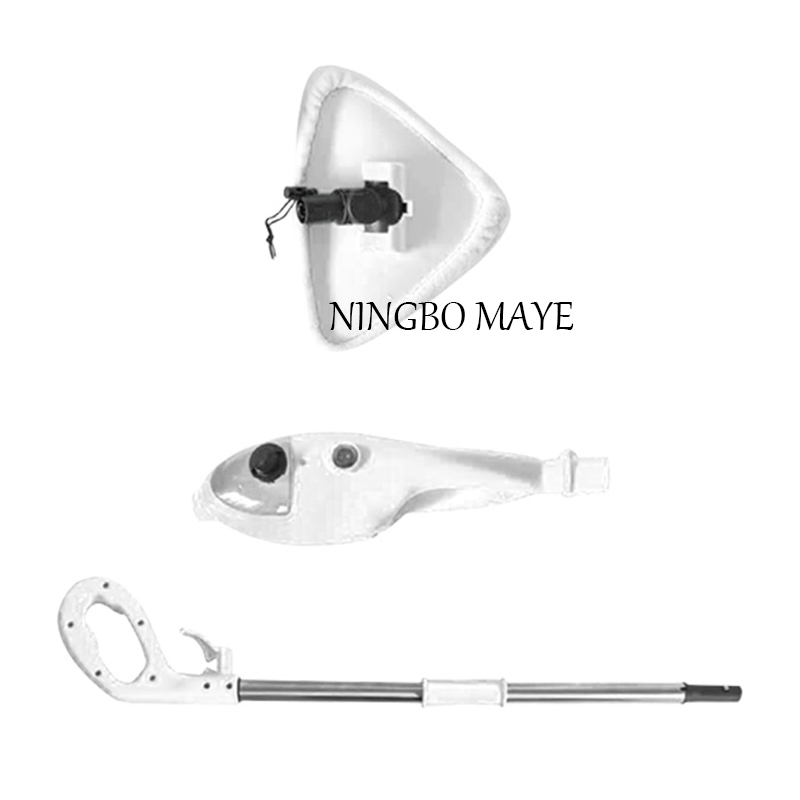
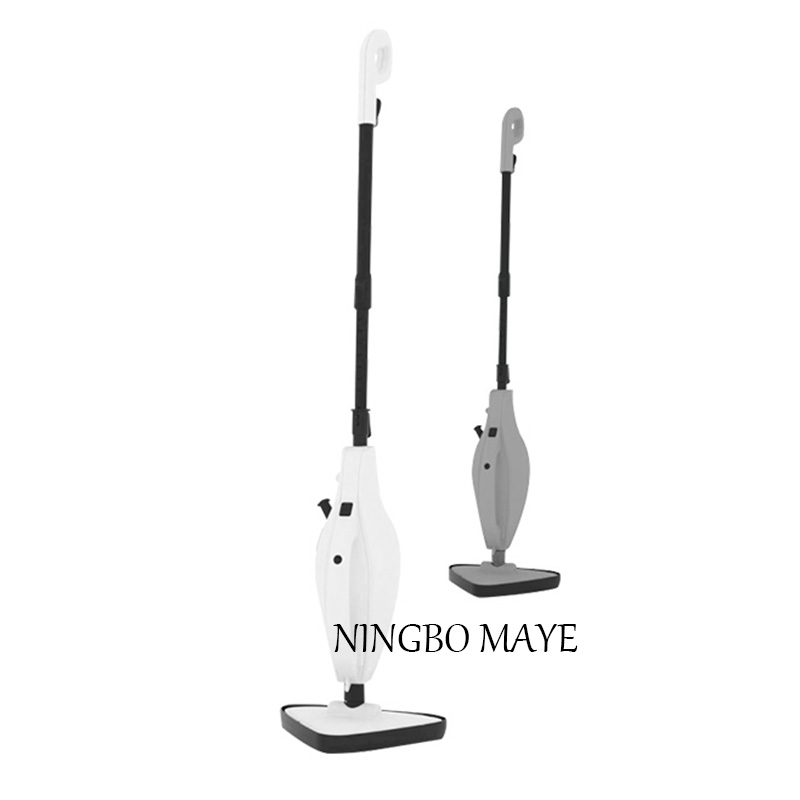
 TM-188 Compact Handheld Garment SteamerCompact 200 ml handheld steamer with 30-second heat-up and adjustable steam for cotton, linen, silk and synthetics in home or travel use.View Product →
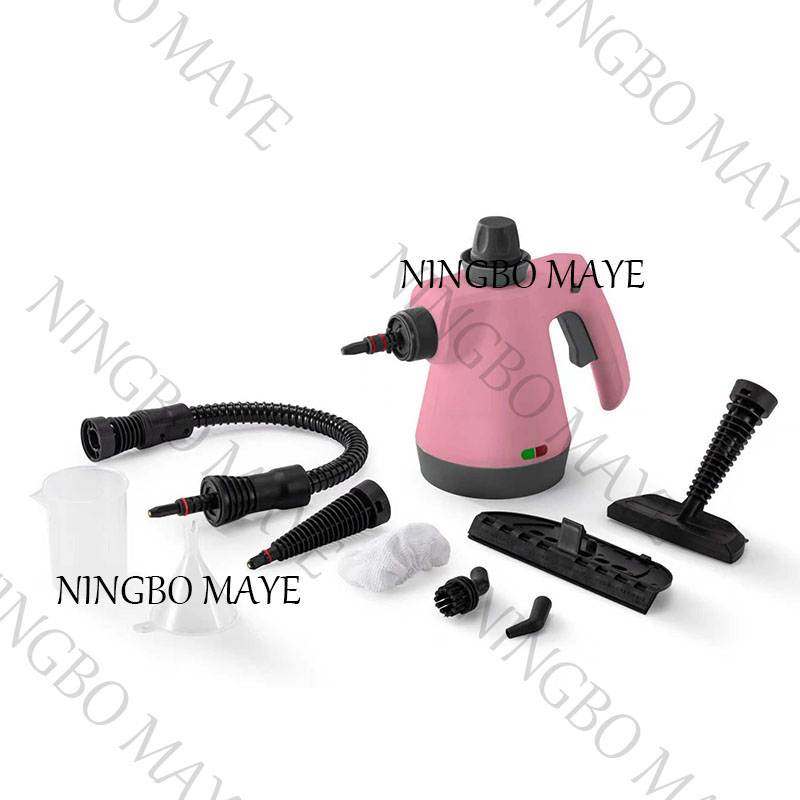
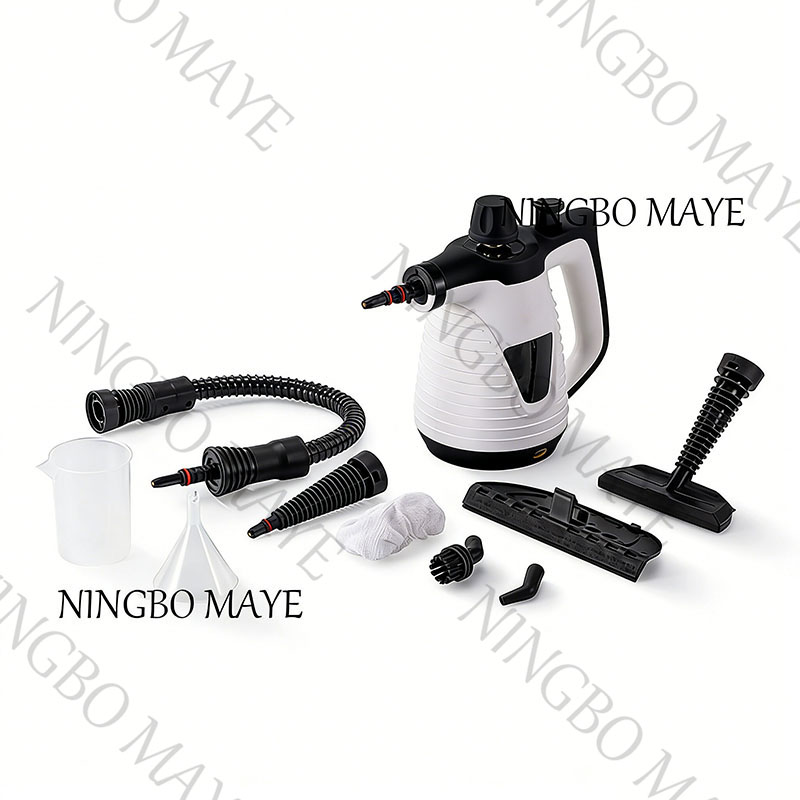
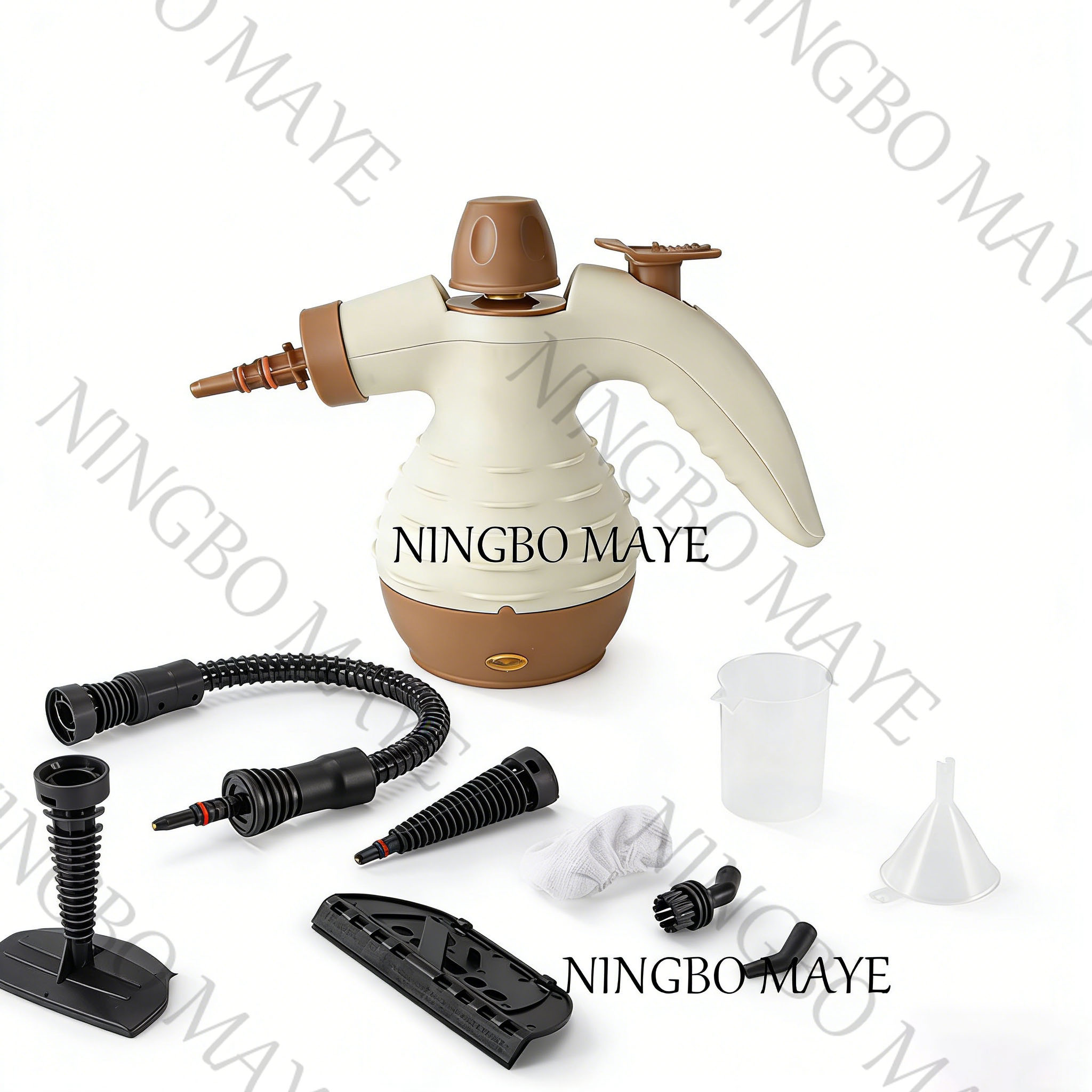
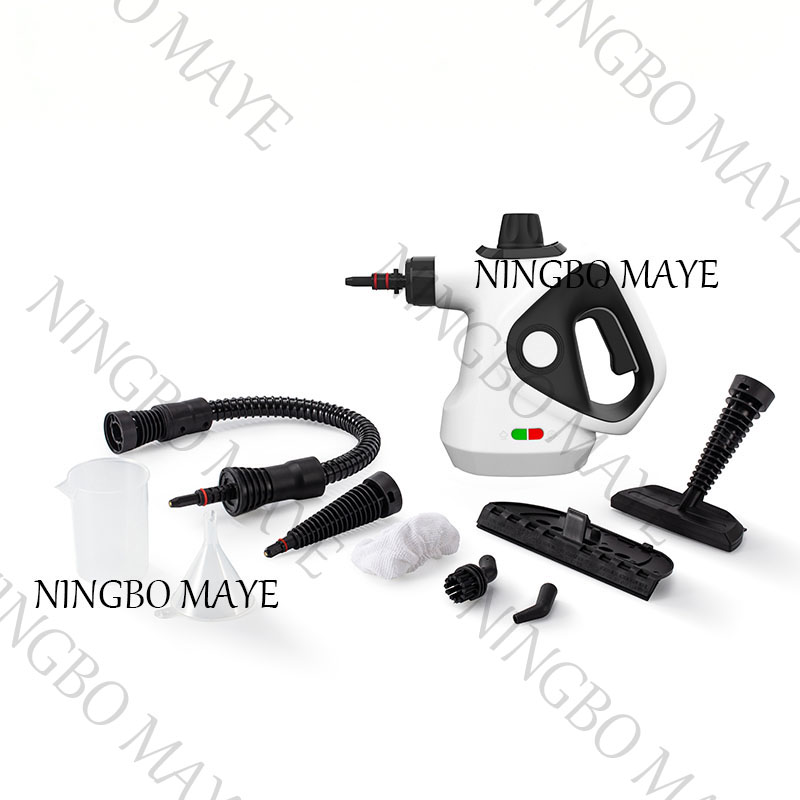
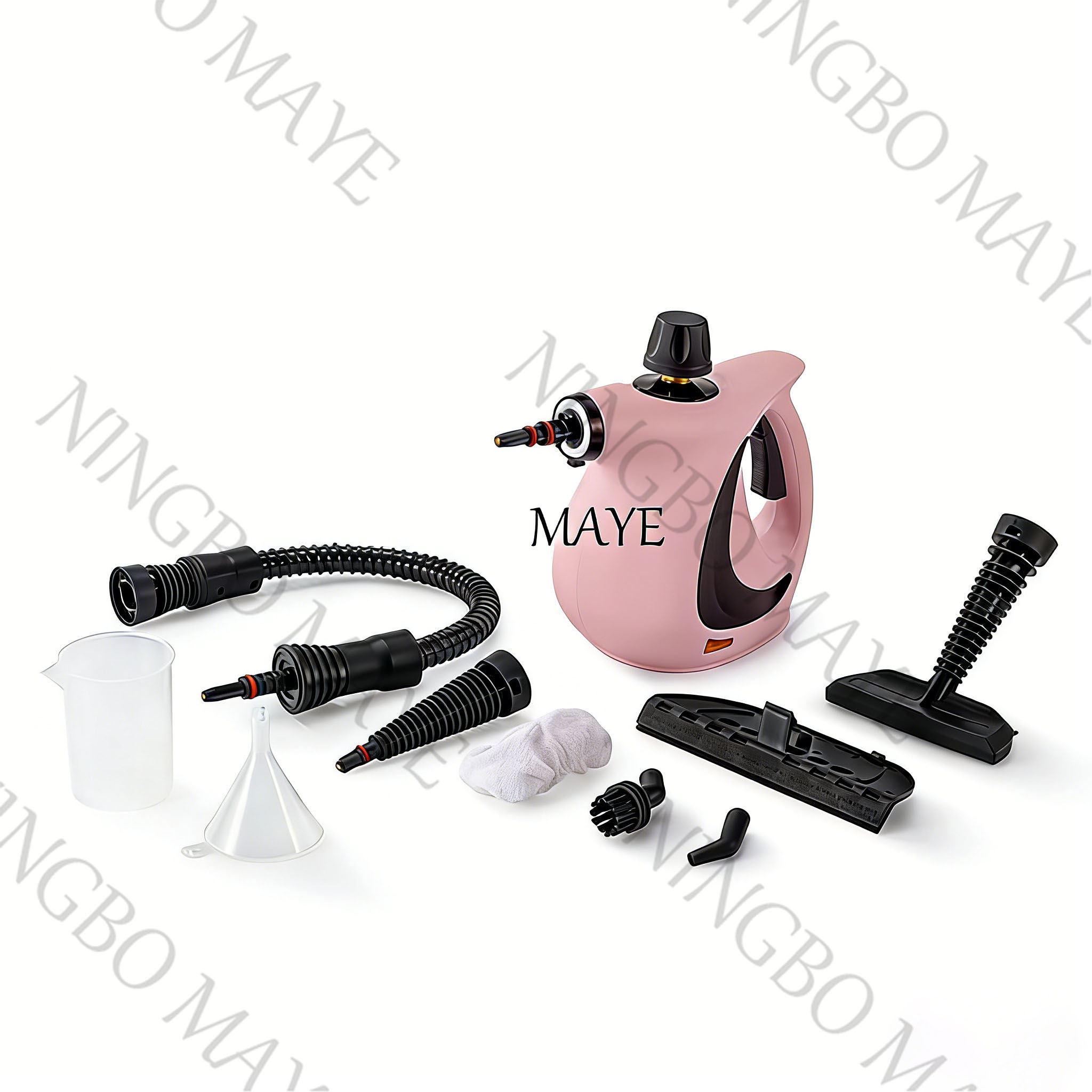
Machines built for this duty tend to share a profile: a pressure-tested boiler with a relief valve, a hose rated for continuous high temperature, and an accessory set that includes at least one narrow jet. In our own household range, models such as the TM188 and TM388 were specified around exactly these parameters, with the nozzle kit treated as part of the tool rather than an afterthought.
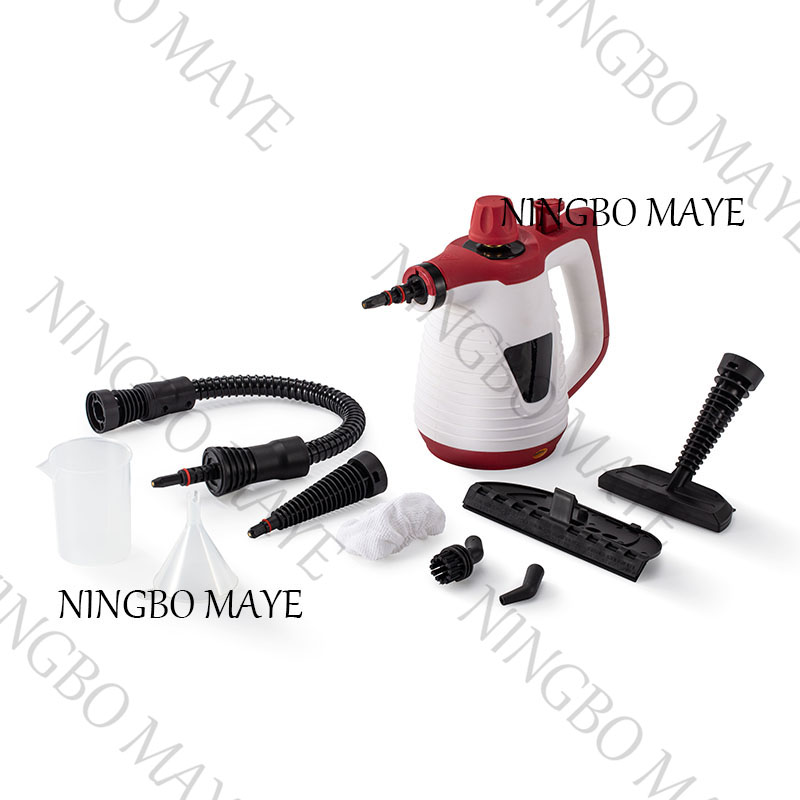 TM-388 Handheld Multi-Surface Steam CleanerHandheld 250 ml working-capacity steam cleaner using 2.8–3.2 bar pressure for kitchen, bathroom, floor and car interior surfaces without chemical detergents.View Product →
Capacity is a genuine trade-off rather than a simple upgrade. A larger tank means longer uninterrupted work, but a heavy canister is awkward on a mattress, on stairs and around a bed frame. For single-room treatment, a 350–500 ml boiler with a ten to fifteen minute cycle is often a better compromise than a two-liter floor steamer that has to be dragged into position and refilled at the worst possible moment.
Steam cleaners fail in the field for two reasons: scale and neglect. Hard water deposits insulate the heating element, reduce steam output and eventually trip the thermal cut-out, usually in the middle of a job. Using distilled water for steam cleaners is the cheapest reliability measure available, particularly where local water hardness exceeds roughly 150 mg/L as calcium carbonate. Where distilled water is impractical, descale every ten to fifteen hours of use with a citric acid solution at the ratio the manufacturer specifies rather than an improvised one.
Between jobs, empty the tank, run the boiler briefly with the trigger held to clear residual moisture, and coil the hose without sharp bends. Store the machine with the cap loose. A hose that stays damp inside develops odor within weeks, and odor is the first complaint a customer raises even when the machine still performs correctly.
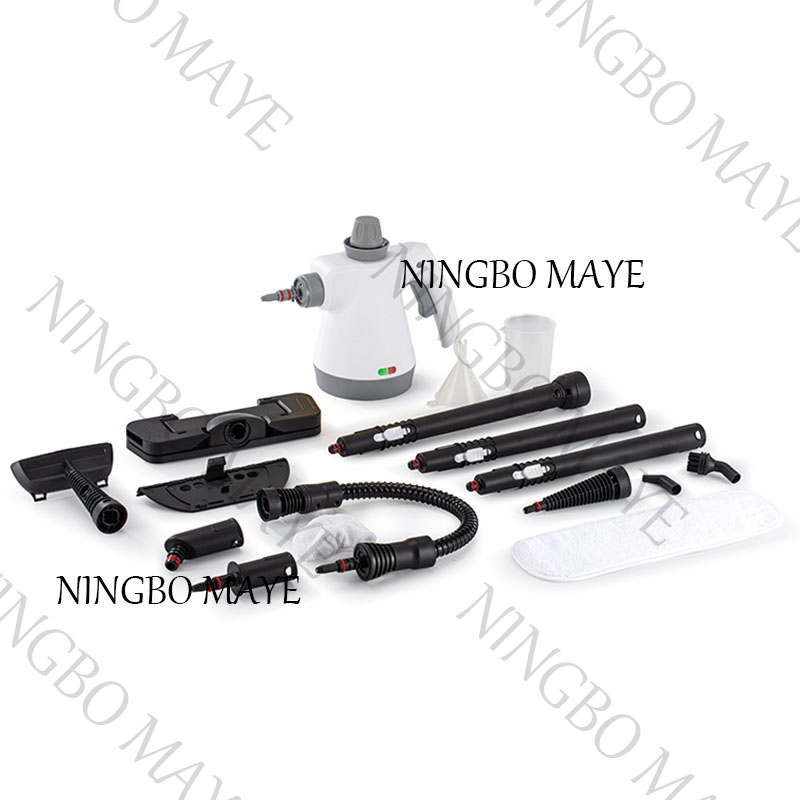 TMSC-001 Handheld Electric Steam Cleaner900–1050 W handheld steam cleaner with 250 ml working capacity and 2.8–3.2 bar pressure for household and car interior cleaning.View Product →
For contractors running several units, a simple maintenance log per machine, recording hours used, descaling dates and nozzle replacements, prevents most mid-job failures and makes warranty conversations far shorter.
If you are specifying steam cleaners for a pest control contractor, a hotel group or a retail program, the questions that decide reorders are different from the ones that decide a single consumer purchase.
Factory audits from European retail chains, ISO 9001 quality management and product certifications such as CE, GS, UL and RoHS are baseline expectations in this category rather than selling points. What separates suppliers in practice is documentation discipline: whether the temperature log, pressure test record and spare parts list are available on request, and whether the same specification holds on the third shipment as on the first. That is where a slow, thorough steamer either becomes a dependable tool in a technician's van or a return.
Steam kills bed bugs and eggs where it reaches lethal temperature and holds it long enough to matter. In a mattress seam with a jet nozzle, slow passes and a machine that maintains 212°F, that usually means seconds. On a thick headboard, inside a foam core or across a cluttered room, it can mean nothing at all.
The realistic view is that steam is the best contact tool available for the surfaces where bed bugs live and where sprays cannot safely go, and it is not a stand-alone cure. A workable sequence looks like this: vacuum and declutter, steam seams, joints and fabric slowly and thoroughly, apply a labeled residual product to cracks and voids where the label permits, encase the mattress, install interceptors, and inspect at seven, fourteen and thirty days. Follow that and a single-room infestation is usually manageable. Skip the follow-up and the machine will have done its job while the room quietly fails.
For anyone choosing equipment, the deciding factor is not the name on the boiler but whether the machine can hold temperature through a slow pass and deliver dry vapor instead of water. Everything else, from tank size to accessory count, is a detail you can work around.
Related Products

Address
East Zone Development Zone Lingshan Town Yuyao City Zhejiang P.R.C.
Tel
+86-18905840666 / +86-574-62067822
+86-15905848828
QR CODE
 Wholesale Multifunctional Steam Cleaner Manufacturers

 English
 Español