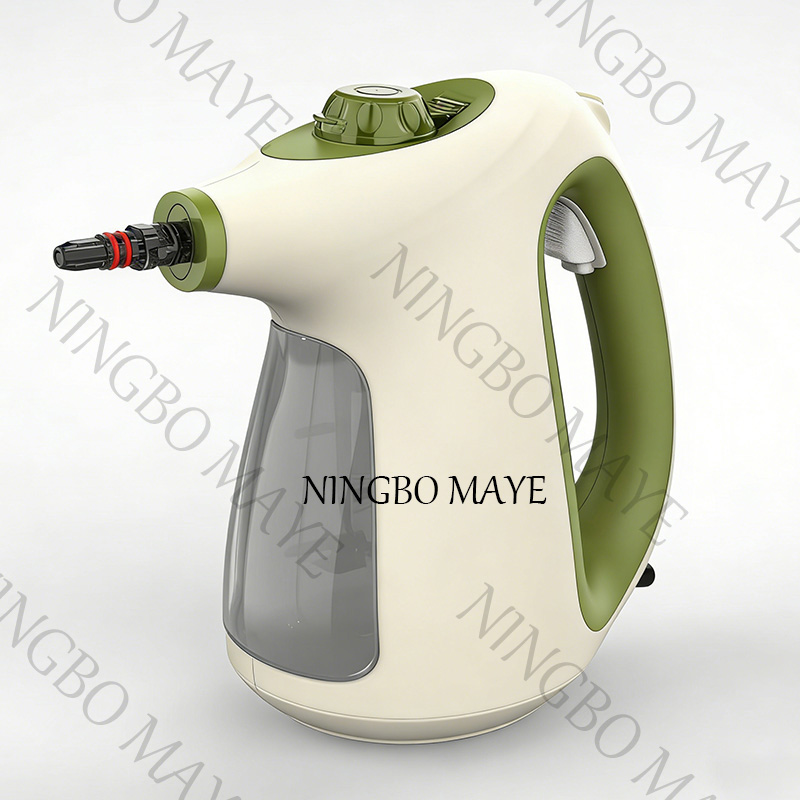
A handheld steam cleaner is one of the most versatile cleaning tools available for home use — compact enough to store in a cabinet, powerful enough to sanitize kitchen surfaces, grout lines, upholstery, and bathroom fixtures without chemical cleaners. Steam at temperatures between 100°C and 180°C kills up to 99.9% of common household bacteria and dust mites on contact, making handheld steam cleaners particularly valuable for households with allergies, young children, or pets. They work best on hard, non-porous surfaces and sealed materials — and understanding their limitations is as important as knowing their strengths before committing to a purchase.
How a Handheld Steam Cleaner Works
The operating principle is straightforward: a small water reservoir feeds a heating element that rapidly boils the water into pressurized steam. The steam is directed through an internal tube to a nozzle or attached tool, where it exits at high velocity and temperature. The combination of heat, moisture, and pressure loosens dirt, dissolves grease, and destroys microbial life on contact surfaces.
The Heating Cycle: Boiler vs Thermoblock
Handheld steam cleaners use one of two heating system designs, and the difference affects how quickly the unit is ready to use:
- Boiler (pressurized tank) systems: Water is heated in a sealed tank until it reaches operating pressure — typically 3–4 bar. Heat-up time is longer (3–8 minutes), but steam output is more consistent and sustained throughout the cleaning session. Better for extended cleaning tasks.
- Thermoblock (on-demand) systems: Water passes through a narrow heated channel and flash-converts to steam almost instantly — ready in 20–45 seconds. Output pressure is typically lower (1.5–2.5 bar), and steam production may be less sustained for very long sessions. Better suited to quick spot-cleaning tasks.
Steam Temperature and Sanitization Effectiveness
The sanitizing claim of steam cleaners rests on temperature alone — no chemicals are involved. Most household pathogens are destroyed at temperatures above 70°C sustained for several seconds. Handheld steam cleaners operating at nozzle temperatures of 120–160°C exceed this threshold substantially. A 2011 study published in the American Journal of Infection Control confirmed that steam cleaning at these temperatures achieved a 6-log reduction (99.9999%) in common pathogens including E. coli and Staphylococcus aureus on hard surfaces — comparable to chemical disinfectants when applied correctly.
The key variable is contact time and steam concentration — a fast pass with a handheld unit delivers less thermal energy to the surface than a slow, close-contact pass. For genuine sanitization (not just cleaning), hold the nozzle 2–3 cm from the surface and move slowly at approximately 1 cm per second, allowing sufficient dwell time for the heat to penetrate.
What Handheld Steam Cleaners Clean Best
Handheld steam cleaners perform most effectively on surfaces that can tolerate heat and moisture — and perform poorly or can cause damage on surfaces that cannot. Matching the tool to the surface is the most important practical consideration.
High-Performance Applications
- Tile grout and bathroom surfaces: The single most effective application. Grout is porous, harbors mold and mildew deeply within its structure, and responds dramatically to steam penetration. A narrow jet nozzle combined with a small brush attachment loosens embedded deposits that chemical cleaners leave behind.
- Kitchen stove tops and oven interiors: Baked-on grease that resists scrubbing dissolves quickly when steam is applied for 10–15 seconds before wiping. Glass and ceramic hob surfaces clean without scratching — an advantage over abrasive pads.
- Sealed hardwood and tile floors: The floor attachment (typically a flat pad with microfiber cover) delivers steam cleaning without saturating the surface. Effective on sealed hardwood, ceramic, porcelain, and vinyl plank flooring.
- Upholstery and fabric: Steam refreshes fabric, removes odors, kills dust mites, and removes light surface soiling from sofas, chairs, mattresses, and car interiors. The fabric tool uses a wider, gentler steam aperture to avoid waterlogging the material.
- Window and mirror glass: Steam loosens fingerprints, water spots, and atmospheric grime — follow with a squeegee or lint-free cloth for streak-free results.
- Children's toys and baby equipment: Steam sanitizes without leaving chemical residues — particularly valuable for plastic toys, high chairs, and surfaces that children put in their mouths.
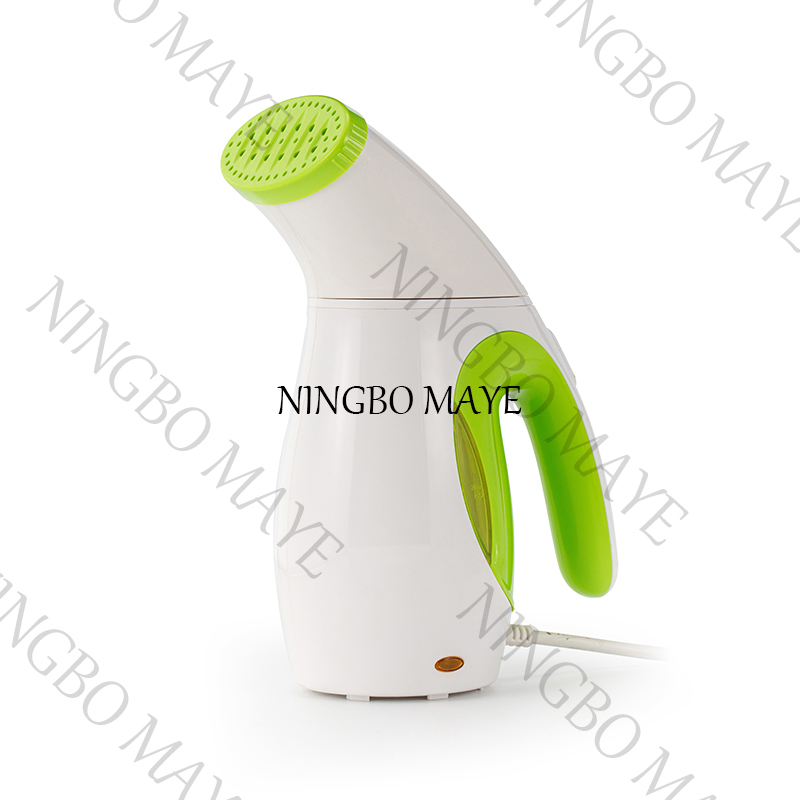
- Clothing and garment steaming: Many handheld steam cleaners include a fabric nozzle suitable for de-wrinkling garments, refreshing dry-clean-only items, and removing odors from suits, jackets, and curtains.
Surfaces to Avoid
- Unsealed or waxed hardwood floors: Steam penetrates the unsealed wood fibers, causing swelling, warping, and finish damage. This damage is often irreversible.
- Laminate flooring: Most laminate is not fully moisture-sealed at the seams — steam can penetrate the joints, causing the core material (usually HDF) to swell and the surface layer to delaminate.
- Delicate fabrics: Velvet, silk, and thin synthetic fabrics can be scorched or have their texture permanently altered by high-temperature steam — always test on an inconspicuous area first.
- Cold glass: Rapid thermal shock from applying high-temperature steam to cold glass — such as a window on a cold day — can cause cracking. Allow glass surfaces to reach room temperature before steaming.
- Painted walls: Steam can lift or bubble paint, particularly on older or poorly adhered surfaces.
- Electrical outlets and switches: Never direct steam toward electrical fittings — moisture and electricity are a safety hazard regardless of the cleaning benefit.
Key Specifications to Compare When Buying
Handheld steam cleaners vary widely in performance across several specifications that marketing materials often obscure with vague claims. The following table captures the most important specs and what to look for at each quality tier:
Table 1: Handheld Steam Cleaner Specifications by Performance Tier
| Specification |
Budget ($20–$60) |
Mid-Range ($60–$150) |
Premium ($150–$300+) |
| Wattage |
800–1,000W |
1,000–1,300W |
1,300–1,800W |
| Steam Pressure |
1.5–2.0 bar |
2.0–3.5 bar |
3.0–5.0 bar |
| Heat-Up Time |
3–5 minutes |
25 seconds – 2 minutes |
20–45 seconds |
| Water Tank Capacity |
150–250 ml |
250–400 ml |
350–500 ml |
| Continuous Steam Time |
8–12 minutes |
12–20 minutes |
20–30 minutes |
| Number of Attachments |
2–5 |
6–12 |
10–20+ |
| Variable Steam Control |
Rarely |
Some models |
Standard |
Wattage: The Most Reliable Performance Indicator
Wattage directly determines how much water the heating element can vaporize per minute and how hot the steam is at the nozzle. A 1,500W handheld steam cleaner produces meaningfully hotter and more powerful steam than a 900W unit — the difference is visible in the penetration of baked-on grease and the speed at which grout is cleaned. For serious cleaning tasks, aim for 1,200W minimum; for light garment steaming or quick spot-cleaning, 1,000W is sufficient.
Tank Capacity and Continuous Steam Time
Continuous steam time is determined by tank capacity and steam output rate. A 300 ml tank on a mid-range unit delivers approximately 15–18 minutes of continuous steaming — enough to clean a full bathroom. For whole-room floor cleaning or extended sessions, either a larger tank (400 ml+) or a unit that allows mid-session refilling (most non-pressurized thermoblock units allow this) is necessary. Pressurized boiler units generally cannot be refilled while hot without safety risk — always check whether mid-session refilling is supported before purchasing.
Variable Steam Output Control
Variable steam control — typically a dial or button that adjusts steam volume from low to high — is one of the most practically useful features on a handheld steam cleaner. Delicate fabrics, painted surfaces, and car interiors need lower steam intensity than grout or oven surfaces. Without variable control, users must compensate by increasing nozzle distance, which reduces cleaning effectiveness. Variable steam output is worth prioritizing over attachment quantity when comparing models in the mid-range tier.
Attachments and What Each Is Actually Used For
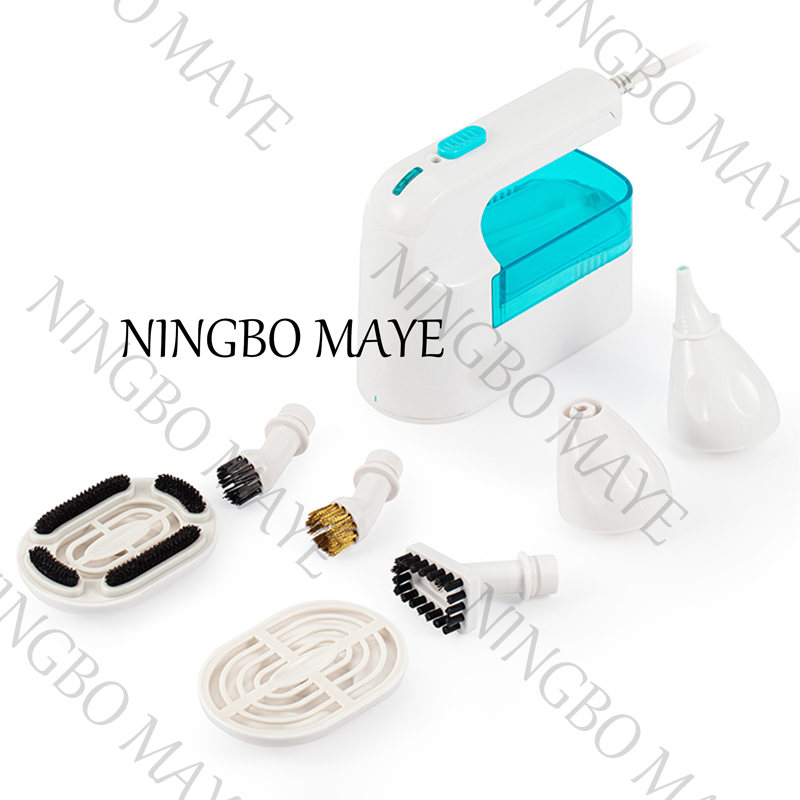
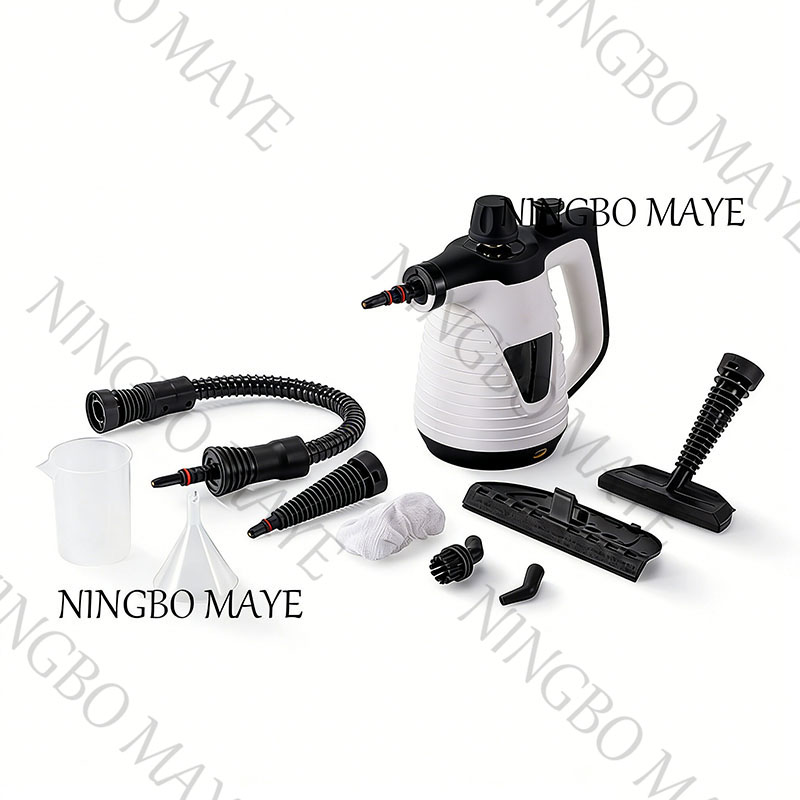
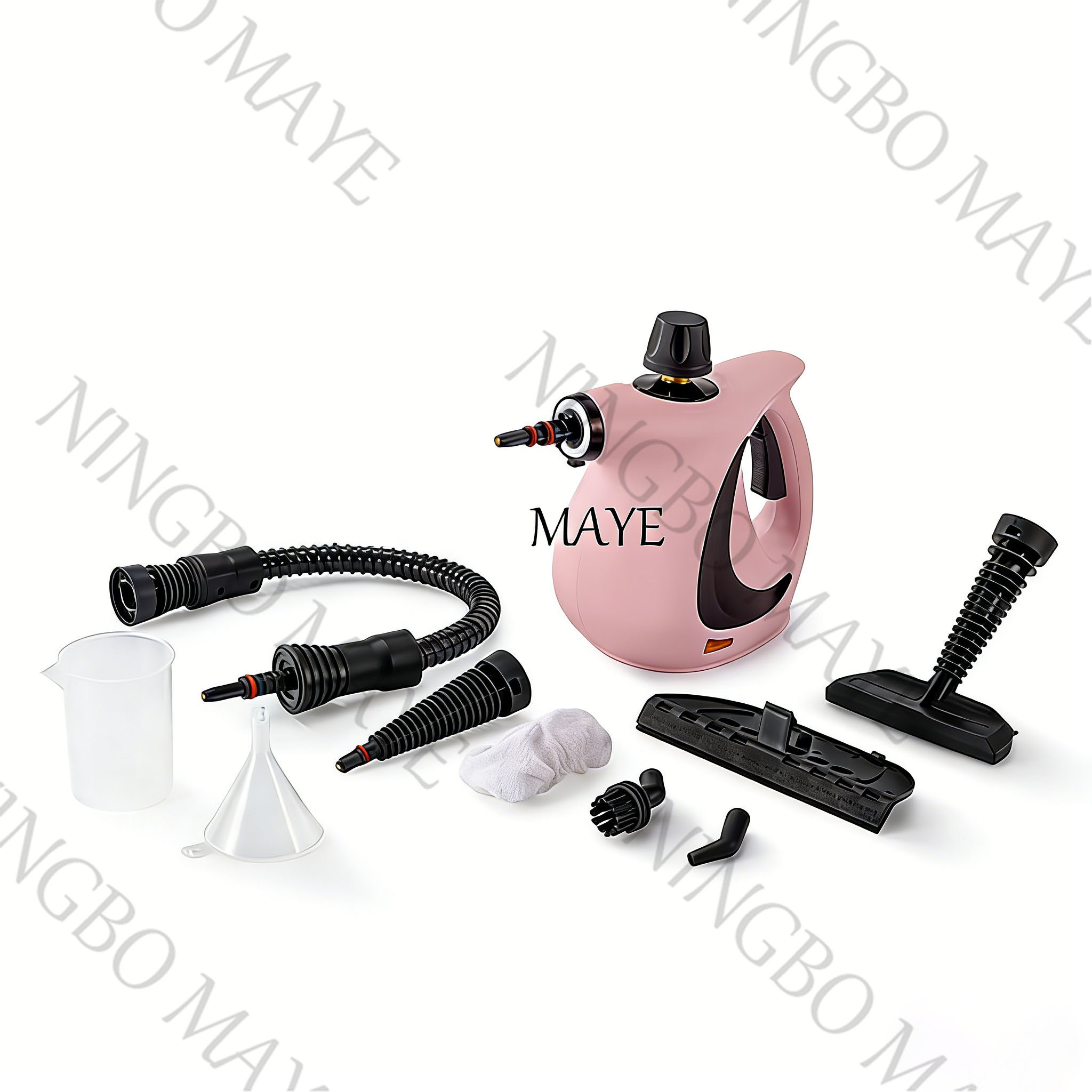
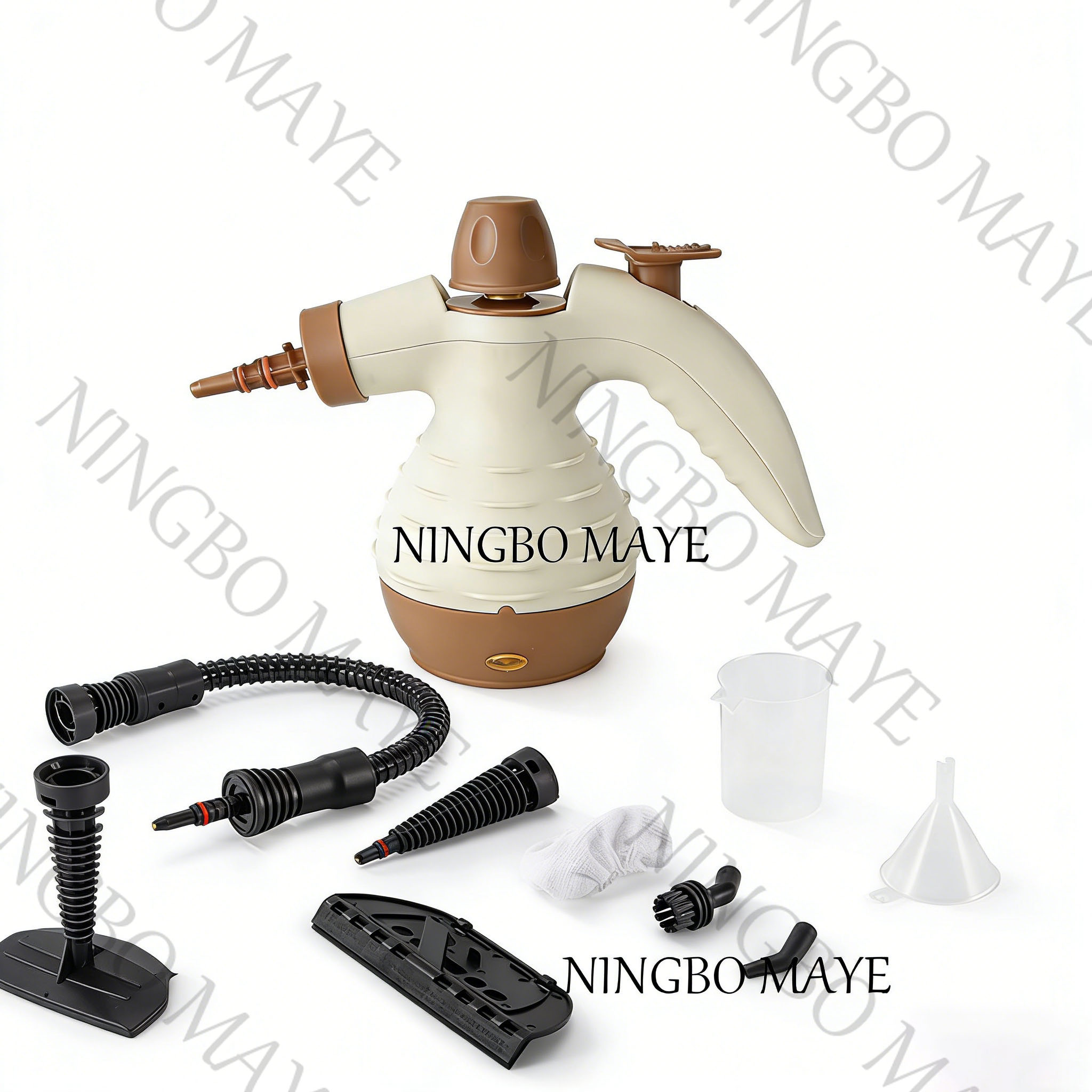
The attachment kit included with a handheld steam cleaner significantly expands its usefulness across different surfaces and tasks. A large attachment count is often used as a marketing point, but many budget sets include attachments of limited practical value. The following are the attachments that deliver genuine performance across common cleaning tasks:
- Jet nozzle (pointed/narrow): The most-used attachment. Concentrates steam into a narrow, high-pressure stream for grout cleaning, tight corners, door seals, and between appliances. Indispensable for bathroom and kitchen applications.
- Brush nozzle (round or flat with bristles): Combines steam with mechanical agitation. Available in nylon (general purpose) and brass (harder deposits, rust). Brass brushes are particularly effective on stove grates, BBQ grill grates, and heavily soiled tile grout.
- Wide nozzle / squeegee nozzle: Spreads steam broadly across flat surfaces — glass, mirrors, windows, and large flat tile areas. Often includes a rubber squeegee edge for streak-free results.
- Fabric nozzle: A wider aperture with reduced steam intensity for garment steaming, upholstery refreshing, and mattress sanitizing. Look for models where the fabric nozzle can accept a microfiber cloth cover — this distributes steam more evenly and prevents dripping on delicate fabrics.
- Flexible extension hose: Allows the steam to be directed into hard-to-reach areas — behind appliances, under cabinets, inside dishwasher seals, and into car vents — without repositioning the unit body itself.
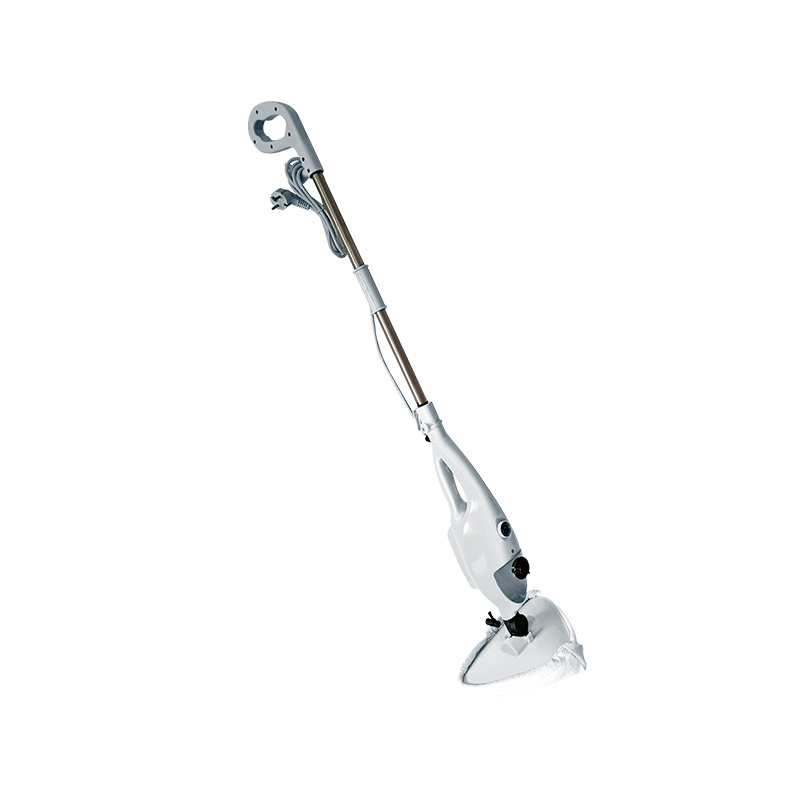
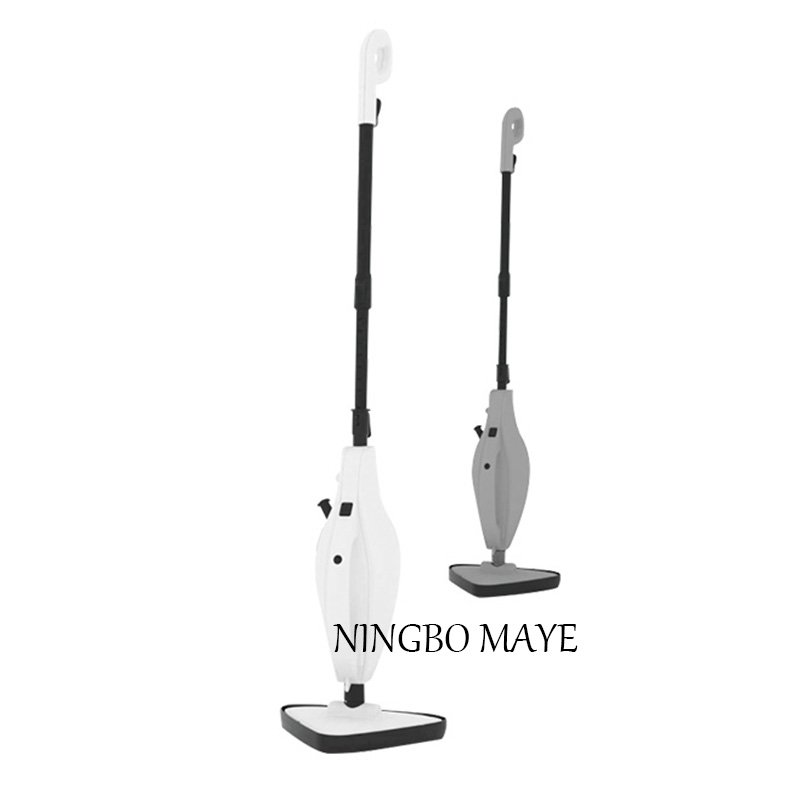
- Floor glider attachment: Converts the handheld unit into a compact floor steam mop. Effective for spot cleaning sealed floors in small areas, though not a replacement for a dedicated floor steam mop for large surface areas.
Water Quality and Descaling: The Maintenance Issue Most Buyers Overlook
Limescale buildup inside the heating element and steam passages is the primary cause of reduced performance and premature failure in handheld steam cleaners. In hard water areas — where dissolved calcium and magnesium mineral content exceeds 200 mg/L — scale can accumulate visibly within weeks of regular use, reducing steam pressure and eventually blocking nozzles entirely.
Using the Right Water
- Distilled or demineralized water: The best choice for extending the steam cleaner's life. Contains virtually no dissolved minerals, eliminating scale formation entirely. Available inexpensively at supermarkets and hardware stores.
- Filtered tap water: Standard carbon filters do not remove hardness minerals — a Brita-type filter is insufficient. Only reverse osmosis or specific demineralization cartridges reduce hardness to levels acceptable for steam cleaners.
- Tap water in soft water regions: Acceptable if local water hardness is below 100 mg/L. Check your local water supplier's published hardness data if uncertain.
Descaling Procedure
Even with distilled water, periodic descaling is recommended every 3–6 months depending on use frequency. The standard method:
- Fill the tank with a mixture of equal parts white vinegar and distilled water (50/50 solution)
- Run the unit for 2–3 minutes, allowing the acidic solution to pass through the heating element and steam passages
- Allow to cool completely, empty the remaining solution, and refill with pure distilled water
- Run a full tank of clean water through the unit to flush all vinegar residue before using on surfaces
Some premium models include a removable, dishwasher-safe descaling cartridge or a dedicated descaling port — a convenience worth noting when comparing models if you live in a hard water area.
Safety Considerations for Everyday Use
Steam at 120–160°C causes serious burns on skin contact — more severely and more quickly than boiling water at 100°C, because steam carries latent heat energy that releases on contact with cooler surfaces. Safe operation practices are non-negotiable:
- Never point the nozzle at people, pets, or plants: The steam jet is powerful enough to cause immediate injury. Always direct the nozzle away from living things before triggering steam output.
- Keep children away during operation: The unit body and nozzle become hot during use — handle only by the insulated grip, and store out of reach immediately after use.
- Release pressure before refilling pressurized boiler models: Attempting to open a pressurized tank cap while the unit is hot or still under pressure is a serious burn risk. Follow the manufacturer's cooldown and pressure release procedure precisely.
- Do not add cleaning chemicals to the water tank: Chemical additives can damage internal seals and heating elements, void warranties, and produce potentially harmful vapor when heated. Steam alone is sufficient for cleaning and sanitization.
- Allow full cooldown before storage: Storing a hot unit — even in a cabinet — retains heat that can damage internal components and nearby materials. Allow at least 20–30 minutes of cooldown time with the cap removed before storing.
Handheld Steam Cleaner vs Full-Size Steam Cleaner: Which to Choose
The choice between a handheld steam cleaner and a full-size upright or canister steam cleaner comes down to where you intend to use it most and how much storage space you have available.
| Attribute |
Handheld Steam Cleaner |
Full-Size Steam Cleaner |
| Best For |
Spot cleaning, vertical surfaces, upholstery, garments |
Large floor areas, whole-room cleaning |
| Tank Capacity |
150–500 ml |
1.0–2.5 liters |
| Continuous Steam Time |
8–30 minutes |
30–60+ minutes |
| Weight |
0.5–1.5 kg |
2.5–6 kg |
| Storage Space Required |
Minimal (drawer or shelf) |
Significant (closet or utility room) |
| Price Range |
$20–$300 |
$100–$600+ |
| Maneuverability |
Excellent — one-handed use |
Good — requires floor space to move |
For most households, a handheld steam cleaner handles 80% of common steam cleaning needs — kitchens, bathrooms, upholstery, and garments — without the storage commitment and cost of a full-size unit. A full-size canister steam cleaner makes more sense for homes with large tile floor areas or where floor steam cleaning is the primary intended use. Many users own both: a handheld for surface and spot work, and a mop-style or canister for floors.
Recommended Buying Criteria by Use Case
Rather than recommending specific brands — which change with market availability and pricing — the following criteria guide selection based on your primary intended use:
- For bathroom and kitchen deep cleaning: Prioritize steam pressure (3+ bar), wattage (1,200W+), a quality jet nozzle, and a brass brush attachment. Thermoblock heat-up is convenient; boiler pressure is better for stubborn grout.
- For garment and fabric steaming: Prioritize quick heat-up (under 30 seconds), variable steam output, a dedicated fabric nozzle with microfiber cover, and a tank size above 250 ml for extended sessions.
- For allergy management and dust mite elimination: Prioritize consistent steam temperature (120°C+ at the nozzle), a wide upholstery attachment, and a unit with documented sanitization testing. A mid-range model at 1,200–1,500W with a 3+ bar rating covers mattress, sofa, and carpet edge treatment effectively.
- For car interior detailing: Prioritize a flexible extension hose, narrow jet nozzle, and a brush attachment. A compact unit weighing under 1 kg is easier to maneuver in confined vehicle spaces.
- For general household versatility: A mid-range thermoblock unit at 1,200–1,500W with variable steam, 8–12 attachments, and a 300–400 ml tank covers nearly all domestic cleaning scenarios. Spend the budget on wattage and pressure before worrying about attachment count.

 Wholesale Multifunctional Steam Cleaner Manufacturers

 English
 Español