2026-04-02
A handheld steam cleaner is a compact, portable appliance that heats ordinary tap water to produce pressurized steam, typically at temperatures between 200°F and 250°F (93°C to 121°C). This steam is then directed through a nozzle and a variety of attachments to clean and sanitize surfaces. Unlike a traditional steam mop, which is designed primarily for floors, a handheld steam cleaner is lightweight, maneuverable, and equipped with brushes, nozzles, and other tools that allow it to clean a wide range of surfaces, from stovetops and oven doors to tile grout and upholstery. The high temperature of the steam is the key to its effectiveness. Heat breaks down grease, oil, and grime, while the moisture lifts dirt from surfaces. Importantly, steam at these temperatures is also highly effective at killing bacteria, viruses, mold, and dust mites. The Centers for Disease Control and Prevention (CDC) notes that steam cleaners that reach temperatures above 212°F (100°C) can effectively sanitize surfaces without the need for chemical disinfectants.
The market for handheld steam cleaners has grown substantially as consumers have become more aware of the potential health and environmental impacts of chemical cleaning products. Volatile organic compounds (VOCs) found in many household cleaners can contribute to indoor air pollution and have been linked to respiratory issues. Plastic packaging from disposable cleaning products adds to the global waste crisis. Handheld steam cleaners offer a solution to both problems. They use only water, produce no chemical residue, generate no plastic waste beyond the initial purchase, and can be used thousands of times over many years. For families with young children, pets, or individuals with allergies, asthma, or chemical sensitivities, the ability to clean effectively without chemicals is invaluable. The following sections explore in depth why handheld steam cleaners have become so popular and what factors should be considered when selecting one of these versatile cleaning tools.
The single most compelling advantage of a handheld steam cleaner is its ability to sanitize and disinfect surfaces using nothing but water. The CDC recognizes that steam cleaning is an effective method for killing bacteria and viruses when the steam reaches a sufficient temperature. Most handheld steam cleaners produce steam at temperatures between 200°F and 250°F (93°C to 121°C). At these temperatures, the heat denatures the proteins and disrupts the cell membranes of microorganisms, killing them within seconds. Studies have demonstrated that steam cleaning can eliminate 99.9% of common bacteria, including E. coli, Salmonella, and Staphylococcus aureus, as well as dust mites and mold spores. For households concerned about the overuse of chemical disinfectants, which can contribute to antibiotic resistance and expose family members to potentially harmful compounds, steam cleaning offers a safe, effective alternative. For those with chemical sensitivities, asthma, or allergies, the absence of fumes and residues is a significant benefit. You can clean a countertop, wipe away the moisture, and immediately prepare food on the same surface without worrying about chemical residue.
A handheld steam cleaner is one of the most versatile cleaning tools available. With a set of attachments, the same device can clean an astonishing variety of surfaces and tackle numerous cleaning challenges throughout the home. In the kitchen, it can blast away baked-on grease from stovetops, oven interiors, and range hoods. It can clean microwave interiors, dissolve food residue from countertops, and sanitize cutting boards and sink drains. In the bathroom, it can remove soap scum from shower doors and tile walls, clean and sanitize toilets, dissolve mineral deposits from faucets and showerheads, and steam away mold and mildew from grout and caulk. Throughout the home, it can clean window tracks, baseboards, blinds, and light fixtures. It can refresh upholstery and curtains, killing dust mites and removing odors. It can clean and sanitize children's toys, pet beds, and high chairs. It can even be used for automotive detailing, cleaning car interiors, removing bugs from grilles, and cleaning engine compartments. The ability to use a single tool for all these tasks reduces clutter, saves money on specialized cleaning products, and makes cleaning more efficient.
Grease, grime, and stubborn stains that resist conventional cleaning often yield to the combination of heat and pressure from a steam cleaner. The high temperature melts and softens grease and oil, allowing it to be wiped away easily. The pressurized steam penetrates porous surfaces, lifting dirt and stains from tile grout, upholstery fibers, and carpeting. For oven cleaning, a handheld steam cleaner can dissolve baked-on food residue without the harsh fumes and skin irritation associated with chemical oven cleaners. For grout, steam can lighten dark, dingy lines between tiles, restoring them to near-original condition without scrubbing with bleach-based products. For carpets and upholstery, steam can lift set-in stains and eliminate odors from pets, smoke, or spills. The steam also kills dust mites, which are a common allergen trigger. The result is a deeper, more thorough clean than is typically achievable with surface-level wiping and spraying.
The environmental and economic benefits of switching to a handheld steam cleaner are substantial. From an environmental perspective, using a steam cleaner eliminates the need for single-use plastic bottles of cleaning products. The typical household goes through dozens of plastic spray bottles each year, most of which are not recycled and end up in landfills or oceans. It also eliminates the need for paper towels, which are used once and discarded. While a steam cleaner requires electricity to operate, the energy consumption is modest. A typical handheld steam cleaner draws 1,200 to 1,500 watts and is used for minutes at a time, so the electricity cost per use is pennies. From an economic perspective, the savings are equally compelling. A quality handheld steam cleaner costs $50 to $150. The average household spends $100 to $300 per year on cleaning products, paper towels, and related supplies. The steam cleaner pays for itself in a matter of months, and then continues to save money year after year. For commercial users, such as house cleaners or janitorial services, the savings are even more dramatic.
The following table provides a concise overview of the key specifications for handheld steam cleaners.
| Parameter | Typical Description |
|---|---|
| Product Name | Handheld Steam Cleaner |
| Power Rating | 800W to 1,500W |
| Steam Temperature | 200°F to 250°F (93°C to 121°C) |
| Steam Pressure | 2 to 5 bar (30 to 70 psi) |
| Water Tank Capacity | 150ml to 500ml (5 oz to 17 oz) |
| Heat-Up Time | 15 to 120 seconds |
| Continuous Steam Time | 5 to 25 minutes per fill |
| Steam Flow Rate | 15 to 40 g/min |
| Voltage | 110-120V (US) or 220-240V (EU/UK/AU) |
| Safety Features | Pressure relief valve, child safety lock, thermal cut-off |
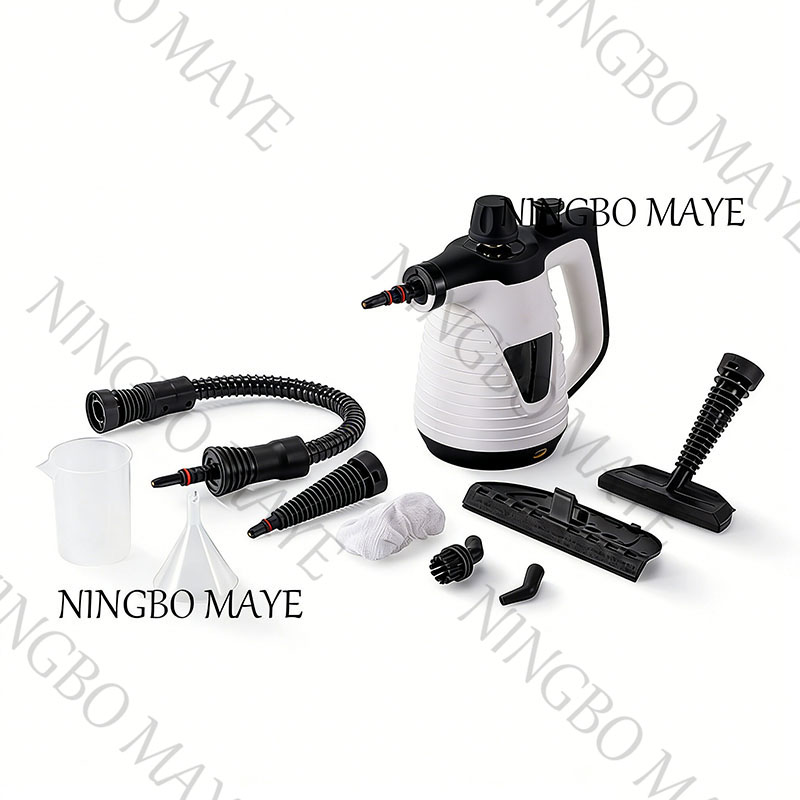
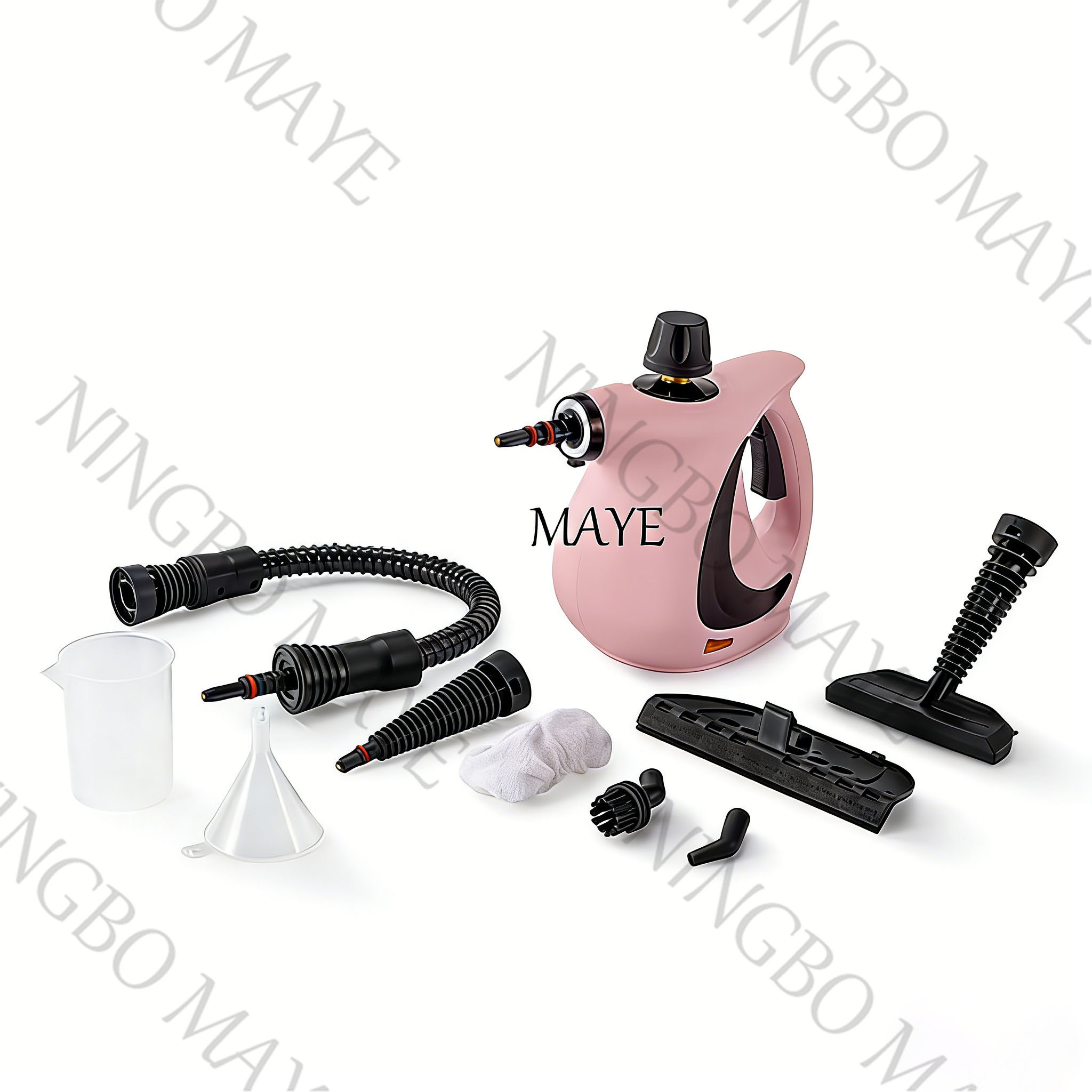
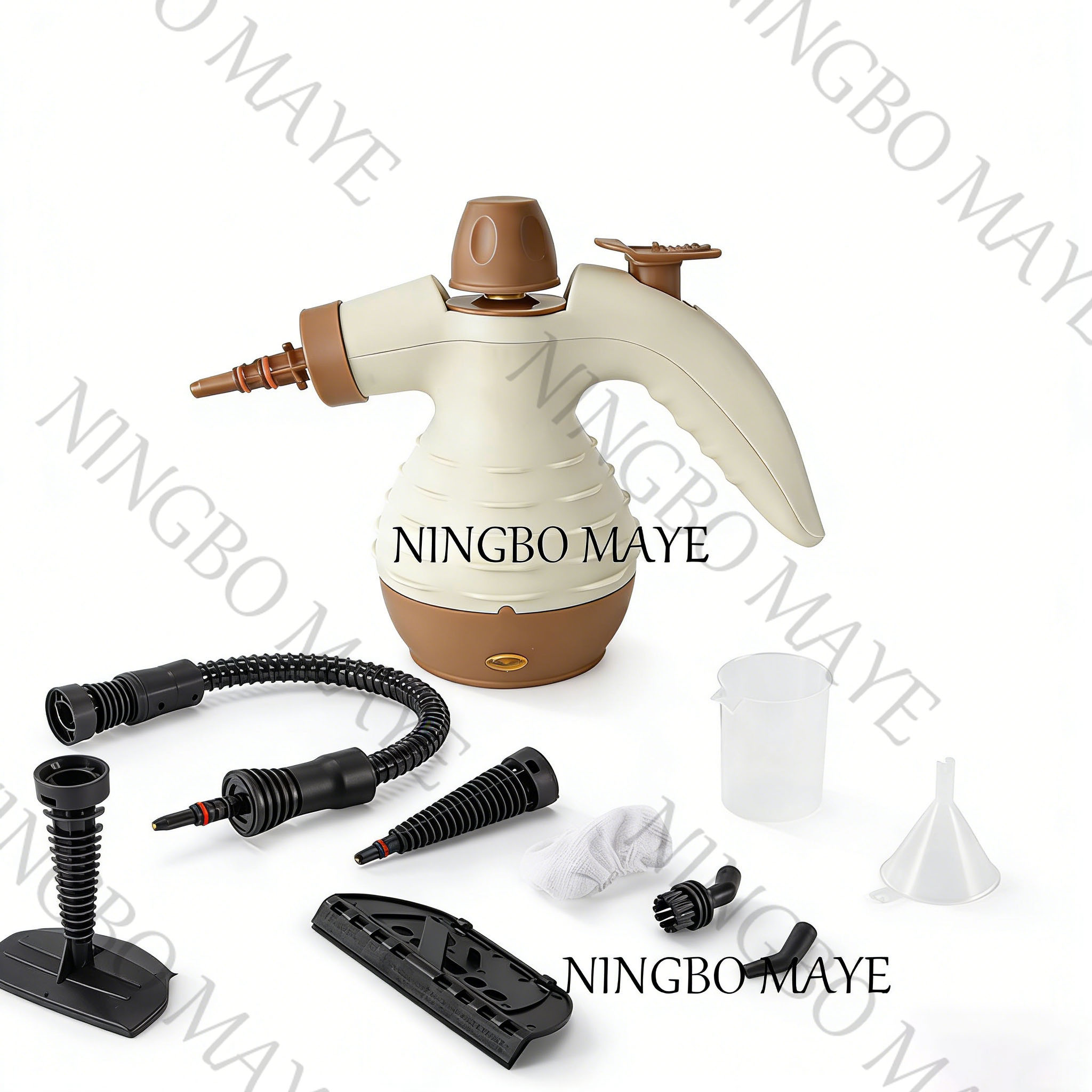
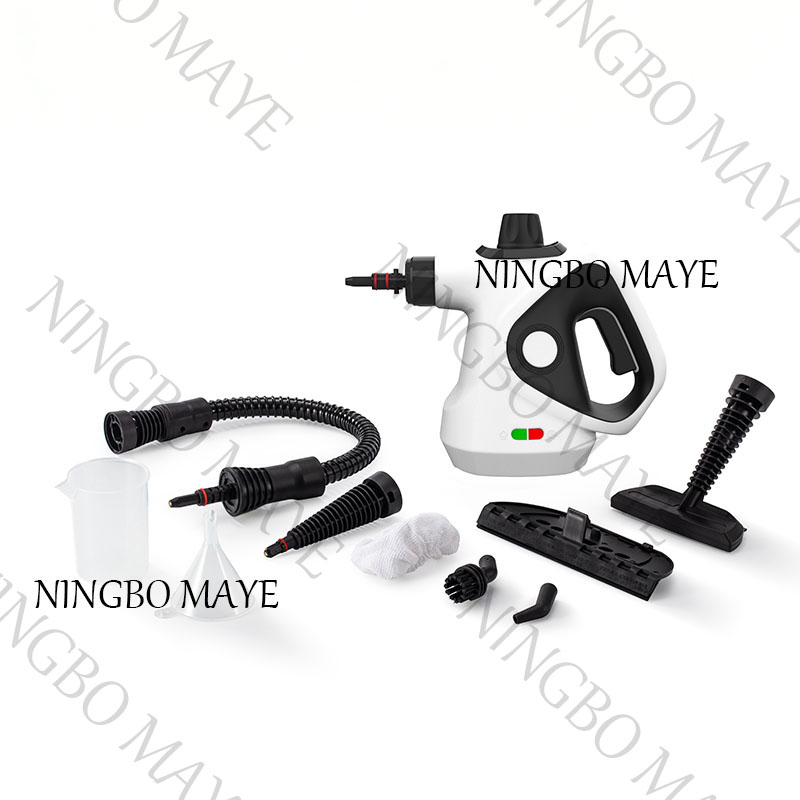
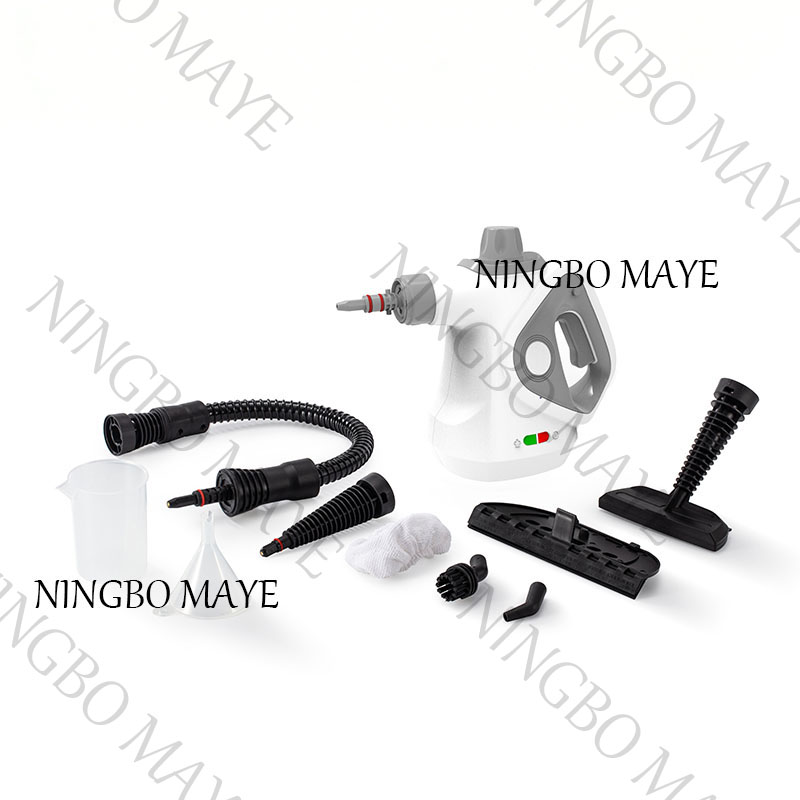
| Included Attachments | Jet nozzle, brush nozzle (nylon/brass), scraper, window squeegee, fabric steamer head, extension hoses |
| Water Compatibility | Tap water (distilled recommended for hard water areas) |
| Certifications | UL, ETL, CE, RoHS |
| Warranty | 1 to 5 years |
| Typical Applications | Kitchen, bathroom, tile grout, upholstery, car interior, windows, appliances |
Not all handheld steam cleaners are created equal. The most important performance factors are power (wattage), steam temperature, and steam pressure. Higher wattage generally means faster heat-up times and more sustained steam production. A 1,500W unit will typically outperform an 800W unit. Steam temperature is critical for sanitization; look for a unit that reaches at least 212°F (100°C) to ensure effective germ killing. Steam pressure, measured in bars or psi, determines how forcefully the steam is ejected. Higher pressure is better for blasting dirt out of grout, cleaning engine parts, or removing stubborn stains. For general household cleaning, a pressure of 3-4 bar (45-60 psi) is sufficient. For heavy-duty cleaning, look for units with 5 bar or more. Continuous steam time, determined by water tank capacity and steam flow rate, indicates how long you can clean before needing to refill. A larger tank provides longer continuous use but makes the unit heavier. For most household tasks, 10-15 minutes of continuous steam is adequate. If you plan to clean large areas such as carpets or multiple rooms, look for a unit with a larger tank or a continuous refill feature.
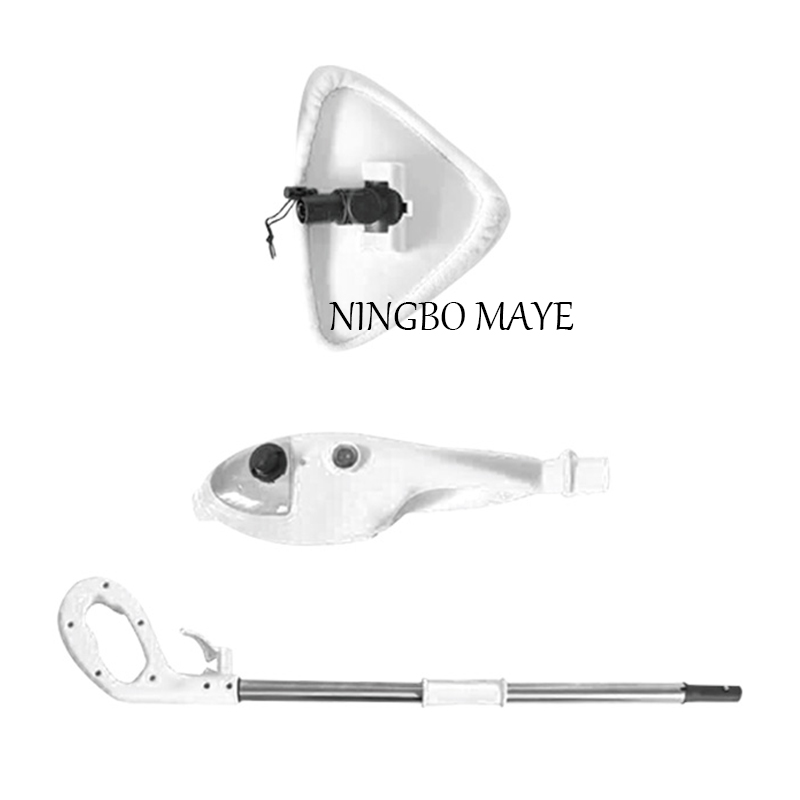
The attachments included with a handheld steam cleaner largely determine its versatility. A jet nozzle focuses the steam into a concentrated jet for blasting grime from tight spaces, crevices, and corners. This is essential for cleaning window tracks, appliance seals, and grout lines. Brush attachments, typically in nylon (for delicate surfaces) and brass (for heavy-duty scrubbing), allow you to agitate dirt while steaming. Nylon brushes are safe for most surfaces, including painted walls and sealed stone. Brass brushes are for heavy-duty applications such as cleaning grills, tools, and engine parts. A scraper attachment is useful for removing baked-on grease from ovens and cooktops. A window squeegee attachment allows you to clean glass surfaces without streaks. A fabric steamer head is useful for refreshing upholstery, curtains, and clothing. Extension hoses and extension wands allow you to reach high places or clean inside tight spaces without holding the heavy main unit. Before purchasing, consider the cleaning tasks you most frequently perform and ensure that the unit comes with the appropriate attachments. Some manufacturers offer additional attachments as optional accessories.
Handheld steam cleaners generate high-temperature, pressurized steam, so build quality and safety features are paramount. Look for a unit with a pressure relief valve that automatically releases excess pressure if the internal pressure becomes too high. A child safety lock prevents accidental steam discharge when the unit is not in use. A thermal cut-off automatically shuts off the heating element if the unit overheats. The water tank should be easy to fill and, ideally, removable. The steam trigger should be comfortable to hold and easy to operate, with a lock-on feature for continuous steaming without holding the trigger. The power cord should be sufficiently long (at least 10 feet) to reach around rooms without unplugging. Brand reputation matters. Established brands such as McCulloch, Wagner, Kärcher, Dupray, and Bissell have track records of quality and customer support. Read user reviews, paying attention to comments about durability, ease of use, and effectiveness. Beware of extremely cheap units that may have poor build quality, inadequate safety features, or low steam performance.
The kitchen is where a handheld steam cleaner truly shines. Stovetops with baked-on grease, oven interiors with burnt-on food residue, microwave interiors with splatters, and range hoods with accumulated grime all yield to the power of steam. The high temperature melts grease and oil, allowing them to be wiped away easily without harsh chemical degreasers. Steam also sanitizes cutting boards, countertops, and sinks, killing bacteria such as E. coli and Salmonella. For refrigerators, steam cleans and sanitizes shelves, drawers, and seals without leaving chemical residue that could affect food. For coffee makers and kettles, steam can help dissolve mineral deposits. For many kitchen cleaning tasks, a handheld steam cleaner reduces or eliminates the need for separate products for each surface.
Bathrooms are a prime application for handheld steam cleaners because of the combination of moisture, soap scum, mold, and bacteria. Steam dissolves soap scum from shower doors, tile walls, and fiberglass enclosures. It kills mold and mildew on grout, caulk, and shower curtains. It sanitizes toilet bowls and seats, sinks and faucets, and countertops. It removes hard water stains from glass shower doors and mineral deposits from showerheads. Because steam leaves no chemical residue, there is no need to rinse surfaces after cleaning. The ability to clean and sanitize the bathroom without harsh chemicals is particularly valuable for households with young children who may put their mouths on tub surfaces.
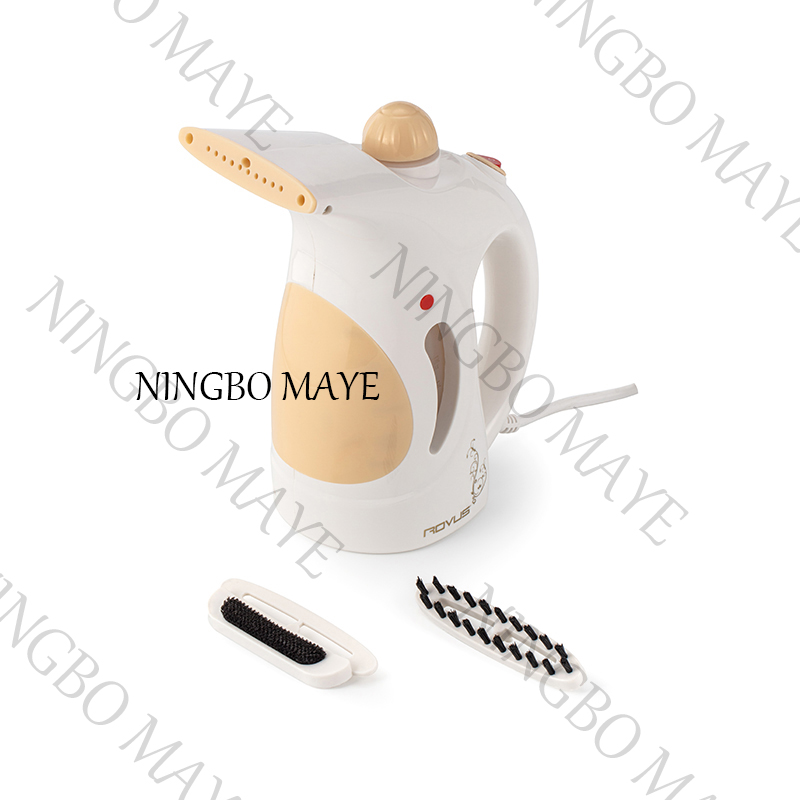
Beyond hard surfaces, handheld steam cleaners are effective for refreshing upholstery, carpets, and bedding. The steam kills dust mites, which are a common allergen, and eliminates odors from pets, smoke, or spills. For upholstery, steam can lift set-in stains and refresh fabric without the need for chemical spot cleaners. For carpets, steam can spot-clean stains and freshen high-traffic areas. For mattresses and pillows, steaming can kill dust mites and remove body oils and odors. Always check fabric care labels before steaming and test on an inconspicuous area first. Use a fabric steamer attachment or a brush attachment with a cloth cover to prevent moisture from soaking into the fabric.
With the appropriate squeegee attachment, a handheld steam cleaner can clean windows, mirrors, and glass shower doors to a streak-free shine. The steam loosens dirt, fingerprints, and soap scum, and the squeegee wipes away the moisture, leaving the surface clean and dry. This method uses no chemical glass cleaners and no paper towels. For window tracks, the jet nozzle blasts dirt and debris from corners that are difficult to reach with other tools.
Related Products

Address
East Zone Development Zone Lingshan Town Yuyao City Zhejiang P.R.C.
Tel
+86-18905840666 / +86-574-62067822
+86-15905848828
QR CODE
 Wholesale Multifunctional Steam Cleaner Manufacturers

 English
 Español